





Who We Are

Guide of the Year


Documents


Charity & SR


Latest Posts


Questions & Answers

At Trek Me Nepal, we specialize in creating unforgettable trekking experiences for travelers from all over the world. One of the highlights of your journey to Everest Base Camp (EBC) is the vibrant and captivating Namche Bazaar.
Known as the gateway to Everest, this charming town is a pivotal part of the trek, offering an opportunity to acclimatize, explore Sherpa culture, and marvel at some of the most iconic mountain views in the world.
In this detailed article, we’ll take you through all that Namche has to offer and why it should be your first stop on your EBC adventure.
Category | Details |
Introduction | Namche Bazaar: The main acclimatization stop for the Everest Base Camp trek. |
History & Culture | Historic trade hub for Sherpas and Tibetans. |
Altitude & Acclimatization | 3,440 meters elevation offers panoramic views. |
How to Reach | Flights to Lukla |
Things to Do | Saturday Market(Haat Bazaar) with local products and trekking gear. |
Best Viewpoints | Syangboche (3,780m): Trek offering panoramic Himalayan views. |
Accommodation | Luxury: Hotel Everest View, Hotel Namche, Yeti Mountain Home & Panorama Lodge |
Best Time to Visit | Spring (March- May) and Autumn (September- November): Best weather for trekking. |
Popular Trekking Routes | Everest Base Camp Trek. |
Packing Essentials | Trekking layers (base, insulating, outer). |
Trekking Safety | Stay hydrated (3- 4 L per day). Gradual ascent, take 2day acclimatization rest. Maintain Altitude not more than 500-600 metres. Follow the "Climb High, Sleep Low" Principle. Physical preparation: Months of uphill hikes and weighted backpacks. |
Everest View Hotel | Located at 3,880 meters. |
Sherpa Culture & Local Experience | Visit Sherpa villages: Thame, Khumjung, and Dingboche. |
Altitude & Health Precautions | Gradual ascent and rest days to help acclimatization. |
Conclusion | Namche Bazaar is an unforgettable trek combining adventure, cultural immersion, and stunning views of Everest. |
Namche Bazaar is a bustling town located at 3,440 meters (11,286 feet) in the heart of the Khumbu region of Nepal. As the main hub for trekkers heading to Everest Base Camp, it serves not only as a base camp for rest and acclimatization but also as the cultural and trading center of the region.
The town is surrounded by towering peaks like Everest, Ama Dablam, and Lhotse, offering some of the most stunning mountain views you’ll experience along the entire trek.
But Namche Bazaar is much more than just a stopping point. It’s a place where Sherpa traditions meet modern amenities. From its vibrant marketplaces and colorful prayer flags to its Tibetan Buddhist monasteries and Sherpa culture museums, Namche Bazaar invites you to discover the rich cultural heritage of the Sherpa people.
Namche Bazaar is home to an estimated 1,500 to 2,000 permanent residents, although the population increases significantly during the peak Everest Base Camp trekking seasons in spring and autumn. As the main acclimatization hub on the Everest Base Camp trek, Namche Bazaar welcomes thousands of trekkers, guides, and porters each year, temporarily expanding the local community.
The majority of the population belongs to the Sherpa ethnic group, who are globally recognized for their mountaineering expertise and deep connection to the Himalayas. Sherpa culture plays a central role in daily life in Namche Bazaar, influencing local traditions, religious practices, architecture, and hospitality.
Tourism is the primary source of income in Namche Bazaar. Many families operate tea houses, trekking lodges, gear shops, bakeries, cafes, and guiding services. Despite modern development driven by trekking tourism in Nepal, the town maintains strong community ties, traditional festivals, and Buddhist practices. Weekly markets and monastery visits remain an important part of social life, preserving the cultural heritage of the Khumbu region.
Namche Bazaar has a long and fascinating history that predates modern mountaineering tourism. For centuries, it served as a vital trading center between Nepal and Tibet. Sherpa traders transported salt, wool, grains, and livestock across high Himalayan passes, establishing Namche as a strategic commercial hub in the Khumbu region.
Its natural amphitheater-shaped setting provided a safe and practical marketplace for cross-border trade, making it one of the most important Himalayan trading settlements.
Namche Bazaar gained international recognition in 1953 after the first successful ascent of Mount Everest by Edmund Hillary and Tenzing Norgay. This historic achievement marked the beginning of global mountaineering interest in the Everest region. As trekking in Nepal expanded, Namche Bazaar became an essential acclimatization stop for climbers and trekkers heading toward Everest Base Camp.
The establishment of Sagarmatha National Park in 1976 further boosted tourism and international attention. Improved air access via Lukla and the rising popularity of Himalayan expeditions transformed Namche from a traditional mountain trading village into a thriving tourism hub. Today, it is widely known as the Gateway to Everest and remains the commercial and cultural heart of the Khumbu region.
Despite the rapid growth of trekking tourism, Namche Bazaar has preserved its cultural charm. As you explore the town, you will encounter mani stones carved with Buddhist mantras, spinning prayer wheels, and traditional monasteries that reflect the deep spiritual heritage of the Sherpa community. These sacred elements highlight the enduring influence of Tibetan Buddhism in the Everest region.
Namche continues to balance modern tourism infrastructure, including hotels, cafes, trekking shops, and bakeries with its historic identity as a Himalayan trading center.

'Namche Bazaar' Key Acclimatization Stop During EBC Trek
Trekking to Everest Base Camp is no small feat, and giving your body time to adapt to high altitude is essential. Namche Bazaar plays a crucial role in acclimatization during the Everest Base Camp trek, offering the ideal balance of elevation, facilities, and rest before the trail continues toward higher settlements.
As trekkers ascend higher into the Khumbu region, oxygen levels decrease significantly. A rapid ascent without proper acclimatization can lead to altitude sickness, with common symptoms such as headaches, nausea, dizziness, and fatigue.
To reduce these risks, the Trek Me Nepal team strongly recommends spending 2 to 3 nights in Namche Bazaar, allowing the body to gradually adjust before moving on.
Hydration is essential during acclimatization. Trekkers are encouraged to drink 3 to 4 liters of water daily to stay hydrated and support oxygen circulation at altitude.
Short acclimatization hikes are also an important part of the process. Popular side trips such as the Syangboche hike at 3,800 meters help the body adapt gradually without excessive physical strain.
Equally important is rest. Trekkers can relax in Namche Bazaar while enjoying panoramic views of Mount Everest, Lhotse, Ama Dablam, and Thamserku, allowing the body to recover before continuing the trek.
Acclimatization days in Namche Bazaar are not only for rest and hiking but also for gear checks and preparation. Many Everest Base Camp trekkers take this time to explore the market streets of Namche, which are lined with trekking gear stores, bakeries, and local shops.
The North Face Store in Namche Bazaar is a popular stop for trekkers who need last-minute cold-weather gear such as insulated jackets, gloves, base layers, and other trekking accessories.
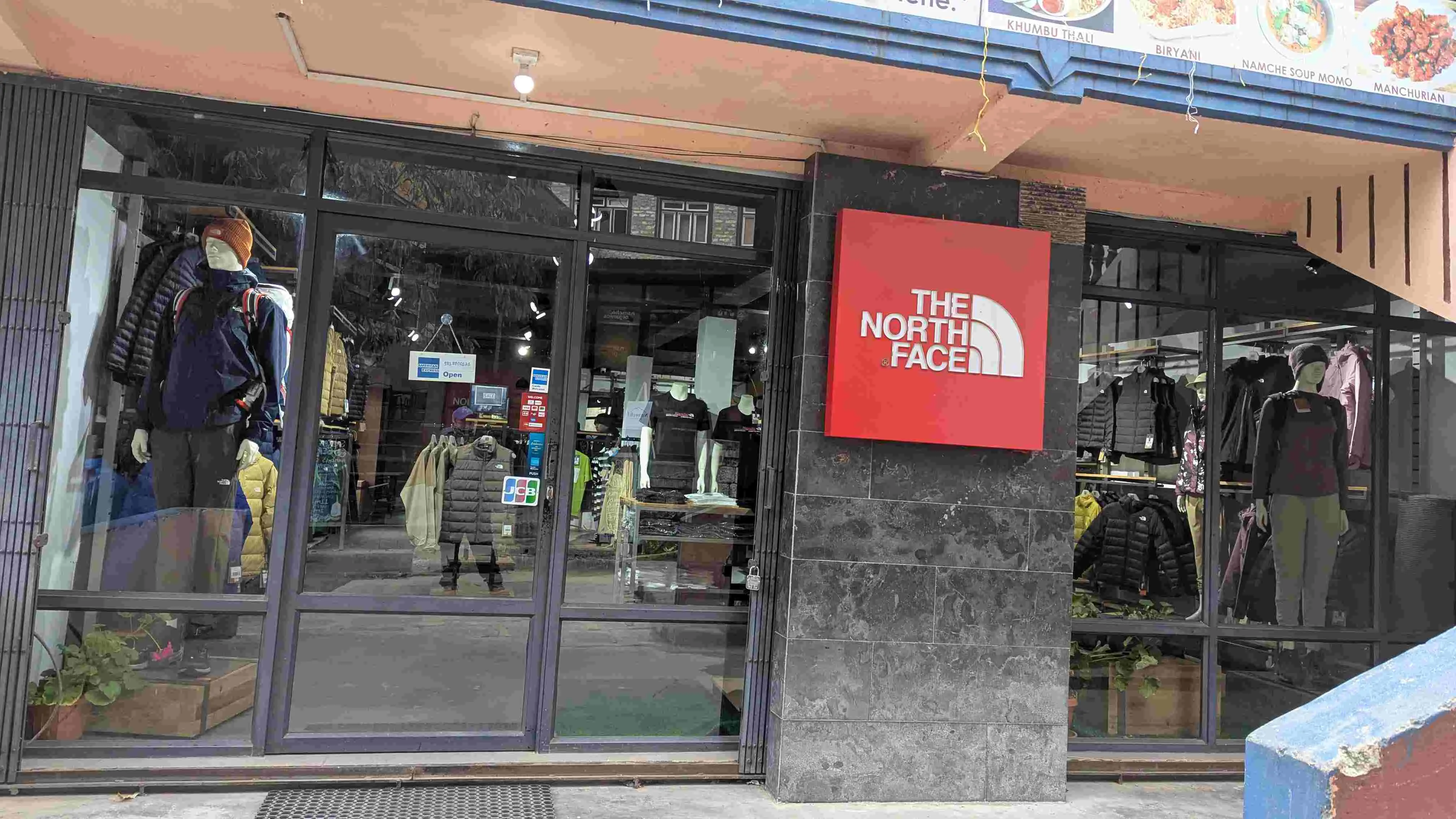
The North Face Store in Namche Bazaar
Although prices are higher than in Kathmandu, the convenience of accessing quality gear at altitude makes it a practical option before continuing toward colder and higher sections of the trail.
Another well-known shop is Sonam Store in Namche Bazaar, which is favored by trekkers for trekking essentials, snacks, trekking poles, and Himalayan souvenirs.
Located along the main walking route, Sonam Store is commonly visited during casual walks around town and adds to the overall acclimatization experience.
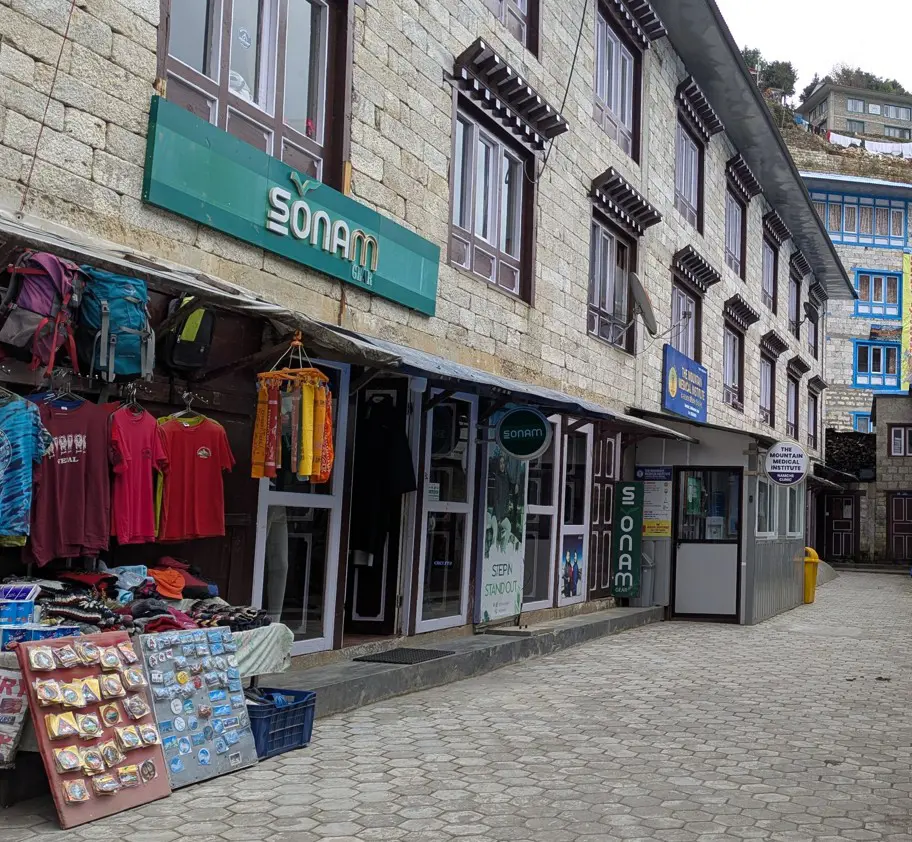
Sonam Gears Namche Bazaar
At Trek Me Nepal, our Everest Base Camp itineraries include sufficient free time in Namche Bazaar so trekkers can rest, explore local markets, visit trusted gear stores, and ensure they are fully prepared for the higher altitudes ahead.
Namche Bazaar is far more than just a place to rest before your Everest adventure. Here are some of the must-see attractions and activities that will enrich your time in this fascinating town:
Every Friday and Saturday, Namche Bazaar transforms into a lively marketplace known as the Haatbazaar or Saturday Market. Located in the heart of the Khumbu region, this vibrant weekly event beautifully blends culture, commerce, and community spirit.
Before Namche Bazaar became a popular destination for trekkers and adventurers, it was already a bustling trading center in the Himalayas. Traders from the lower valleys and mountain regions would gather here to exchange goods, creating a tradition that continues today.
During the Haatbazaar, the streets of Namche Bazaar fill with fresh produce, handmade crafts, traditional Nepali textiles, trekking gear, and delicious local snacks. The market is not just a place to shop but also a cultural experience where visitors can interact with locals and witness the authentic Sherpa lifestyle.
For trekkers on the Everest Base Camp route, visiting the Namche Bazaar Saturday Market is one of the best things to do in Namche. It offers a true taste of Himalayan trade culture and showcases the vibrant local life that makes Namche the heart of the Khumbu region.
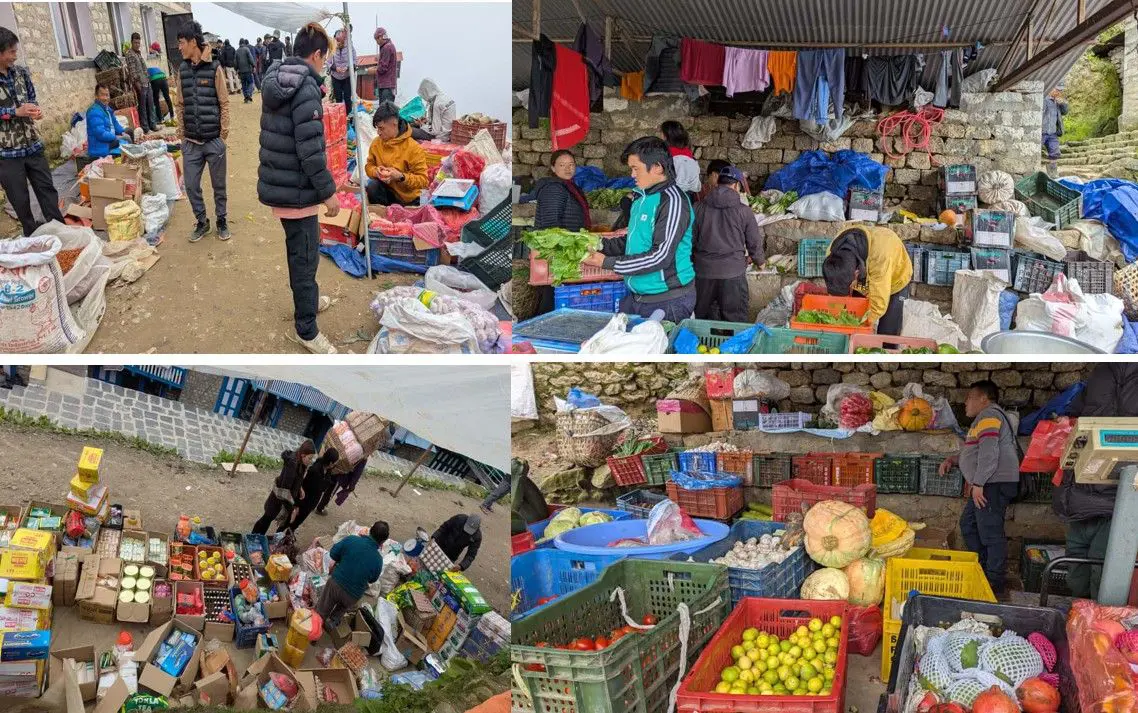
Saturday Market at Namche Bazaar (Haatbazaar)
What to Expect at Namche's Haatbazaar
a) Local Products: The market is a hub for fresh vegetables, fruits, grains, and herbs brought in from surrounding villages, providing trekkers a chance to experience the flavors of the region.
b) Traditional Handicrafts: Browse through locally made clothing, jewelry, and other crafts, which are perfect for souvenirs or gifts.
c) Trekking Gear: For trekkers embarking on expeditions like Everest Base Camp, this is a convenient spot to pick up necessary gear or supplies.
d) Cultural Experience: The bustling market gives visitors a taste of Sherpa life, with interactions with locals that provide insight into the rich cultural heritage of the Everest region.
The Saturday Market in Namche Bazaar is a vibrant trading hub where Sherpa traders, Tibetan merchants, and businesses from surrounding valleys gather to sell fresh produce, household items, trekking gear, and handicrafts.
Managed by the Namche Youth Group, the market ensures smooth operations by designating vendor spaces, maintaining cleanliness, regulating fair trade practices, and providing security, especially during peak tourist seasons.
This historic market not only supports local businesses but also promotes community interaction and cultural exchange between locals and trekkers, preserving its traditional essence while adapting to modern needs.
At the heart of Namche lies the Namche Monastery, a peaceful retreat where you can observe local monks performing prayers and rituals. The monastery’s walls are adorned with beautiful murals that tell stories of Buddhist teachings.
As a Trek Me Nepal guest, we’ll take you to visit this spiritual site, giving you a deeper understanding of the Sherpa people’s strong connection to Tibetan Buddhism.
When visiting Namche Bazaar, a stop at the Namche Monastery is a must for those seeking a peaceful and spiritual experience. Located right in the heart of the village, this serene monastery is one of three significant monasteries in the region, alongside Thame and Tengboche monasteries.
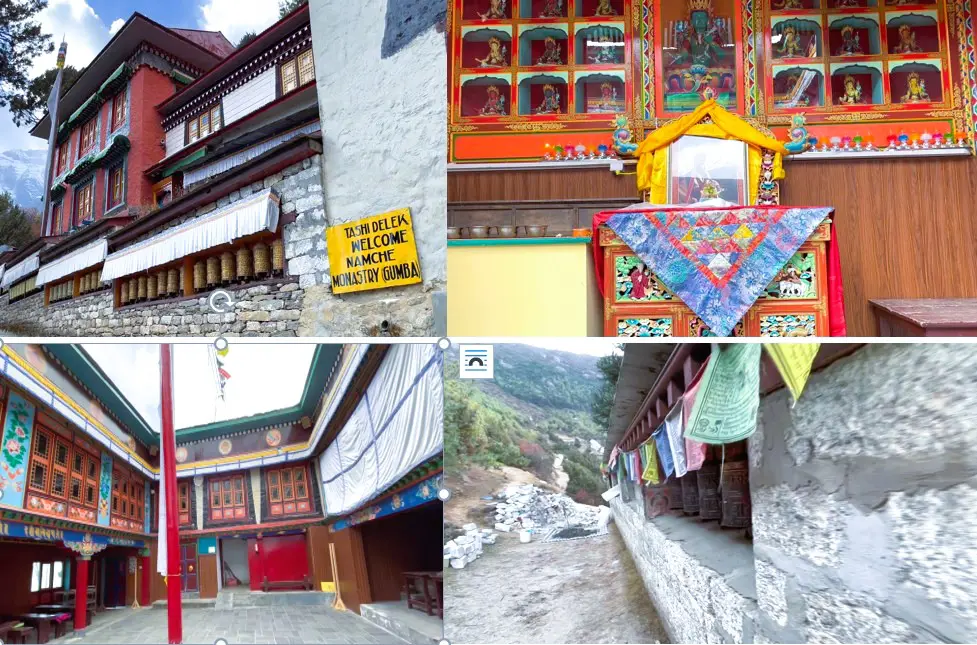
Namche Monastery (Gompa)
The Namche Monastery stands as a tranquil sanctuary amidst the hustle and bustle of the market, offering visitors a chance to witness the harmonious life of the monks and soak in the calming atmosphere.
The vibrant prayer flags fluttering in the crisp mountain air, paired with the chants and murmurs of the monks, create an ethereal ambiance. It's an ideal spot to reflect, connect with nature, and embrace the serenity of the Himalayas.
Whether you're a spiritual seeker or simply in need of a quiet moment, a visit to Namche Monastery provides an enriching experience that leaves you feeling peaceful and rejuvenated.
To truly understand the history and culture of the Sherpa people, a visit to the Sherpa Culture Museum is a must. The museum is home to Everest climbing artifacts, mountaineering tools, religious paintings, and displays showcasing the Sherpa way of life. It’s a perfect stop for anyone interested in the history of mountaineering in the Himalayas.
When in Namche Bazaar, a visit to the Sherpa Culture Museum is a must. Located just a short 20-minute walk uphill from the center, this museum offers a fascinating glimpse into the traditional life of the Sherpa people.
The museum showcases a reconstructed Sherpa household, complete with a family room, prayer room, stable, and yard, providing an authentic look at domestic and religious aspects of Sherpa culture.
The museum is also home to a valuable collection of artifacts, old objects, and photographs, including a notable image of Tenzing Norgay assessing his porter's loads from 1953.
Additionally, the museum features a resource center with a library, conference hall, and documents about the history of Everest exploration.
Run by local photographer Lhakpa Sonam, the museum is not only a cultural hub for visitors but also a key research facility dedicated to preserving Sherpa heritage and Himalayan history.
A visit to this unique museum is an enriching experience for anyone traveling to Everest Base Camp or exploring the region.
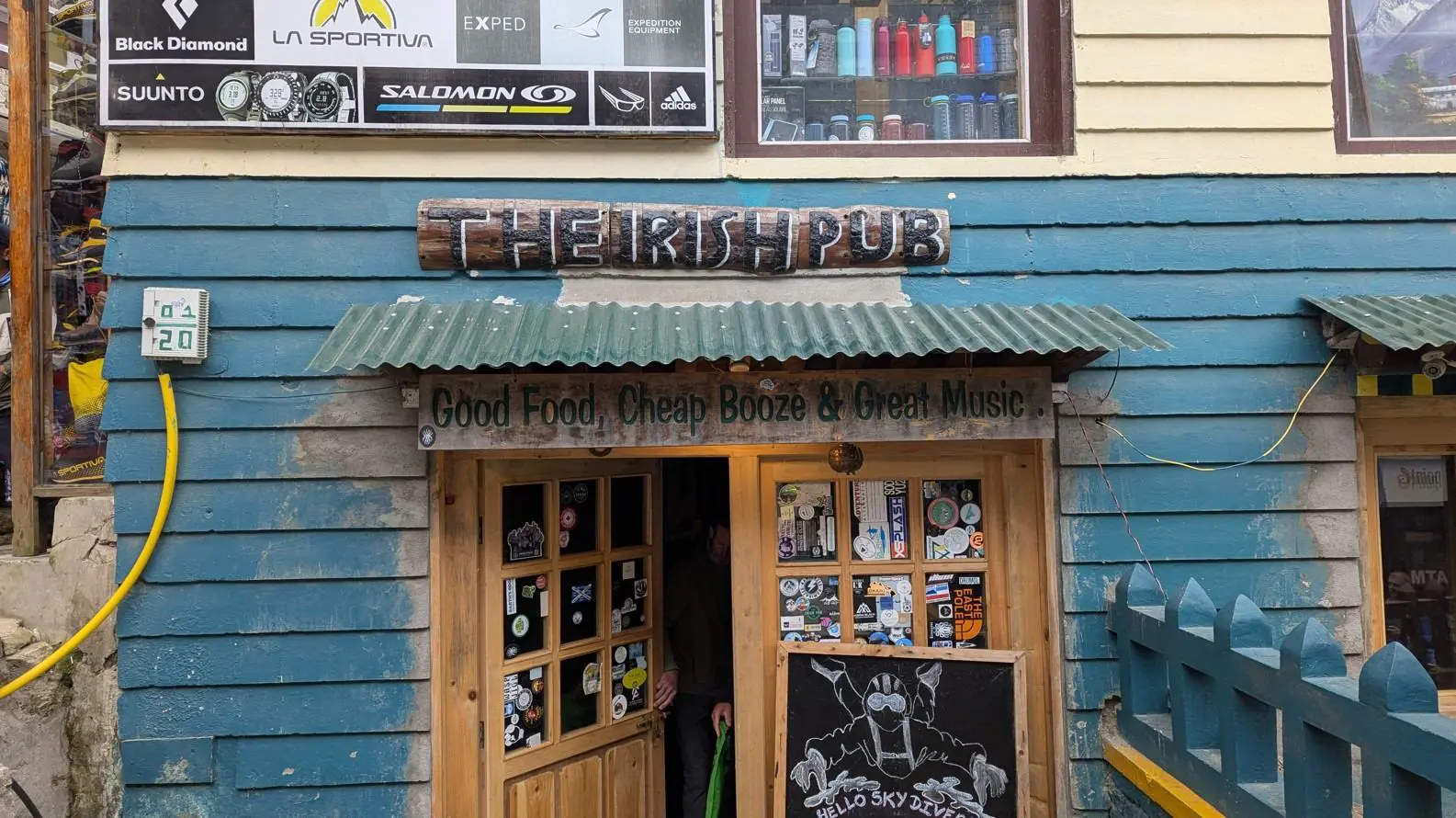
World's Highest Irish Pub at Namche Bazaar
The World's Highest Irish Pub, located in Namche Bazaar, Nepal, sits at an altitude of 3,450 meters (11,322 feet) above sea level, making it a popular stop for trekkers heading to Mount Everest Base Camp.
It provides a unique blend of Western and Nepali ambiance, offering great food and music, ideal for relaxation and unwinding before the high-altitude trek ahead.
What makes it even more interesting is that the pub’s owner, Dawa Sherpa, uses a herd of donkeys to carry Guinness kegs up to the pub. It's a fantastic place to celebrate the beginning of an Everest trek.
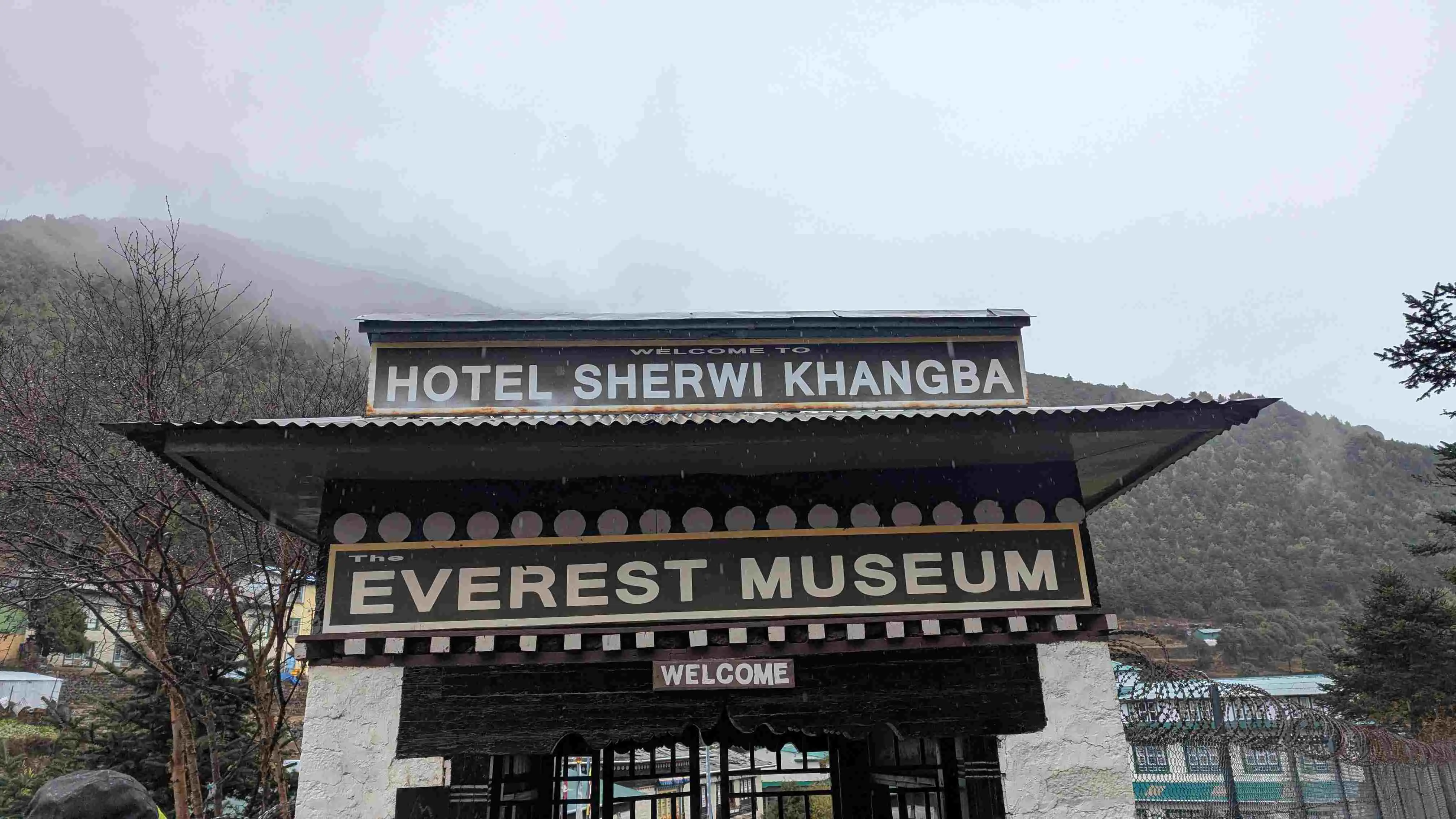
The Mount Everest Documentation Centre, located in Namche Bazar, is a significant museum dedicated to the history and culture surrounding Mount Everest and its climbers. It offers visitors an immersive experience with photographs, videos, and artifacts related to Tenzing Norgay, Sir Edmund Hillary, and the Sherpa community.
The exhibits cover the evolution of mountaineering techniques and the cultural importance of Everest to the Sherpas. The center is housed in a traditional Sherpa building and also features views of the surrounding mountains, enhancing the educational experience.

Mount Everest Documentation Centre
Location: Namche Bazar, Nepal, along the Everest Base Camp trek route.
Focus: Mount Everest history, climbing techniques, and Sherpa culture.
Exhibits: Photographs, videos, and artifacts of legendary climbers and Sherpa history.
Address: Hotel Sherwi Khangba, RP47+2RH, Everest Base Camp Trekking Rte, Namche 56000.
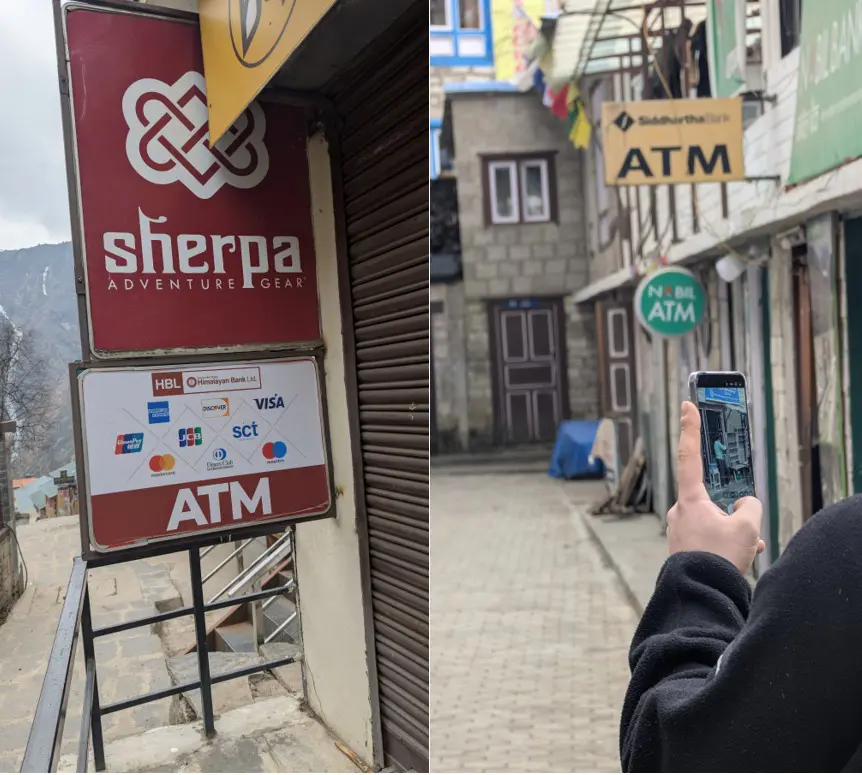
ATM Facilities in Namche Bazaar
Namche Bazaar offers reliable ATM access for trekkers traveling in the Everest region. As the main commercial center of the Khumbu area, the town has several ATMs operated by different Nepali banks, located along the main market streets and near lodges, shops, and trekking gear stores. These machines are generally easy to find while walking through the bazaar.
Most ATMs in Namche accept major international debit and credit cards, including Visa and Mastercard, and often support additional global card networks.
However, due to the high-altitude location and dependence on limited internet connectivity, machines may occasionally be out of service. Power cuts, satellite disruptions, or heavy usage during peak trekking seasons can affect availability.
Cash is essential for trekking beyond Namche Bazaar. Higher villages such as Tengboche, Dingboche, Lobuche, and Everest Base Camp do not have dependable ATM facilities, and tea houses, bakeries, and lodges operate primarily on a cash basis.
For this reason, trekkers are strongly advised to withdraw sufficient Nepalese Rupees either in Kathmandu before flying to Lukla or upon reaching Namche as a backup option.
During busy spring and autumn seasons, ATMs can sometimes run low on cash due to the high number of visitors. Planning ahead and carrying extra funds helps avoid inconvenience.
While Namche provides a valuable financial service in the mountains, it should not be relied upon as the only source of cash for the entire Everest trek.
Having access to ATM facilities in Namche Bazaar adds convenience and flexibility, making it an important stop for final preparations before heading deeper into the Himalayas.

Pemba Doma Sherpa Memorial, Namche Bazaar
The Pemba Doma Sherpa Memorial in Namche Bazaar is a significant cultural and historical landmark that honors one of Nepal’s most accomplished female mountaineers.
Located in the heart of Namche, this memorial pays tribute to Pemba Doma Sherpa, the first Nepali woman to summit Mount Everest via the North Face (Tibet side) and the first South Asian woman to climb Mount Lhotse.
A resident of Namche Bazaar, she played a pioneering role in empowering Nepali women in high-altitude mountaineering. The monument highlights her international achievements, national honors, and lasting legacy, making it an important stop for trekkers exploring Namche Bazaar village, Everest Base Camp trekking routes, and the cultural heritage of the Khumbu region.
Namche Bazaar offers some of the most incredible mountain views in the world. Whether you’re an early riser or prefer afternoon hikes, there are several viewpoints around the town that provide stunning panoramas of Everest and its surrounding peaks. Here are some of the best:
1) Syangboche (3,780m)
A short walk from Namche, Syangboche provides a perfect view of the Himalayas. From this vantage point, you can see Mount Everest, Lhotse, Ama Dablam, and many other peaks in the region.
2) Everest View Hotel (3,880m)
As one of the highest hotels in the world, the Everest View Hotel offers some of the best views of Mount Everest. You can enjoy a luxurious breakfast with breathtaking panoramic views of the surrounding peaks.
3) Sagarmatha National Park Visitor Centre

Sagarmatha National Park Entry
Namche Bazaar offers a range of accommodation options to suit different budgets:
Luxury: For those seeking comfort, the Hotel Everest View offers luxurious rooms and incredible views of the Himalayas. It holds the title for the highest hotel in the world and is perfect for those looking to treat themselves while acclimatizing.
Along with this Hotel Namche,Yeti Mountain Home & Panoroma Lodge also offers luxurious room facilities.

Hotel Everest View
Mid-Range: Options like Hotel Sherpa land , Bodhi, etc offer cozy rooms with modern amenities and stunning views of the mountains.
Budget: If you’re on a budget, International Food Rest, Sakura, etc in Namche provides simple rooms with basic facilities. While the rooms are more basic, they offer a warm atmosphere and a chance to meet other trekkers.

At Trek Me Nepal, your safety and well-being during the Everest Base Camp trek are our highest priorities. Our carefully planned itineraries include sufficient acclimatization days to help your body adjust to high altitudes, while having professional medical support available in Namche Bazaar ensures extra peace of mind for all trekkers.
Located in the heart of Namche Bazaar, Nepal, the TMMI clinic serves both local residents and thousands of visiting trekkers. This modern, well-equipped facility is designed specifically to handle altitude-related illnesses and general health concerns in the challenging Himalayan environment.
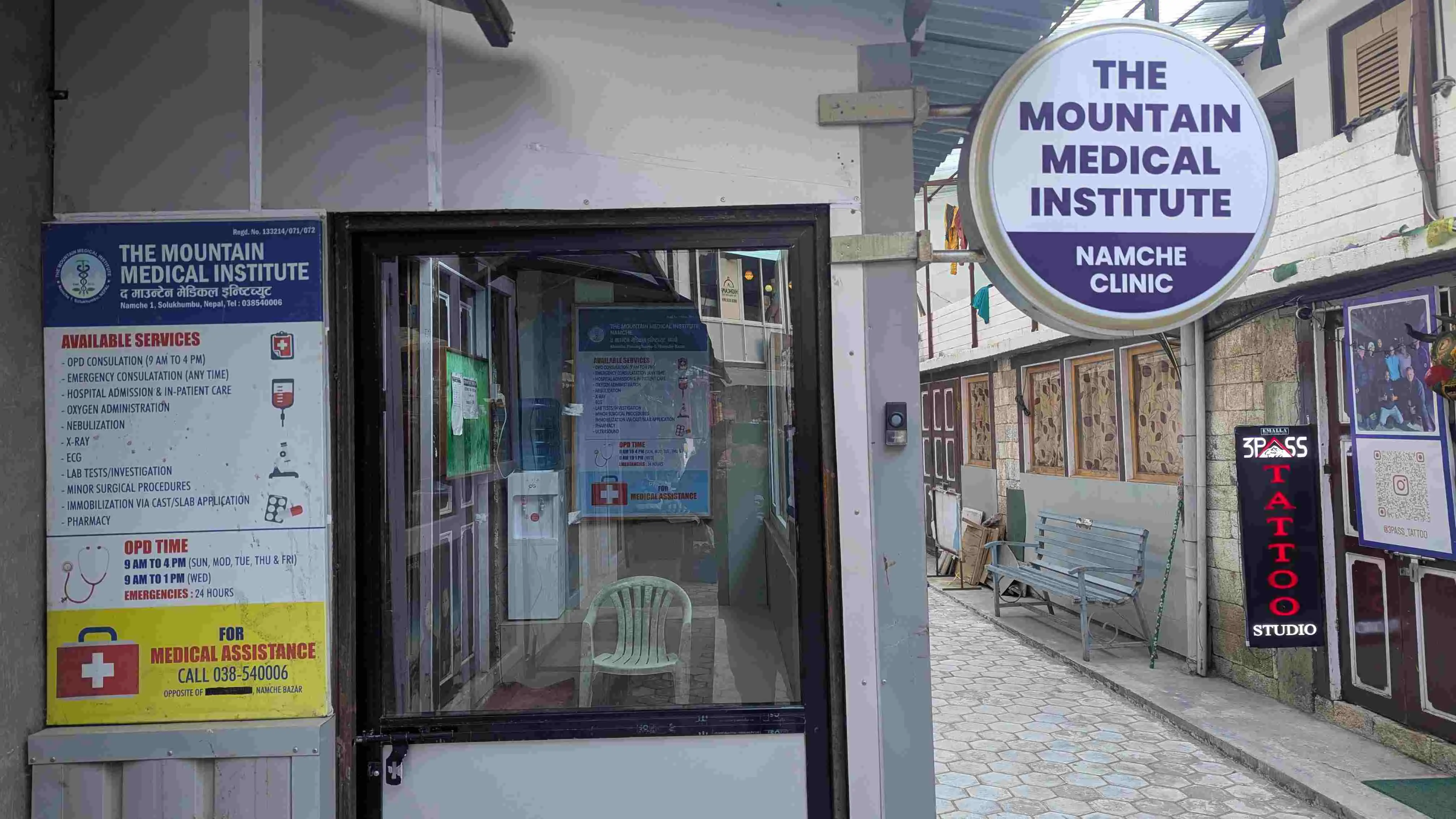
The Mountain Medical Institute: Namche Clinic
The Mountain Medical Institute Namche Clinic is an essential resource for anyone trekking in the Khumbu region, offering reliable healthcare services for trekkers, mountaineers, and the local community. Situated at 3,440m (11,286 ft), it provides immediate medical support in an area where access to high-quality healthcare is limited.
One of our recent guests experienced a leg injury while returning from their Everest Base Camp trek, which could have been stressful in a remote, high‑altitude environment. Thanks to the Mountain Medical Institute (TMMI) in Namche Bazaar, they received immediate, professional on‑site medical attention, including initial diagnostics and treatment.
Key Services at TMMI Namche Clinic:
24-Hour Emergency Consultations: Doctors are available around the clock for urgent situations.
Altitude Sickness Treatment: Staffed by doctors trained in high-altitude medicine, capable of diagnosing and treating Acute Mountain Sickness (AMS), High Altitude Pulmonary Edema (HAPE), and High Altitude Cerebral Edema (HACE).
On-Site Diagnostics: Including X-rays, ECGs, laboratory tests, and pulse oximetry readings.
Immediate Care & Support: Oxygen administration, nebulization, minor surgical procedures, and a fully stocked pharmacy.
After returning to Kathmandu, they continued their care at Era International Hospital (Traveler Hospital in Nepal), a facility known for providing personalized medical services and comprehensive care tailored to international patients, with well‑equipped labs, multidisciplinary specialists, easy insurance processing, and traveler‑focused treatment packages.
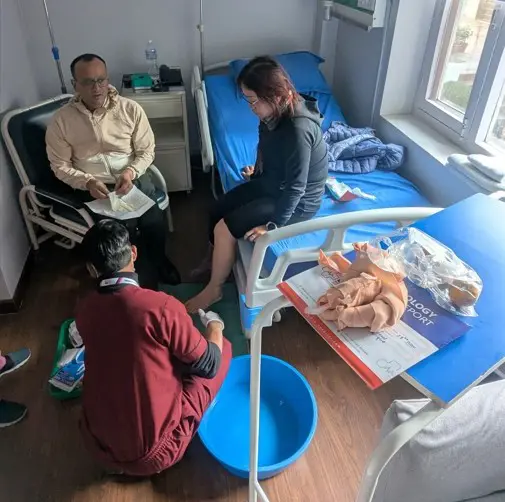
Guest Receiving Follow-up Treatment at Era International Hospital, Kathmandu
This incident highlights the critical importance of having reliable medical support right along the Everest Base Camp route, especially in high‑altitude, remote locations, and the value of quality follow‑up care when you return to the city.
This is a true testament to the importance of having reliable medical support along the Everest Base Camp route.
Having such a professional medical facility at your main acclimatization stop means you can relax and focus on enjoying the breathtaking scenery of the Khumbu region, knowing help is just a short walk away.
Whether it’s a minor injury or a high-altitude emergency, the Mountain Medical Institute in Namche Bazaar ensures trekkers can continue their Everest Base Camp journey safely while enjoying the stunning Himalayan landscapes.
The best time to visit Namche Bazaar is during spring (March-May) and autumn (September-November) when the weather is mild, the skies are clear, and the trekking conditions are ideal. These months provide the best visibility for viewing the mountains, especially Mount Everest and Ama Dablam.
If you plan to trek during winter (December- February), be prepared for cold temperatures and potentially challenging weather conditions. On the other hand, the monsoon season (June- August) is best avoided due to the heavy rains that make trails muddy and difficult to navigate.
Season | Weather | Pros | Cons |
Spring (March to May) | Stable, moderate temperatures with clear skies | Warm days, clear skies, blooming rhododendrons | Can expect some fog and rain |
Autumn (September to November) | Calm, clear weather with excellent visibility | Pleasant temperatures, vibrant fall colors, clear skies | Peak season, more crowds, and higher prices |
Summer (June to August) | Monsoon season with heavy rainfall and mist | Fewer crowds, possibly lower prices | Heavy rainfall, muddy and slippery trails |
Winter (December to February) | Dry, freezing temperatures with clear skies | Fewer crowds, potentially lower prices | Freezing temperatures |
Once you’ve had time to acclimatize and explore Namche, it’s time to head out and start your trek. Here are the most popular routes you can take:
Everest Base Camp Trek: The most popular trek, leading you all the way to Everest Base Camp. The journey passes through iconic landmarks like Tengboche Monastery and several Sherpa villages.
Three Passes & Gokyo Lakes: For experienced trekkers, this route offers a more challenging adventure with incredible views of the Himalayas.
Short Acclimatization Hikes: If you prefer something shorter, opt for hikes to Khunde & Khumjung (historic monasteries), Thamo or Hotel Everest View for great views of Everest and its neighboring peaks.
At Trek Me Nepal, we understand how important it is to take it slow and prepare properly before tackling the journey to Everest Base Camp.
Namche Bazaar offers the perfect mix of acclimatization, cultural exploration, and unmatched views, making it an essential stop on your trek.
Ready to explore Namche Bazaar and begin your adventure to Everest? Let Trek Me Nepal be your guide. With our expertise and local knowledge, we’ll ensure that your trek is safe, unforgettable, and full of adventure.
Get in touch today, and let’s start planning your trek to Everest Base Camp!
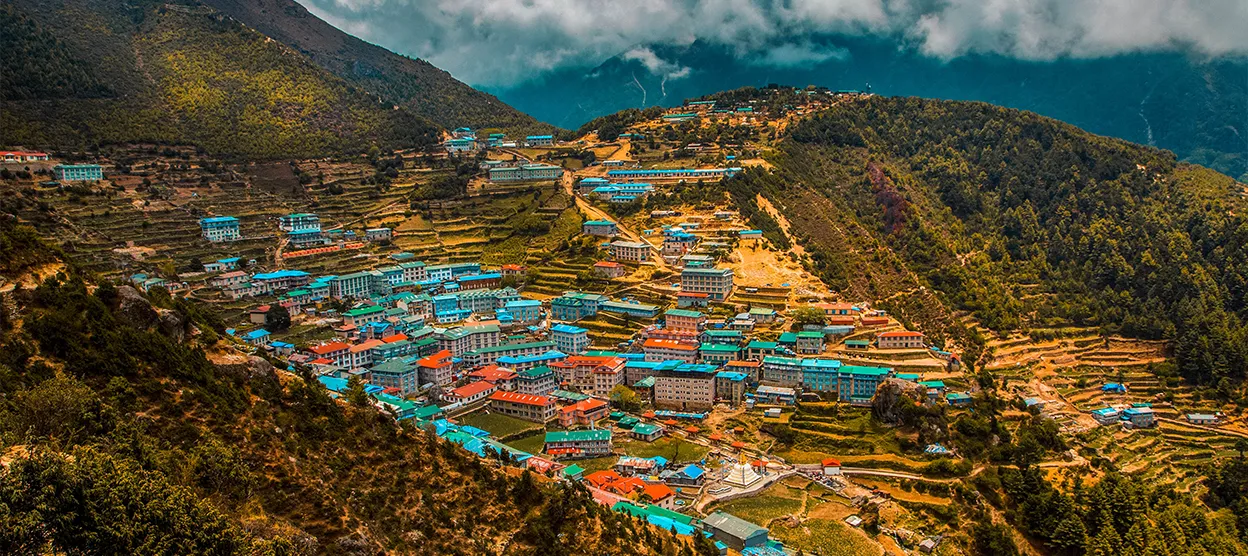
Namche Bazaar is famous because it is the main gateway to Mount Everest and the most important acclimatization stop on the Everest Base Camp trek. Almost every trekker heading toward Everest passes through Namche Bazaar.
It is also known as the heart of the Sherpa community in the Khumbu region. The town has a rich history as a traditional trading center between Nepal and Tibet. Today, it is a lively mountain town filled with trekking lodges, cafes, bakeries, gear shops, monasteries, and scenic viewpoints. Its unique amphitheater shape surrounded by Himalayan peaks makes it one of the most beautiful settlements in Nepal.
Yes, you can see Mount Everest from viewpoints near Namche Bazaar, but not clearly from the center of the town itself. Because Namche sits in a natural bowl-shaped valley, the town blocks some direct views of Everest.
To see Everest, trekkers usually hike uphill toward the Everest View Hotel or nearby viewpoints during their acclimatization day. On a clear morning, you can enjoy stunning panoramic views of Everest and the surrounding Himalayan peaks. Early mornings generally provide the best visibility before clouds move in.
No, Namche Bazaar is not colder than Everest Base Camp. Namche Bazaar sits at an altitude of 3,440 meters, while Everest Base Camp is above 5,300 meters.
Because Everest Base Camp is much higher, it experiences significantly colder temperatures, especially at night. Namche Bazaar has milder weather, relatively warmer daytime temperatures, and better shelter due to its lower elevation and developed infrastructure. This makes Namche a comfortable place to rest and acclimatize before heading to higher altitudes.
It typically takes two days to trek to Namche Bazaar from Lukla. On the first day, trekkers fly from Kathmandu to Lukla and hike to Phakding, which takes about three to four hours. On the second day, they trek from Phakding to Namche Bazaar. This section takes approximately six to seven hours and includes a steady uphill climb toward the end.
The trek to Namche is part of the classic Everest Base Camp route and includes crossing suspension bridges and walking through Sagarmatha National Park.
The best time to trek to Namche Bazaar is during spring from March to May and autumn from September to November.
During spring, the weather is stable, temperatures are moderate, and rhododendron forests bloom beautifully. Autumn offers clear skies, crisp air, and excellent mountain visibility. These seasons are ideal for trekking and photography.
Winter from December to February is colder but quieter, offering fewer crowds. The monsoon season from June to August brings rain, cloudy skies, and possible flight delays to Lukla, making trekking more challenging.
There are many enjoyable activities in Namche Bazaar. Trekkers often spend their acclimatization day hiking to Everest View Hotel for panoramic mountain views. Many visitors explore the Sherpa Culture Museum to learn about local history and mountaineering heritage.
Other popular activities include visiting monasteries, browsing trekking gear shops, relaxing in local bakeries and cafes, and attending the Saturday market. Short hikes to nearby villages such as Khumjung are also common. Namche offers a pleasant mix of adventure, culture, and relaxation.
Yes, people live in Namche Bazaar throughout the year. The town has a permanent population of around 1,500 to 2,000 residents.
Most locals belong to the Sherpa community and work in tourism, guiding, hospitality, trade, and small businesses. Although the number of visitors decreases during winter, many families remain in Namche year round, operating lodges, shops, schools, and health posts. It is a functioning mountain town, not just a seasonal trekking stop.
The best things to do in Namche Bazaar include acclimatization hikes, mountain viewing, cultural exploration, and relaxing before continuing the Everest Base Camp trek.
Top activities include hiking to Everest View Hotel, visiting the Sherpa Culture Museum, exploring monasteries, shopping for trekking equipment, enjoying fresh bakery items, and walking through the Saturday market. Namche Bazaar is also a great place to rest, recharge, and prepare for higher altitudes.
Check out recent travel trends and news by Trek me Nepal


More Reasons Why Travellers Trust Us






Bipin Thapa Magar
Guide of the Year | Operations Manager & Chief Planner | Trek Me NepalBipin Thapa Magar is a highly experienced trekking and expedition professional with over 20 years in Nepal’s adventure tourism industry. He began his journey in 2004 as a porter and gradually advanced... Read More