






Who We Are


Guide of the Year


Documents


Charity & SR


Latest Posts


Questions & Answers

High above the clouds, where oxygen thins and silence dominates the landscape, the Sherpas of Mount Everest move with calm confidence. For centuries, they have lived among the world’s tallest mountains, developing a way of life shaped by altitude, faith, and resilience.
Today, Sherpas stand at the heart of Himalayan mountaineering, guiding climbers through perilous terrain while carrying the cultural and spiritual legacy of the Khumbu region of Nepal.
This article explores the history, culture, physical adaptations, economic role, and risks faced by Sherpas, while also explaining the interconnected roles of Icefall Doctors and Everest porters, the essential workforce that keeps Everest expeditions possible.
The Sherpas are an indigenous ethnic community of Nepal, primarily inhabiting the Solu-Khumbu district near Mount Everest, also known as Sagarmatha. The word Sherpa originates from Tibetan, Shar meaning east and Pa meaning people, together translating to people from the east.
Unlike visiting climbers, Sherpas are born and raised at high altitude, often above 3,000 meters, where oxygen levels are significantly lower than at sea level. Over generations, they have developed a unique relationship with the Himalayas, not as conquerors but as caretakers of sacred mountains.
Approximately 500 years ago, Sherpa ancestors migrated from eastern Tibet into the high valleys of present-day Nepal. These migrations occurred gradually, influenced by trade routes, agricultural needs, and political changes in Tibet.
The Solu-Khumbu region offered familiar terrain such as glacial valleys, high pastures, and spiritual isolation, allowing Sherpa communities to thrive.
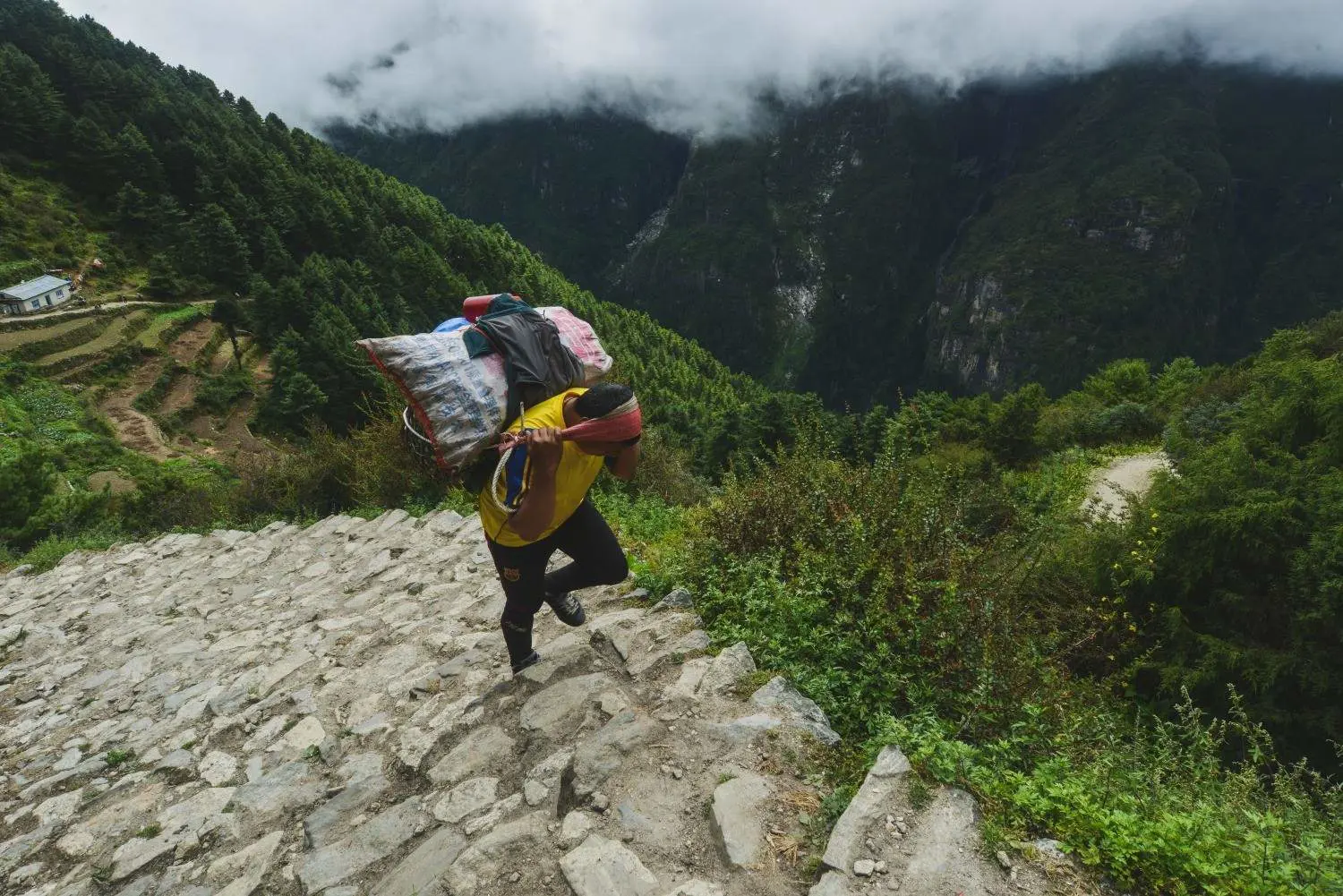
Before Everest expeditions, Sherpas depended on:
Subsistence farming including potatoes, barley, and buckwheat
Yak herding
Salt and wool trade across Himalayan passes
Their society emphasized cooperation, spirituality, and environmental balance, values that remain central today.
Sherpas entered global history during the early 20th-century Everest expeditions. Their strength, endurance, and calm demeanor at altitude quickly set them apart.
The turning point came in 1953, when Tenzing Norgay, a Sherpa climber, reached the summit of Mount Everest. Since then, every successful Everest expedition has relied on Sherpa expertise.
Sherpas are the operational backbone of Everest climbing.
Sherpas:
Guide climbers through technical sections
Assess weather and route safety
Fix ropes and ladders
Establish and maintain camps
Perform high-altitude rescues
Their work often begins weeks before climbers arrive at higher camps.
Role | Primary Responsibility | Altitude Exposure |
Sherpa Climbers | Guiding, rope fixing, high-camp support | Extreme, above 8,000 m |
Icefall Doctors | Maintaining safe routes through Khumbu Icefall | Very high |
Everest Porters | Carrying supplies to Base Camp | Moderate |
Foreign Climbers | Summit attempts | Limited and short-term |
Among Sherpas, Icefall Doctors hold one of the most perilous roles on Mount Everest.
Icefall Doctors are highly experienced Sherpa climbers responsible for:
Installing ladders over deep crevasses
Fixing ropes through the Khumbu Icefall
Continuously monitoring glacier movement
They work before dawn and often cross the Icefall daily, knowing the terrain can collapse without warning.
The Icefall is a constantly shifting glacier filled with:
Deep crevasses
Towering ice seracs
Frequent avalanches
This section has claimed many lives, including during the 2014 Khumbu Icefall tragedy, which deeply affected the Sherpa community.
Before climbers and Sherpas reach Everest Base Camp, Everest porters perform the essential groundwork.
Porters transport:
Food supplies
Climbing gear
Oxygen cylinders
Tents and fuel
They typically carry loads between 30 and 50 kilograms along steep trails from Lukla to Base Camp.
Aspect | Sherpas | Everest Porters |
Specialized climbing skills | Yes | No |
High-altitude work | Yes | Limited |
Technical mountaineering | Yes | No |
Load carrying | Yes | Yes |
Summit involvement | Yes | No |
Villages such as Namche Bazaar, Phortse, Khumjung, and Pangboche feature stone houses designed to retain heat. Homes revolve around a central hearth, which forms the heart of Sherpa family life.
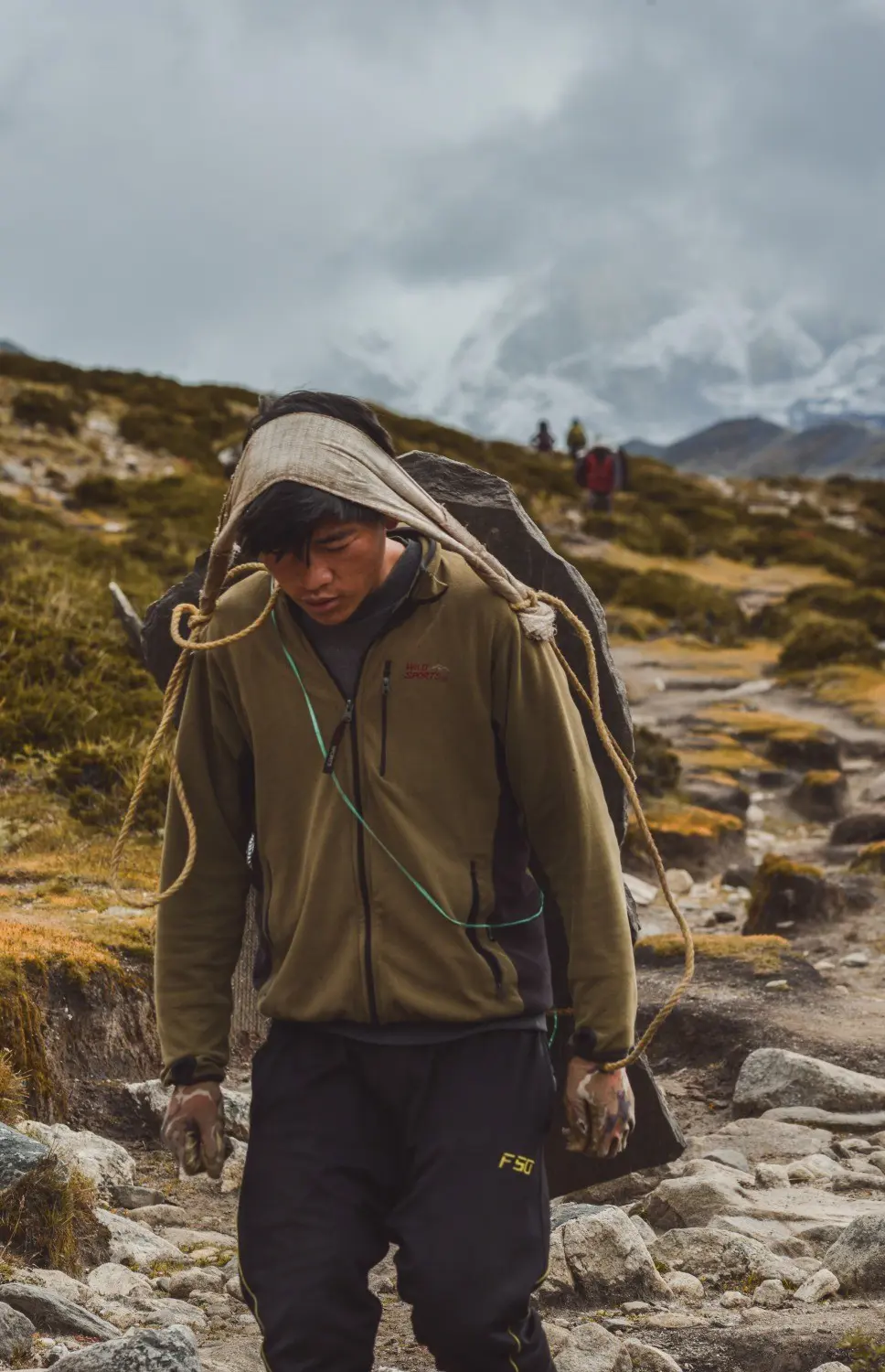
Sherpa culture is deeply rooted in Tibetan Buddhism.
Important festivals include:
Losar, the Sherpa New Year
Mani Rimdu, celebrated in monasteries
Staple foods such as tsampa, yak butter tea, and potato-based dishes provide warmth and energy in cold climates.
Yaks provide transport, milk, meat, wool, and fuel. Sherpas treat them with respect, reflecting their belief in living harmoniously with nature.
Sherpas possess unique genetic and physiological adaptations.
Adaptation | Benefit |
EPAS1 gene variant | Efficient oxygen usage |
Lower hemoglobin response | Reduced blood thickening |
Enhanced lung efficiency | Better endurance |
Stable cardiovascular system | Safer high-altitude exposure |
These traits allow Sherpas to function effectively above 8,000 meters, where most humans struggle to survive.
Mountaineering has reshaped the Solu-Khumbu economy. Experienced climbing Sherpas can earn USD 5,000 to 8,000 per season, while porters and support staff also earn more than traditional agricultural wages.
Sherpas also run teahouses, lodges, trekking agencies, and equipment shops. Many invest earnings into education, healthcare, and community development.
Despite their skill, Sherpas face constant danger, including avalanches, frostbite, altitude illness such as HAPE and HACE, and limited insurance coverage.
Tragic events like the 2014 Icefall avalanche and the 2015 earthquake-triggered avalanche exposed the vulnerabilities Sherpas endure.
For Sherpas, Mount Everest, known as Chomolungma, is the Mother Goddess of the World. Before expeditions, Sherpas conduct puja ceremonies, offering prayers, incense, and prayer flags to seek protection and harmony. Climbing is viewed not as conquest but as a spiritual responsibility.
The Sherpas of Mount Everest are not merely support staff. They are guardians of the Himalayas, preserving culture, faith, and human resilience at the roof of the world.
Alongside Icefall Doctors and Everest porters, they form an interconnected system that makes Everest accessible while protecting its fragile spirit.
The Sherpas of Mount Everest are an indigenous ethnic group from Nepal’s Solu-Khumbu region who are globally known for their expertise in high-altitude mountaineering. They play a critical role as guides, climbers, route fixers, and safety leaders on Everest expeditions.
Sherpas are essential because they possess deep local knowledge, high-altitude experience, and exceptional physical adaptation. They fix routes, carry supplies, manage camps, assess risks, and often perform rescues, making Everest expeditions significantly safer and more successful.
Yes, Mount Everest can be climbed without Sherpas, but it is extremely rare and far more dangerous. Most successful expeditions rely on Sherpas for route preparation, safety management, and logistics, especially in hazardous sections like the Khumbu Icefall.
Sherpas survive high altitudes due to a combination of genetic adaptation, lifelong acclimatization, and experience. Many Sherpas carry the EPAS1 gene variant, which allows more efficient oxygen use and reduces the risk of altitude-related illnesses.
Sherpas are not a different species, but they have unique genetic traits developed over generations of high-altitude living. These traits help them perform better in low-oxygen environments compared to people from lower elevations.
Experienced climbing Sherpas typically earn between USD 5,000 and 8,000 per climbing season, depending on their role and experience. While this is high by local standards, many argue it does not fully reflect the risks Sherpas take on Everest.
Sherpas face serious risks including avalanches, icefall collapses, frostbite, extreme cold, and altitude illnesses such as HAPE and HACE. They are often exposed to danger more frequently than foreign climbers because they make multiple trips through hazardous zones.
The Khumbu Icefall is a constantly moving glacier on the Everest route filled with crevasses and unstable ice towers. Sherpas, especially Icefall Doctors, cross it repeatedly to fix ladders and ropes, making it one of the most dangerous parts of Everest.
Sherpas are trained high-altitude climbers who work above Base Camp and assist with technical climbing, while Everest porters primarily carry supplies on trekking routes below Base Camp and do not usually participate in summit climbs.
Yes, Sherpa women are increasingly involved in mountaineering. While many manage households and businesses, some have become successful climbers and expedition leaders, breaking traditional gender roles in Himalayan climbing.
Yes, Sherpas believe Mount Everest, known as Chomolungma, is the Mother Goddess of the World. Climbing is approached with respect and humility, and puja ceremonies are performed before expeditions to seek blessings and protection.
Sherpa knowledge is passed down through family traditions, community mentorship, monasteries, and formal training centers such as the Khumbu Climbing Center, which focuses on safety and professional development.
The future of Sherpas is closely tied to sustainable tourism, improved safety standards, and fair compensation. As global interest in Everest continues, Sherpas are expected to remain central to mountaineering while gaining greater recognition and protection.
Check out recent travel trends and news by Trek me Nepal


More Reasons Why Travellers Trust Us








Bipin Thapa Magar
Guide of the Year | Operations Manager & Chief Planner | Trek Me NepalBipin Thapa Magar is a highly experienced trekking and expedition professional with over 20 years in Nepal’s adventure tourism industry. He began his journey in 2004 as a porter and gradually advanced... Read More