






Who We Are


Guide of the Year


Documents


Charity & SR


Latest Posts


Questions & Answers

The Poon Hill trek, often referred to as the Ghorepani Poon Hill trek, is one of the most popular short treks in Nepal. It is located within the Annapurna Conservation Area in the Myagdi and Kaski districts of the Gandaki Province.
The trek's primary destination is the Poon Hill viewpoint, situated at an altitude of 3,210 meters (10,531 feet), which is renowned for offering one of the most accessible and panoramic sunrise views in the Himalayas.
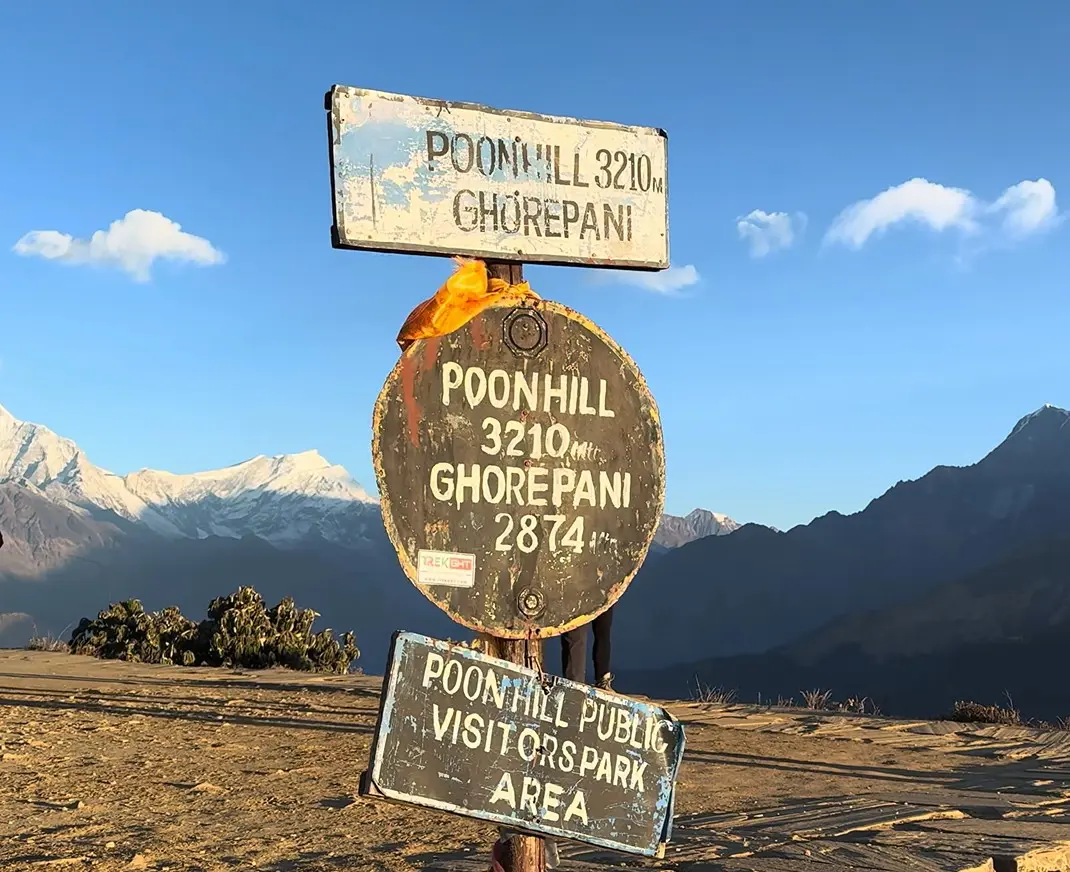
This trek is not technically demanding and follows well-established trails, making it a classic introduction to trekking in Nepal.
The route typically forms a loop, passing through charming villages, lush rhododendron forests, and terraced farmland. Its ease of access from the city of Pokhara, combined with its relatively low altitude and short duration, makes it a highly feasible option for a wide range of trekkers.
Feature | 4-Day Annapurna Poon Hill Sunrise Trek | 10-Day Ghorepani Poon Hill Trek |
Duration | 3 Nights / 4 Days | 9 Nights / 10 Days |
Start/End Point | Pokhara → Pokhara | Kathmandu → Kathmandu |
Max. Altitude | 3,210 m (Poon Hill) | 3,210 m (Poon Hill) |
Trekking Days | 4 days | 5 days |
Key Trekking Stops | Ulleri, Ghorepani, Tadapani, Ghandruk (visit) | Tikhedhunga, Ghorepani, Tadapani, Ghandruk (overnight) |
Difficulty | Easy to Moderate | Easy to Moderate |
Best Seasons | Spring (Mar-May), Autumn (Sept-Nov) | Spring (Mar-May), Autumn (Sept-Nov) |
Ideal For | Beginners, those with limited time | Those wanting a complete Nepal experience with culture & trekking |
The widespread popularity of the Ghorepani Poon Hill trek can be attributed to several key factors:
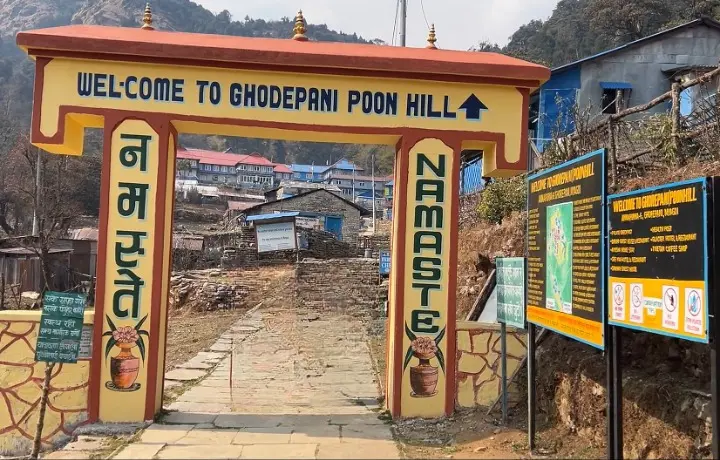
Accessibility and Ease: The trek is considered an easy trek suitable for beginners, families with children, and those with limited time. The trails are well-maintained, and the daily walking hours are manageable, typically ranging from 4 to 6 hours. The short duration, often completed in 4 to 5 days, makes it easy to incorporate into a broader Nepal travel itinerary.
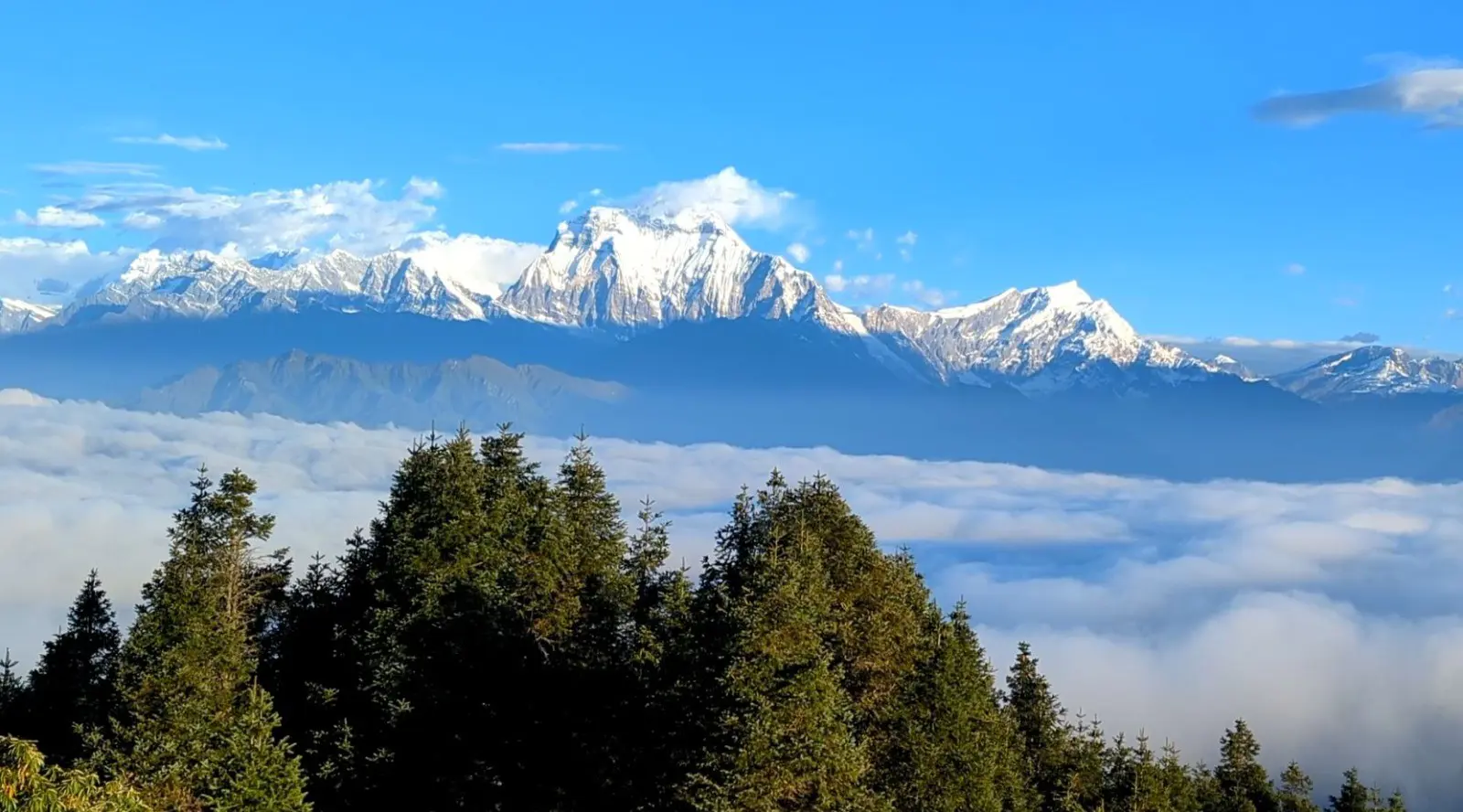
Spectacular Sunrise Views: The pre-dawn hike to the Poon Hill sunrise viewpoint is the trek's main highlight. From the summit, trekkers are rewarded with an unobstructed 360-degree panorama of more than 20 Himalayan peaks. This includes clear views of the Dhaulagiri massif (8,167m), the Annapurna range (including Annapurna I, 8,091m), Machhapuchhre (Fishtail Mountain, 6,993m), and Nilgiri Himal (6,940m).
Cultural Experience: The trail winds through traditional villages inhabited primarily by the Gurung and Magar communities. Trekkers have the opportunity to experience local culture and hospitality by staying in family-run tea houses in villages like Ghorepani and Ghandruk.
Natural Beauty: The journey passes through dense forests of rhododendron, which burst into vibrant colors of red, pink, and white during the spring blooming season (March to May). The trail also offers diverse landscapes, from river valleys to high ridges, providing constant scenic variety.
Choosing the best time to do the Poon Hill trek is crucial for an enjoyable experience, as the weather in the Himalayas varies significantly with the seasons. The ideal periods are defined by stable weather, clear skies, and optimal mountain visibility.
The climate in the Annapurna region follows a distinct seasonal pattern, which directly impacts trekking conditions on the Poon Hill route.
Spring (March to May): This season is characterized by warm days, mild nights, and gradually rising temperatures. It is a visually spectacular time as the rhododendron forests along the trail are in full bloom.
Autumn (September to November): Following the monsoon, this period offers stable weather, clear atmospheric conditions, and moderate temperatures. The skies are generally cloudless, providing excellent visibility.
Winter (December to February): Days can be sunny and clear, but temperatures drop significantly, especially in the mornings and evenings. Nights at higher elevations like Ghorepani can be cold, sometimes falling below freezing.
Monsoon (June to August): This season brings consistent rainfall, making trails slippery and muddy. Humidity is high, and cloud cover often obscures the mountain views. Leeches are also present in the forested sections during this time.
The best time to do the Poon Hill trek falls during two primary windows, which are considered the peak seasons due to their favorable conditions.
Autumn (September to November): This is the most popular trekking season. The weather is highly stable, with minimal rainfall and crisp, clear air. The Poon Hill sunrise Himalayas view is particularly stunning during these months, with unparalleled visibility of the Dhaulagiri and Annapurna ranges. The comfortable temperatures make for pleasant walking conditions.
Spring (March to May): This is the second peak season, famous for the Poon Hill rhododendron season. The forests are vibrant with colorful blooms, and the weather is generally good with warm days. While there may be occasional afternoon cloud build-up, the mornings are often clear for sunrise views.
Trekking outside the peak seasons is possible but requires preparation for specific challenges.
Winter Trekking (December to February): The Poon Hill winter trek offers the advantage of crystal-clear skies and fewer trekkers. However, trekkers must be prepared for cold conditions. Essential gear includes a high-quality sleeping bag, insulated layers, a warm jacket, gloves, and a beanie. Trails at higher, shaded elevations can be icy, so caution is advised.
Monsoon Trekking (June to August): Trekking during the Poon Hill monsoon season is generally not recommended. The persistent rain and clouds significantly reduce mountain visibility. Trails can be challenging, and leeches are an active nuisance. If trekking during this time, waterproof gear, leech socks, and realistic expectations about views are necessary.
The table below provides a clear comparison of the conditions throughout the year:
Season | Months | Temperature | Rainfall | Visibility & Conditions |
Spring | March - May | Warm | Low | Good; vibrant rhododendron blooms, occasional clouds. |
Monsoon | June - August | Warm/Humid | High | Poor; heavy rain, cloudy, slippery trails, leeches. |
Autumn | June - August | Warm/Humid | High | Excellent; stable weather, clear skies, best for photography and sunrise views. |
Winter | December - February | Cold | Low | Very Clear; cold temperatures, potential for ice on trails, fewer trekkers. |
The Ghorepani Poon Hill trek is a classic circuit in the Annapurna region, renowned for its accessibility and stunning Himalayan vistas.
Trek Me Nepal offers this experience through two primary packages: a short 4-day trek and an extensive 10-day journey that includes cultural sightseeing.
Both itineraries are designed as an easy trek Poon Hill, suitable for beginners and those with limited time, focusing on well-established trails and comfortable teahouse accommodations.
The starting point for your trek depends on the package you choose.
For the 4-Day Annapurna Poon Hill Sunrise Trek: The journey begins and ends in Pokhara. On the first day, a short drive (approximately 1-1.5 hours) transports you from Pokhara to Nayapul, where the trekking trail starts.
For the 10-Day Ghorepani Poon Hill Trek: This comprehensive package starts in Kathmandu. It includes guided sightseeing of UNESCO World Heritage Sites in Kathmandu, followed by a scenic drive or flight to Pokhara. The trek itself then begins with a drive from Pokhara to Nayapul.
The trail connects a series of traditional villages, each offering unique cultural and scenic highlights:
Tikhedhunga/Ulleri: The first major settlement, known for the long, steep stone staircase leading up to Ulleri. This section is one of the more strenuous climbs of the entire trek.
Ghorepani: A key village situated at a high pass (2,874m). Ghorepani is the main overnight stop before the sunrise hike to Poon Hill. It features numerous lodges and tea houses and is a bustling hub for trekkers.
Ghandruk: A large and culturally significant Gurung village, renowned for its traditional stone houses, rich cultural heritage, and stunning close-up views of Annapurna South and Machhapuchhre. It is a common alternative endpoint or overnight stop on the return leg of the loop.
Tadapani (2,630m): A small settlement surrounded by dense rhododendron and oak forests, offering a tranquil stop after the sunrise view.
The Ghorepani Poon Hill Trek is considered moderate in difficulty. While it is suitable for beginners, it does involve some uphill climbs, particularly the stone steps from Tikhedhunga/Ulleri to Ghorepani.
The highest point on the trek is Poon Hill (3,210 meters), which is not high enough to cause serious altitude sickness. The trek is manageable for most people with a moderate level of fitness, but it requires some stamina for the ascents.
Terrain: The path consists of a mix of stone-paved steps, dirt trails, and forest paths. The most challenging section is the ascent of over 3,000 stone steps from Tikhedhunga to Ulleri.
Walking Time: The average daily walking time ranges from 4 to 6 hours. The trek from Ghorepani to Poon Hill takes about 45 minutes to 1 hour. The path is steep but well-paved, and it’s a popular pre-dawn hike to catch the stunning sunrise over the Annapurna and Dhaulagiri ranges. While the ascent is short, it can feel physically demanding due to the steep climb.
Altitude: Altitude sickness is generally not a major concern on the Ghorepani Poon Hill Trek, as the highest point, Poon Hill, is at 3,210 meters (10,531 feet). The trek is below the usual threshold where trekkers commonly experience acute mountain sickness (AMS), which typically occurs above 3,500 meters (11,500 feet). However, trekkers should still take regular breaks, stay hydrated, and avoid rushing the ascent to reduce the risk of mild symptoms like headaches or dizziness.
Package Duration | Day-by-Day Trekking Route (Key Stops) | Highest Altitude |
4-Day Trek | Day 1: Nayapul → Ulleri | 3,210m (Poon Hill) |
10-Day Trek | Day 4: Nayapul → Tikhedhunga | 3,210m (Poon Hill) |
4-Day Annapurna Poon Hill Sunrise Trek
Day 1: Drive from Pokhara to Nayapul and Trek to Ulleri (2,050m)
Starting Point: Pokhara (approx. 820m)
Ending Point: Ulleri (2,050m)
Approximate Walking Time: 5 hours
Altitude Gain: +1,230m
Major Stops: After a 1-hour drive from Pokhara to Nayapul, the trek begins. The trail follows the Modi Khola river, passes through Birethanti (ACAP permit check), and begins a sustained ascent to Ulleri, known for its long stone staircase.
Day 2: Trek from Ulleri to Ghorepani (2,870m)
Starting Point: Ulleri (2,050m)
Ending Point: Ghorepani (2,870m)
Approximate Walking Time: 4-5 hours
Altitude Gain: +820m
Major Stops: The trail continues ascending more gradually through rhododendron and oak forests. You will pass through the small settlements of Banthanti and Nangethanti before reaching the pass and village of Ghorepani.
Day 3: Sunrise at Poon Hill (3,210m) and Trek to Tadapani (2,630m)
Starting Point: Ghorepani (2,870m)
Ending Point: Tadapani (2,630m)
Approximate Walking Time: 6-7 hours (including Poon Hill visit)
Altitude Profile: +340m to Poon Hill, then -1,240m to Tadapani
Major Stops: An early morning hike (approx. 45-60 minutes) takes you to the Poon Hill sunrise viewpoint. After descending to Ghorepani for breakfast, the trek continues east, crossing Deurali pass and descending through forests to Tadapani.
Day 4: Trek to Ghandruk and Syauli Bazaar, then Drive to Pokhara
Starting Point: Tadapani (2,630m)
Ending Point: Pokhara (820m)
Approximate Walking Time: 5 hours
Altitude Loss: -1,560m (from Tadapani to road head)
Major Stops: The trail descends through forests to the major Gurung village of Ghandruk. After time for exploration, the trek continues down to Syauli Bazaar and Nayapul, where a vehicle awaits for the 1-hour drive back to Pokhara.
10-Day Ghorepani Poon Hill Trek
Days 1-2: Arrival and Sightseeing in Kathmandu
Accommodation: Hotel
Activities: Arrival at Tribhuvan International Airport and transfer to your hotel. A full day of guided sightseeing of UNESCO World Heritage Sites in Kathmandu Valley, such as Swayambhunath Stupa, Pashupatinath Temple, and Kathmandu Durbar Square. A pre-trek briefing is conducted.
Day 3: Drive from Kathmandu to Pokhara (820m)
Drive Duration: 6-8 hours
Accommodation: Hotel
Activities: Scenic drive by tourist vehicle to Pokhara, offering views of hills, rivers, and terraced fields.
Day 4: Drive to Nayapul and Trek to Tikhedhunga (1,500m)
Starting Point: Pokhara (820m)
Ending Point: Tikhedhunga (1,500m)
Drive Time: 1 hour
Approximate Walking Time: 4-5 hours
Altitude Gain: +680m
Major Stops: Drive to Nayapul to start the trek. The trail follows the Bhurungdi Khola river north, passing through Birethanti and Sudame before reaching Tikhedhunga for the first teahouse overnight stay.
Day 5: Trek from Tikhedhunga to Ghorepani (2,870m)
Starting Point: Tikhedhunga (1,500m)
Ending Point: Ghorepani (2,870m)
Approximate Walking Time: 6 hours
Altitude Gain: +1,370m
Major Stops: The day involves a continuous ascent, beginning with the stone staircase to Ulleri (2,080m). The path then continues through rhododendron forests, passing Banthanti before reaching Ghorepani.
Day 6: Sunrise at Poon Hill (3,210m) and Trek to Tadapani (2,630m)
Starting Point: Ghorepani (2,870m)
Ending Point: Tadapani (2,630m)
Approximate Walking Time: 6-7 hours (including Poon Hill visit)
Altitude Profile: +340m to Poon Hill, then -1,240m to Tadapani
Major Stops: Early morning hike to Poon Hill for sunrise. Return to Ghorepani for breakfast, then trek east across Deurali pass and descend through forests to Tadapani.
Day 7: Trek from Tadapani to Ghandruk (1,950m)
Starting Point: Tadapani (2,630m)
Ending Point: Ghandruk (1,950m)
Approximate Walking Time: 4 hours
Altitude Loss: -680m
Major Stops: A shorter day with a steep descent through forests into the Modi Khola valley. The afternoon is spent in Ghandruk, a major Gurung village, allowing time for cultural exploration.
Day 8: Trek to Nayapul and Drive to Pokhara
Starting Point: Ghandruk (1,950m)
Ending Point: Pokhara (820m)
Approximate Walking Time: 4-5 hours
Drive Time: 1 hour
Altitude Loss: -880m (to Nayapul)
Major Stops: The final descent passes through Kimche and Syauli Bazaar, following the river to Birethanti and Nayapul. A vehicle drives you back to your hotel in Pokhara.
Day 9: Drive from Pokhara to Kathmandu
Drive Duration: 6-8 hours
Accommodation: Hotel
Activities: Return drive to Kathmandu with a final evening in the city.
Day 10: Final Departure
Meals: Breakfast
Activities: Transfer to Tribhuvan International Airport for your departure flight.
Poon Hill Sunrise (3,210m): The premier viewpoint for a 360-degree panorama of the Annapurna and Dhaulagiri ranges.
Ghandruk Village: A cultural highlight on both itineraries, offering deep insight into Gurung traditions, stone architecture, and close mountain views.
Rhododendron Forests: Prominent on the trails between Ulleri and Ghorepani, especially vibrant during spring.
Ulleri Staircase: A notable physical challenge on the initial ascent in both packages.
A steady, slow pace is recommended for all days, especially during ascents. The itineraries are designed with ample time, so there is no need to rush. Taking frequent short breaks is more effective than a few long ones.
The pace on the sunrise day (Day 3 in the 4-day, Day 6 in the 10-day) should account for the early start and long descent.
The Poon Hill trek offers a rich combination of natural scenery, wildlife, and cultural immersion. Beyond the famous sunrise, the trail is filled with diverse Poon Hill trek attractions that provide a well-rounded Himalayan experience.
While Poon Hill is the primary viewpoint, several other spots along the route offer exceptional vistas:
Poon Hill Summit (3,210m): The main attraction, providing a 360-degree panorama of the Himalayas at sunrise.
Deurali Pass (approx. 3,090m): Located on the trail between Ghorepani and Tadapani, this pass offers a different perspective of the Annapurna and Dhaulagiri ranges before the descent.
Ghandruk Village: The village itself is a viewpoint, with terraced fields providing a stunning foreground for close-up views of Annapurna South and Machhapuchhre (Fishtail Mountain).
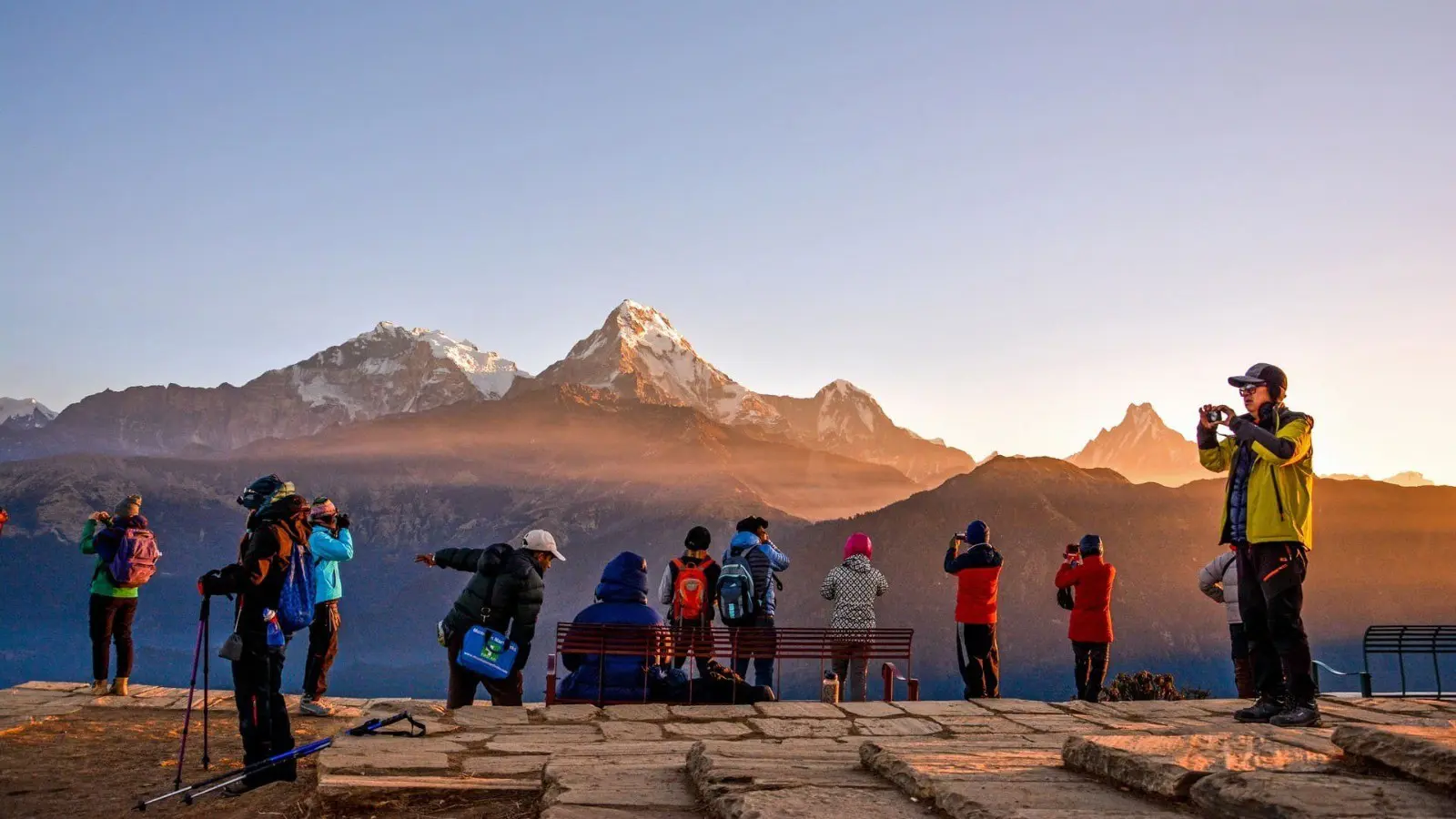
Poon Hill is one of Nepal’s most popular Himalayan viewpoints and is famous for its breathtaking panoramic views of the Annapurna and Dhaulagiri mountain ranges. From the summit, trekkers can admire legendary peaks such as Annapurna I at 8,091 meters, Annapurna South at 7,219 meters, the uniquely shaped Machapuchare (Fishtail Mountain), and the distant but majestic Dhaulagiri massif.
The sunrise at Poon Hill is especially remarkable, as the first light of day illuminates the snow-capped peaks in warm golden colors, creating one of the most memorable mountain scenes in the entire Annapurna region.
Many trekkers often ask, “Can I see Everest from Poon Hill?” The simple answer is no. Mount Everest cannot be seen from Poon Hill because it lies far to the east in the Everest region, while Poon Hill looks out toward the Annapurna and Dhaulagiri ranges in central Nepal. Anyone hoping to see Everest must trek in the Khumbu region, with popular routes such as the Everest Base Camp Trek.
Poon Hill remains the perfect choice for trekkers seeking a shorter and more accessible hike with incredible sunrise views over the Annapurna Himalayas, even though it does not include views of Mount Everest.
The trek passes through the Annapurna Conservation Area, which hosts a variety of ecosystems.
Flora: The most prominent feature is the extensive rhododendron forest. These trees bloom spectacularly in spring (March to April), covering the hillsides in shades of red, pink, and white. The trail also passes through sections of oak, bamboo, and pine forests.
Fauna: While larger mammals are shy and rarely seen, the region is home to species such as the Himalayan Tahr, deer, langur monkeys, and occasionally the endangered Red Panda. The area is excellent for bird watching, with species like the Danphe (Himalayan Monal), Nepal's national bird, as well as eagles, vultures, and various pheasants.
A significant part of the trek is the Ghorepani cultural experience in the traditional villages inhabited by the Gurung and Magar communities.
Ghandruk: This is a major cultural highlight. It is one of the largest Gurung villages in Nepal, known for its tightly clustered slate-roofed houses built in traditional style. Visitors can explore the narrow alleyways, visit a small local museum to learn about Gurung history and culture, and observe the daily life of the community.
Ghorepani: Primarily a Magar village, it serves as the main trekking hub before the sunrise hike. The culture here is intertwined with the trekking industry, offering a chance to interact with lodge owners and fellow trekkers.
Local Lifestyle: Throughout the route, you can observe traditional agricultural practices on terraced farms, see locals weaving, and experience the simple, hospitable nature of the people. The teahouses provide a direct window into local life and customs.
Check out our blog on the 'Ultimate Guide to Sunrise Views, Itinerary, Best Time, Cost & Cultural Experience' here to know more.
The table below summarizes the key cultural and scenic highlights in the main villages:
Village Name | Ethnic Majority | Key Attractions & What to See |
Ghandruk | Gurung | Traditional stone architecture, Gurung museum, close-up mountain views, terraced farmland. |
Ghirepani | Magar | Trekking hub, access to Poon Hill, local tea houses, vibrant rhododendron forests in spring. |
Ulleri | Magar | The long stone staircase, views of the Annapurna South and Hiunchuli peaks. |
Proper preparation is key to a safe and enjoyable Poon Hill trek. While it is an easy trek, basic fitness and the right gear are essential. This section provides practical advice on how to plan a Poon Hill trek, covering physical preparation, a comprehensive packing list, and important health and safety measures.
The Poon Hill trek is manageable for most people with a reasonable level of fitness. It does not require specialized training, but some pre-trek conditioning is highly recommended.
Cardiovascular Fitness: Engage in regular aerobic exercises such as brisk walking, jogging, cycling, or swimming for at least 4-6 weeks before your trek. Aim for sessions of 30-45 minutes, 3-4 times a week.
Leg Strength and Endurance: The trek involves significant ascents and descents, most notably the stone staircase to Ulleri. Incorporate exercises like squats, lunges, and step-ups into your routine. The most effective preparation is to practice walking up and down hills or stairs while carrying a daypack.
Acclimatization: The maximum altitude of 3,210m at Poon Hill is generally not high enough to cause severe altitude sickness for most people. However, walking at a steady, slow pace and staying hydrated are the best practices for acclimatization.
A practical Poon Hill trekking gear list focuses on layering for variable weather conditions and ensuring comfort on the trail.
Clothing (Layering System)
Moisture-wicking base layers (top and bottom)
Insulating mid-layers (fleece or down jacket)
Waterproof and windproof outer shell jacket
Quick-dry trekking trousers
Thermal underwear (for cold seasons and early mornings)
Trekking shirts (both long and short-sleeved)
Footwear
Well-broken-in hiking boots with good ankle support
Several pairs of moisture-wicking hiking socks
Camp shoes or sandals for evenings
Gear and Accessories
A comfortable daypack (30-40 liters)
A larger duffel bag for porters (if used)
Four-season sleeping bag (tea houses provide blankets, but a bag is cleaner and warmer)
Trekking poles (highly recommended for descents)
Headlamp with extra batteries (essential for the sunrise hike)
Water bottle or hydration bladder (2-liter capacity)
Water purification tablets or filter
Essentials
Personal first-aid kit including blister treatment, pain relievers, and any personal medication
Sun protection: high-SPF sunscreen, lip balm, sunglasses, and a wide-brimmed hat
Toiletries and a quick-dry towel
Hand sanitizer and wet wipes
Snacks (energy bars, nuts, chocolate)
Documents
Passport and copies
Cash (Nepalese Rupees) for meals, snacks, and hot showers as ATMs are not available on the trail
ACAP and TIMS trekking permits
Adhering to these practical tips will enhance your safety and comfort throughout the trek.
Hydration and Nutrition: Drink at least 3-4 liters of water daily to stay hydrated. Stick to familiar, well-cooked foods like Dal Bhat, which provides sustained energy. Avoid untreated water and unpeeled raw vegetables.
Pacing: Walk slowly ("Bistare Bistare" - slowly slowly in Nepali) and maintain a steady pace that allows you to hold a conversation. Take frequent short breaks rather than few long ones.
Foot Care: Wear well-fitted boots and manage hotspots on your feet immediately to prevent blisters. Change into dry socks at the end of each day's walk.
Trekking Poles: Using trekking poles reduces impact on your knees during long descents and provides stability on uneven trails.
Weather: Be prepared for rapid weather changes. Layer your clothing so you can adjust to varying temperatures and conditions throughout the day.
Guide and Porter: While not mandatory, hiring a local guide ensures you stay on the correct trail and provides valuable cultural context. A porter allows you to trek with only a light daypack, significantly enhancing your enjoyment.
Understanding the Poon Hill trek cost Nepal is essential for effective planning. The total Poon Hill trekking expenses can vary based on your style of travel, group size, and personal preferences. Below is a transparent breakdown of the expected costs.
The primary costs for the trek fall into several categories: permits, transportation, accommodation, food, and optional services. The following table provides approximate costs in both Nepalese Rupees (NPR) and US Dollars (USD) for a standard 5-day trek. Note that these are average estimates and can fluctuate.
Accommodation: The cost for a basic twin-share room in a tea house is typically very low (NPR 0-500 per night). It is a common practice for lodge owners to provide rooms for free or at a minimal charge on the condition that you purchase all your dinner and breakfast at their establishment.
Food: Meals are the most significant daily expense. A typical day including breakfast (e.g., porridge, toast), lunch (e.g., Dal Bhat, noodles), dinner (e.g., Dal Bhat, pizza), and snacks (tea, chocolate bar) can cost between NPR 2,500 to 3,500 per person per day. Dal Bhat is often the most economical and filling option, and it is usually available for a refill.
Hiring a guide or porter is an optional but highly recommended expense that impacts the total cost.
Guide: A local guide provides navigation, cultural interpretation, and handles logistics like securing accommodation. The daily fee is separate from the guide's food and accommodation, which is typically covered by the trekkers or the trekking company.
Porter: A porter can carry up to 15-20 kg of luggage (typically one duffel bag per two trekkers). This allows you to trek with only a light daypack. Their daily fee is also separate from their upkeep costs.
Total Estimated Budget Range
Independent Trekker (without guide/porter): Approximately $200 - $300 for 5 days, excluding international flights and Nepal visas.
With a Guide: Adds approximately $100 - $140 to the total cost.
With a Guide and Porter: Adds approximately $175 - $225 to the total cost.
All-Inclusive Package: This typically includes permits, transport, guide/porter services, accommodation, and all meals. This is the most convenient option and costs a single, upfront price.
Wi-Fi: Many tea houses offer paid Wi-Fi cards, costing approximately NPR 300 - 500 for a limited data duration.
Hot Shower: A bucket or gas-heated shower is available at most tea houses for NPR 300 - 600.
Battery Charging: Charging electronic devices at tea houses can cost NPR 200 - 500 per hour or per device.
Soft Drinks, Beer, and Snacks: These are available but are more expensive than in Pokhara.
Understanding what to expect from Poon Hill trek lodges and local cuisine is key to preparing for the journey. The trail is well-serviced with basic but sufficient facilities that form an integral part of the trekking experience.
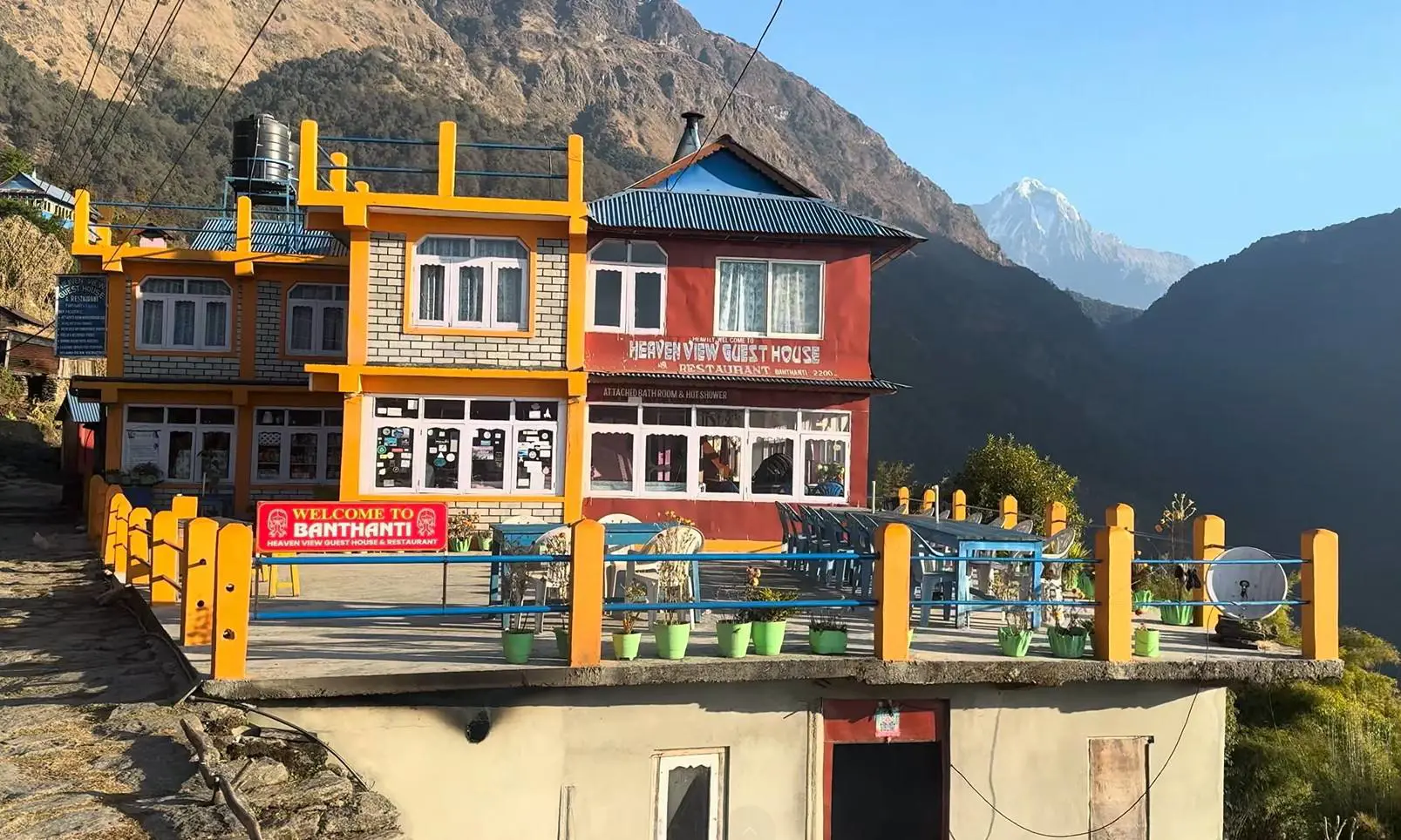
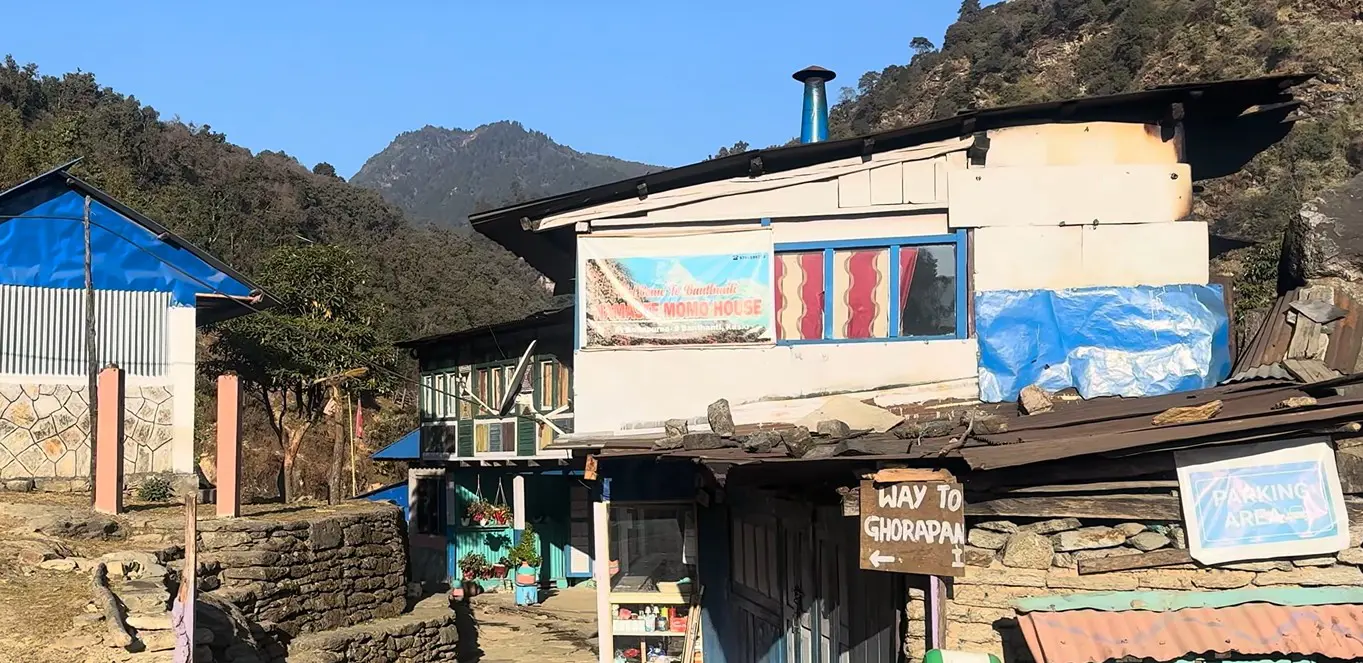
Remember, the first and last nights of the 10-day trek (in Kathmandu/Pokhara), accommodation is in hotels, not teahouses.
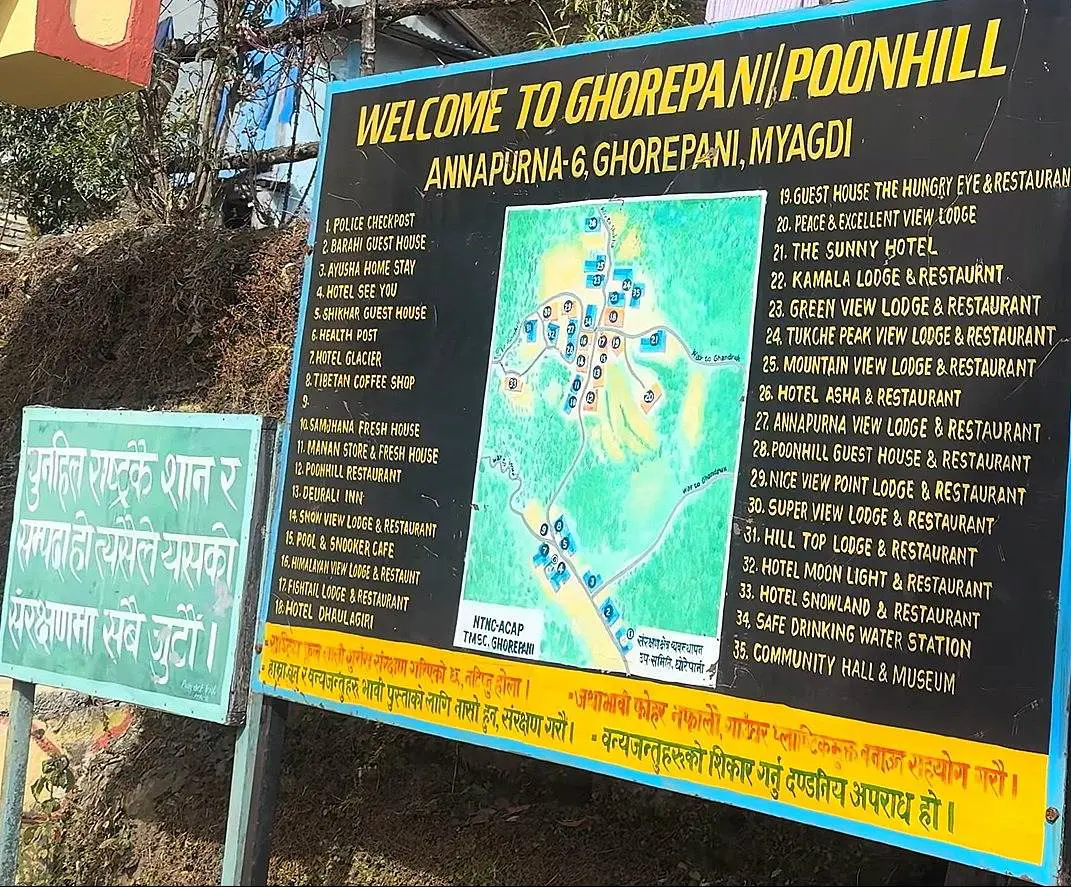
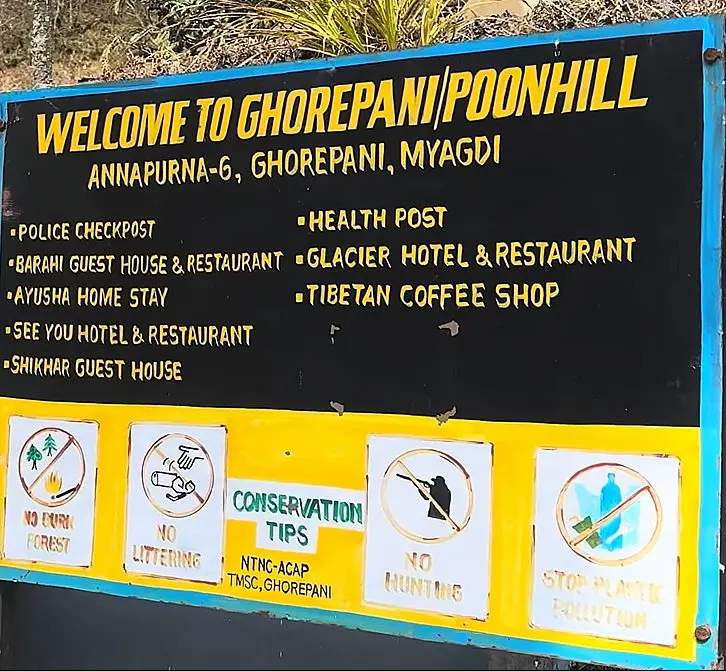
Category | Name | Details/Type |
Government & Public Services | Police Checkpost | Government Facility |
Health Post | Medical Facility | |
Safe Drinking Water Station | Public Facility | |
Community Hall & Museum | Community Facility | |
Hotels | Hotel See You | Hotel |
Hotel Glacier | Hotel | |
Hotel Dhawalagiri | Hotel | |
The Sunny Hotel | Hotel | |
Hotel Asha & Restaurant | Hotel / Restaurant | |
Hotel Moon Light & Restaurant | Hotel / Restaurant | |
Hotel Snowland & Restaurant | Hotel / Restaurant | |
Guest Houses | Barahi Guest House | Guest House |
Ayusha Home Stay | Homestay | |
Shikhar Guest House | Guest House | |
Guest House “The Hungry Eye” & Restaurant | Guest House / Restaurant | |
Poonhill Guest House & Restaurant | Guest House / Restaurant | |
Lodges & Inns | Samjhana Fresh House | Lodge / Restaurant |
Deurali Inn | Lodge / Inn | |
Snow View Lodge & Restaurant | Lodge / Restaurant | |
Himalayan View Lodge & Restaurant | Lodge / Restaurant | |
Fishtail Lodge & Restaurant | Lodge / Restaurant | |
Peace & Excellent View Lodge | Lodge | |
Kamala Lodge & Restaurant | Lodge / Restaurant | |
Green View Lodge & Restaurant | Lodge / Restaurant | |
Tukuche Peak View Lodge & Restaurant | Lodge / Restaurant | |
Mountain View Lodge & Restaurant | Lodge / Restaurant | |
Annapurna View Lodge & Restaurant | Lodge / Restaurant | |
Nice View Point Lodge & Restaurant | Lodge / Restaurant | |
Super View Lodge & Restaurant | Lodge / Restaurant | |
Hill Top Lodge & Restaurant | Lodge / Restaurant | |
Tibetan Coffee Shop | Café | |
Pool & Snooker Café | Café | |
Maman Store & Fresh House | Store / Lodge | |
Restaurants | Poonhill Restaurant | Restaurant |
The food on the trail is a mix of Nepalese staples and simpler Western-style dishes designed to provide energy for trekkers.
Dal Bhat: The quintessential Nepali meal. It consists of lentil soup (dal), steamed rice (bhat), a vegetable curry (tarkari), and sometimes pickles (achar). It is nutritious, filling, and most lodges offer free refills.
Noodles and Pasta: Dishes like fried noodles, chow mein, and pasta are widely available and provide good carbohydrates.
Soup: A variety of hot soups, such as garlic soup (popular among trekkers), tomato soup, and noodle soup, are offered and are good for warming up.
Breakfast: Common options include Tibetan bread (a fried bread), porridge, pancakes, and eggs prepared in various styles.
Drinks: Hot drinks like milk tea, black tea, ginger lemon honey tea, and instant coffee are available. It is advisable to stick to boiled or treated water, which is often provided for a fee.
The system for securing accommodation on the Poon Hill trek is generally straightforward.
Advance Booking: For individual trekkers without a guide, advance booking is usually not required, even in the peak seasons (Spring and Autumn). There are numerous tea houses in each village, and it is rare for them to be completely full.
Guided Treks: If you are on a guided trek or a package with a company like Trek Me Nepal, all accommodations are pre-arranged and included in your package cost. Your guide will handle the logistics of securing your room upon arrival at the tea house.
Peak Season Consideration: While booking is not mandatory, during the busiest weeks of October/November and March/April, arriving at your chosen tea house by early afternoon increases the likelihood of getting a room with an attached bathroom or a preferred location.
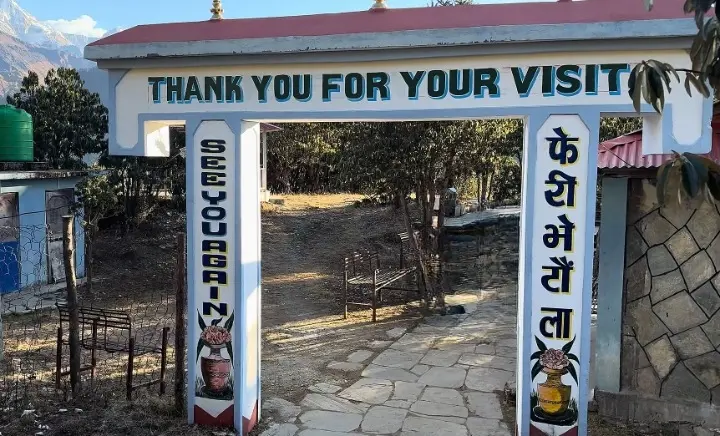
The Poon Hill trek successfully combines accessibility with a genuinely rewarding Himalayan experience. This easy trek Poon Hill is an excellent choice for those seeking a manageable adventure with high scenic and cultural returns.
The key attractions that define the Ghorepani Poon Hill trek are:
The Sunrise View: The pre-dawn hike to Poon Hill (3,210m) for a panoramic sunrise over the Dhaulagiri and Annapurna mountain ranges remains the unparalleled highlight of the trek.
Cultural Immersion: The route passes through traditional Gurung and Magar villages, such as Ghandruk and Ghorepani, offering a genuine glimpse into local lifestyles and architecture.
Natural Diversity: The trail winds through lush rhododendron forests, terraced farmland, and river valleys, providing constant visual variety, especially vibrant during the spring bloom.
Accessibility: Its short duration (typically 4-5 days), well-maintained trails, and low risk of altitude sickness make it a perfect beginner-friendly introduction to trekking in Nepal.
To ensure a smooth and enjoyable journey, consider these final pieces of advice:
Physical Preparation: While not strenuous, a basic level of fitness will significantly enhance your enjoyment. Pre-trek conditioning involving walking and stair climbing is recommended.
Packing: Adhere to a practical packing list, emphasizing layered clothing for variable weather, a warm sleeping bag, a reliable headlamp, and sturdy, broken-in hiking boots.
Guides and Porters: For first-time trekkers or those seeking a more immersive experience, hiring a local guide through a reputable operator is highly beneficial. Porters can greatly reduce your load, allowing you to focus on the scenery.
As a visitor in the Annapurna Conservation Area, it is important to minimize your environmental and cultural impact.
Respect Local Culture: Dress modestly, ask for permission before taking photographs of people, and be respectful of local customs and temples.
Support the Local Economy: Choose locally-owned tea houses for accommodation and meals. Consider hiring local guides and porters to directly contribute to the community.
Minimize Waste: Avoid single-use plastics. Carry a reusable water bottle and purification tablets. Carry all your non-biodegradable waste, such as wrappers and batteries, back to Pokhara for proper disposal.
Choose Responsible Organizers: When booking a package, select a company committed to sustainable practices. Trek Me Nepal, for instance, operates as a trusted organizer that promotes responsible and eco-friendly trekking, ensuring minimal environmental impact and fair treatment for its local staff.
Book your Poon Hill Trek with Trek Me Nepal. We have two standard packages: Ghorepani Poon Hill 10 Days Trek and Annapurna Poon Hill Sunrise 4 Days Trek. We can also customise your trek according to your personal needs.
Check out recent travel trends and news by Trek me Nepal


More Reasons Why Travellers Trust Us








Bipin Thapa Magar
Operation Manager | Official Trekking GuideAnyone who has trekked in Nepal knows that successful expeditions require careful planning and an in-depth understanding of the terrain. That is where Bipin Thapa Magar comes in. As the Operations Man... Read More