






Who We Are


Guide of the Year


Documents


Charity & SR


Latest Posts


Questions & Answers

The Annapurna Circuit is a trekking route in Nepal popular for its diverse natural landscapes and beautiful trekking routes. The beautiful Annapurna Base Camp weather makes the trip more memorable. The trek route contains natural landscapes and beautiful forests, offering trekkers a unique and beautiful blend of nature and native traditions.
If you want to enjoy that visit, then you should have some of the permits. These permits are mandatory for the trekkers to complete the circuit as they help to support tourism in the area and also ensure the safety of the trekkers and the environment.
Obtaining the permit is important not only for the trekkers but also for the safety concerns of the environment. These permits help the authorities to manage the resources accordingly and track visitors’ activities.
If you are planning to climb the Annapurna Circuit, then it is important to have the Annapurna Circuit Trekking Permit, which will allow you to enter the areas that are protected and areas that are inaccessible without the Annapurna Circuit Permit.
Permit/Area | Cost (USD) | Solo Trekking | Guide Required | Notes |
Annapurna Circuit (ACAP + TIMS) – Foreign Solo | 40 (Approx) | Allowed | Optional | Standard trekking permits for entry into ACA |
Annapurna Circuit (ACAP + TIMS) – Indian Solo | 25 | Allowed | Optional | SAARC rate |
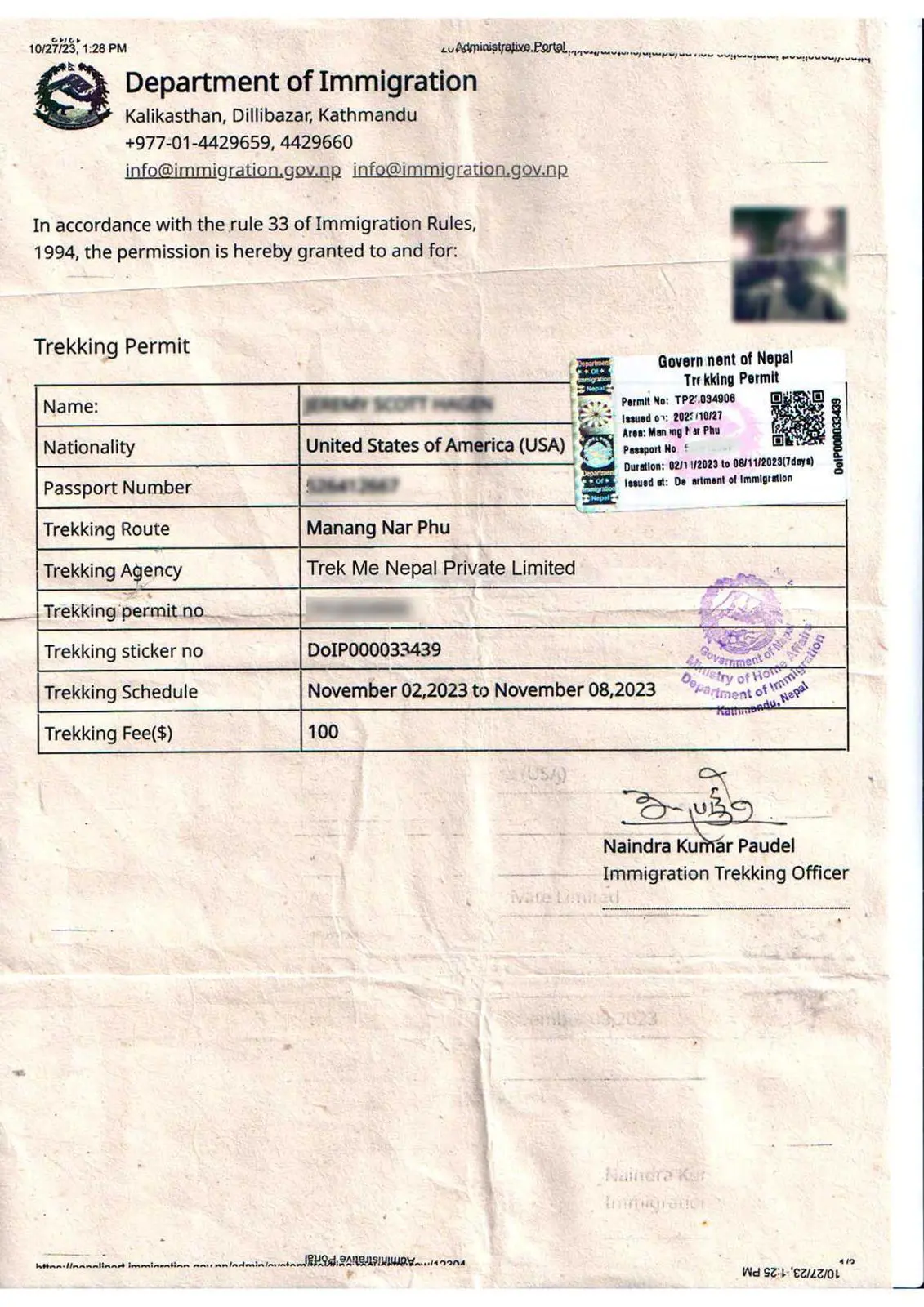
Nar Phu Valley (Special Permit) | 100 (10 days) + 10/day extra | Not Allowed | Mandatory | Restricted area, group only |
Upper Mustang (Special Permit – Revised 2026) | 50/day | Not Allowed | Mandatory | Pay per actual days, group only |
Trekking the Annapurna Circuit is an adventure of a lifetime that requires a passion for hiking and also careful preparation, including the requirement of the necessary permits. Permits are required in the Annapurna region for the assistance of local community development, maintaining safety standards, and to uphold the environment.
They help manage the number of trekkers within the Annapurna Conservation Area, keep an eye on their locations for their security purposes, and support conservation efforts. To start this beautiful and well-known trek, you just need to secure specific permissions, which may be acquired at certain offices in Pokhara or Kathmandu.
The total Annapurna base camp trek cost of these permits differs depending on your nationality and also changes according to the residents of different countries. Here is an overview of all the information you need to obtain the Annapurna Base Camp trek permits.
The Annapurna Circuit Permit is the mandatory certification that allows hikers to access and navigate the Annapurna Conservation Area. There will be an approval that is required to protect the fragile natural balance of the area and to guarantee that hikers follow selected routes and also follow certain safety measures.
Whether you want to take the entire Annapurna Circuit or a shorter path, you must obtain this authorization to enter the Annapurna region. In addition to making the trip legal, it raises funds for social and environmental initiatives, which support the region's sustainable growth.
Permit | Description |
Annapurna Conservation Area Permit (ACAP) | Required for all trekkers to enter the Annapurna Conservation Area. |
Trekkers Information Management System (TIMS) | Required for tracking and safety management on the trail. |
Category | Cost |
Non-SAARC Trekker | NPR 2,000 / USD $17 |
SAARC Trekker | NPR 1,000 / USD $7.50 |
Nationality | Cost |
Foreign Nationals | USD $30 |
SAARC Nationals | USD $5 |
Nepali Citizens | Free |
Trek Type | ACAP Cost | TIMS Solo | TIMS Group | Total Solo | Total Group |
Annapurna Circuit | $30 | $20 | $20 | $50 | $50 |
ABC Trek | $30 | $20 | $20 | $50 | $50 |
Trek Type | ACAP Cost | TIMS Solo | TIMS Group | Total Solo | Total Group |
Annapurna Circuit | $10 | $20 | $20 | $30 | $15 |
ABC Trek | $10 | $20 | $20 | $30 | $15 |
Permit Type | Cost |
ACAP | Free |
TIMS Group | $6 (NPR 600) |
TIMS Solo | Usually not required if with a local guide |
Step-by-Step Guide for Obtaining Annapurna Circuit Permits:
Visit the Permit Office: Apply at the office nearest in Pokhara or Kathmandu.
Complete the paperwork: Prepare copies of passport, passport-sized photos, and insurance info.
Apply in Person: Fill applications for ACAP and TIMS at the office.
Complete Payment: Pay in Nepalese Rupees (NPR – often cash).
Receive Permits: Permits will be issued after document and payment verification.
Office Name | Location |
Nepal Tourism Board (NTB) Office Kathmandu | Bhrikutimandap, Kathmandu |
Trekking Agencies Association of Nepal (TAAN) | Maligaon, Kathmandu |
Nepal Tourism Board (NTB) Pokhara | Damside, Pokhara |
ACAP Office (Annapurna Conservation Area Project) | Lakeside, Pokhara |
Document Type | Required For |
Passport Copies | All permits |
Passport-Sized Photos | TIMS Card |
Travel Insurance Info | Recommended |
Emergency Contact Info | TIMS Card |
The Government of Nepal has officially revised the Upper Mustang Restricted Area Permit (RAP) fee structure.
Instead of the old USD $500 lump-sum permit for 10 days, foreign trekkers now pay USD $50 per day based on the actual number of days they stay in Upper Mustang. This new system adds flexibility and reduces costs, especially for shorter itineraries.
Feature | Old Rule | New Rule (2026) |
Permit Fee | USD $500 flat (10 days) | USD $50 per person, per day |
Minimum Stay | 10 days required | No minimum – pay per actual days spent |
Guide Requirement | Mandatory | Still Mandatory |
Restricted Area Status | Yes | Remains Restricted |
This change was published in the Nepal Gazette and officially communicated to trekking agencies and authorities.
Area | Special Permit Cost | Additional Requirements |
Nar Phu Valley | $100 per person (10 days) + $10/day extra | Group only, guide required |
Upper Mustang | $50 per person per day | Group only, licensed guide required |
Restricted regions require stricter compliance due to cultural and environmental sensitivities.
Feature | Annapurna Circuit | Nar Phu/Upper Mustang |
Permit Cost | ~$50 USD | $100–$500+ (now $50/day for Mustang) |
Solo Trekking | Allowed | Not Allowed without guide |
Guide Requirement | Optional | Mandatory |
Regulations | Standard | Very High |
Getting permits can feel super tricky. Trekking agencies help with:
Completing forms
Providing assistance for TIMS and RAP applications
Arranging licensed guides and itineraries
They also offer emergency support, safety contacts, and local insights to make your trip smoother.
Having a guide is important for safety. Guides are available in Pokhara or Kathmandu and cost around USD 40–50.
You must carry ACAP and TIMS permits at all times. Checkpoints require these documents for verification and failure to present permits may result in fines or penalties.
Trekking in Nepal without permits is illegal and results in fines, deportation, or restrictions on future travel. These measures protect the environment and preserve cultural heritage.
Trekking the Annapurna Circuit is a life-changing experience, but it starts with the right preparation. Securing the Annapurna Conservation Area Permit (ACAP) and TIMS Card is mandatory, ensuring your safety and helping preserve the region’s natural beauty and cultural integrity.
At Trek Me Nepal, we take pride in offering tailored trekking packages that suit every traveler. We handle logistics, permits, accommodation, transport, and guided support so you can focus entirely on the trek.
Check out recent travel trends and news by Trek me Nepal


More Reasons Why Travellers Trust Us







Bipin Thapa Magar
Guide of the Year | Operations Manager & Chief Planner | Trek Me NepalBipin Thapa Magar is a highly experienced trekking and expedition professional with over 20 years in Nepal’s adventure tourism industry. He began his journey in 2004 as a porter and gradually advanced... Read More