






Who We Are


Guide of the Year


Documents


Charity & SR


Latest Posts


Questions & Answers

The Langtang Valley, situated to the north of Kathmandu, is one of Nepal's most accessible and significant trekking regions. It is within this high-altitude landscape, near the settlement of Kyanjin Gompa, that Nepal's first yak cheese factory was established.
Located within Langtang National Park, the valley is characterized by its rugged terrain, glacial rivers, and the towering presence of peaks like Langtang Lirung.
The cheese factory at Kyanjin Gompa is a direct result of this specific environment, utilizing the resources and pastoral practices native to the region to create a product that is intrinsically linked to the place.
| Category | Details |
| Factory Name | Nepal's First Yak Cheese Factory |
| Location | Kyanjin Gompa, Langtang Valley, Nepal |
| Established | 1955 |
| Founding Partners | Government of Nepal & Swiss Agency for Technical Assistance |
| Primary Product | Artisanal Yak Cheese |
| Best Time to Visit | Spring (Mar-May) and Autumn (Sep-Nov) |
| Trek Starting Point | Syabrubesi (7-9 hour drive from Kathmandu) |
| Trek Duration to Factory | 2-3 days from Syabrubesi |
| Key Attraction | Cheese tasting, observing traditional production |
Langtang's fame for yak cheese stems directly from the establishment of this pioneering factory. It was the first of its kind in Nepal, created to process the milk from the herds of yaks that are central to the local economy and way of life.
The yaks (Bos grunniens) are well-adapted to the high-altitude conditions of the Himalayas, thriving in pastures above 3,000 meters where conventional dairy cattle cannot. Their milk is richer in fat and protein compared to cow's milk, which contributes to the distinctive qualities of the cheese produced.
The factory's location in Kyanjin Gompa means it is situated along a primary trekking route, making it accessible to visitors while being centrally located for the local Tamang and Sherpa communities who rely on yak herding. This means the factory is not an isolated attraction but a functional part of the local livelihood.
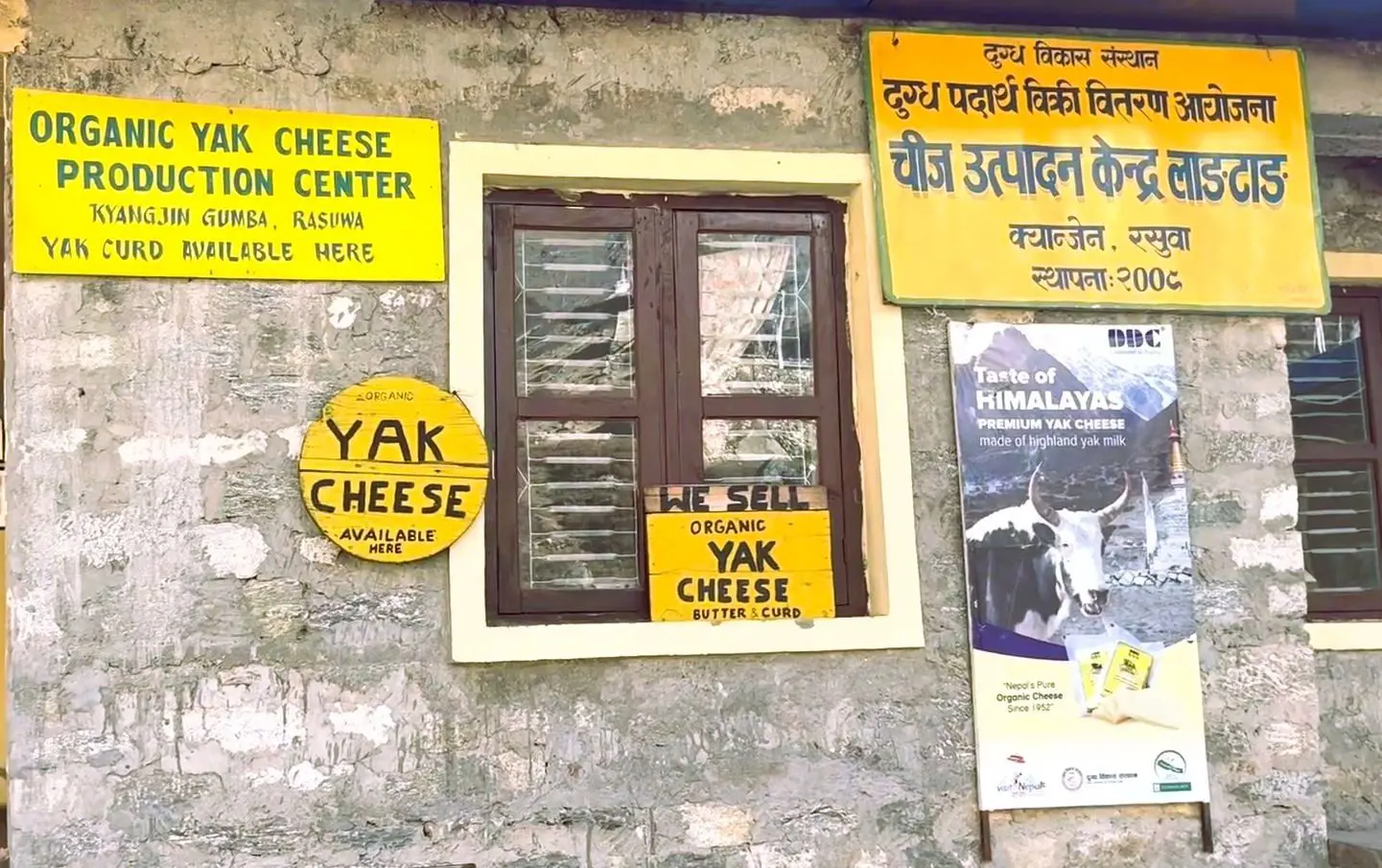
Its presence has made the Langtang Valley synonymous with yak cheese in Nepal, as it was the first place where this traditional dairy product was systematically produced and made available to a wider market, including trekkers.
The cheese produced here is a tangible outcome of the region's specific agro-pastoral system, which combines high-altitude yak herding with milk processing techniques adapted to the Himalayan environment.
The existence of the yak cheese factory in Langtang is the result of a specific historical project. Its establishment was not an accidental development but a deliberate initiative designed to create economic opportunity.
The initiative to establish Nepal's first yak cheese factory in Langtang began in 1955. This project was a direct collaboration between the Government of Nepal and the Swiss Agency for Technical Assistance, which later became the Swiss Development Corporation.
The primary purpose of this collaboration was not solely commercial; it was a developmental project aimed at introducing a sustainable source of income for the high-altitude communities of the Langtang region.
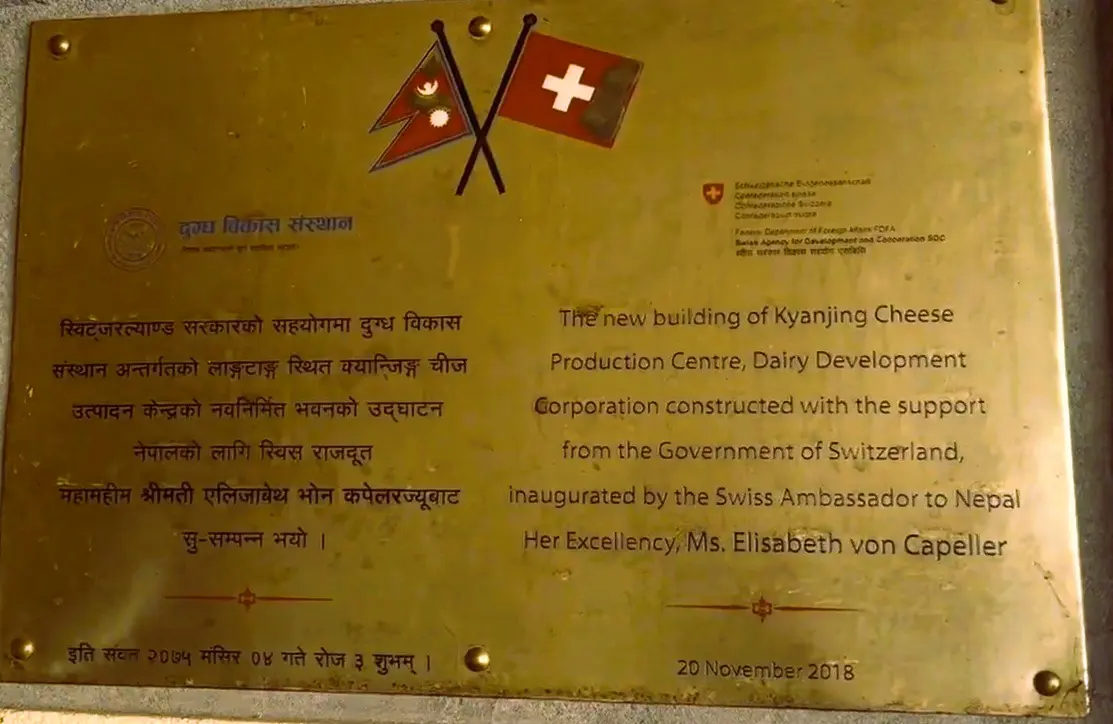
The Swiss involvement was technical and expertise-driven. Swiss experts possessed advanced knowledge in dairy farming and cheese production, particularly in alpine environments similar to the Himalayas.
Their role was to transfer this technology and knowledge to the local Tamang and Sherpa communities.
The objective was to create a local industry that could utilize a readily available resource i.e. yak milk and convert it into a durable, high-value product like cheese.
This would provide a stable economic alternative to traditional subsistence agriculture and trade, thereby uplifting local livelihoods.
The cheese-making process introduced was based on Swiss Alpine cheese-making techniques, adapted to the specific conditions and resources available in Langtang.
The establishment of the cheese factory fundamentally altered the economic structure for the local communities. Prior to its existence, the primary economic activities for the Tamang and Sherpa people in the region were subsistence farming, animal husbandry, and trade with Tibet.
The factory created a new, cash-based market for yak milk, which was previously consumed mostly within households or used to make simple dairy products like butter and chhurpi (a traditional hard cheese).
By providing a centralized collection and production point, it gave herders a reliable outlet for their milk.
The income generated from selling milk and from the wages paid for work at the factory contributed directly to household economies, improving resilience and reducing economic vulnerability.
This initiative is a clear early example of a community-based tourism and production model, where the goal was to support sustainable tourism by giving trekkers a unique local product to purchase, thereby ensuring that the financial benefits of tourism directly reached the local population.
The factory's operation over the decades has been sustained by these communities, making it an integral part of Langtang's social and economic fabric.
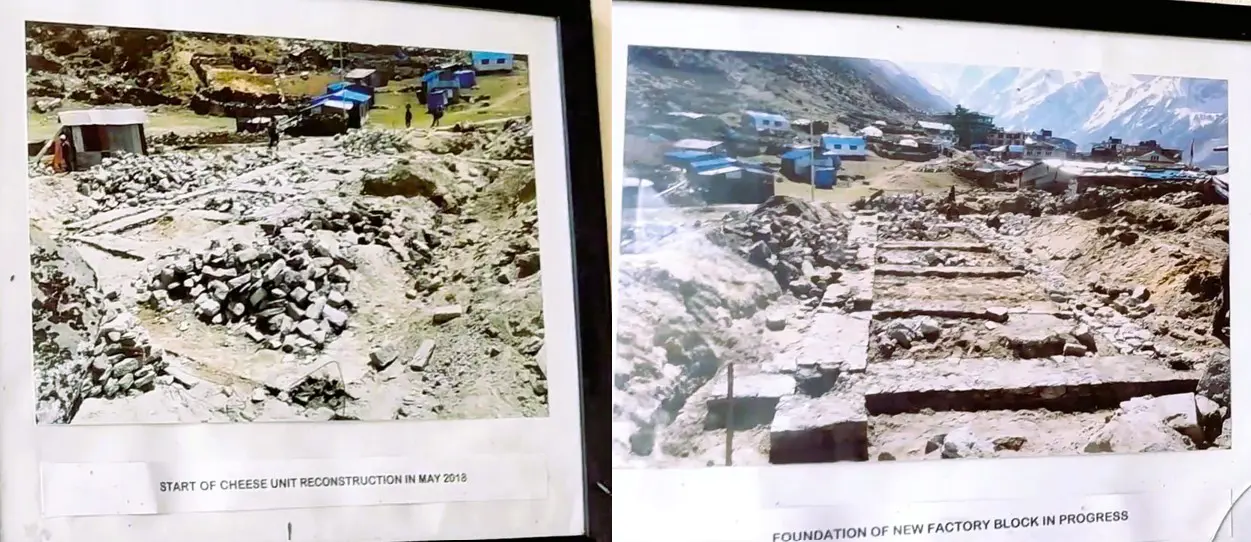
The production of yak cheese begins with the herding and milking of the yaks. The herds are managed by herders from the local Tamang and Sherpa communities, who often take the animals to higher grazing grounds during the summer months.
Milking is a labor-intensive process conducted by hand, usually once a day in the morning. The milking period is seasonal, largely taking place during the warmer months from May to September when the yaks produce more milk after giving birth in the spring.
The milk yield per yak is significantly lower than that of a dairy cow, but the milk is notably richer in fat, protein, and total solids, which is a key factor in the quality of the final cheese.
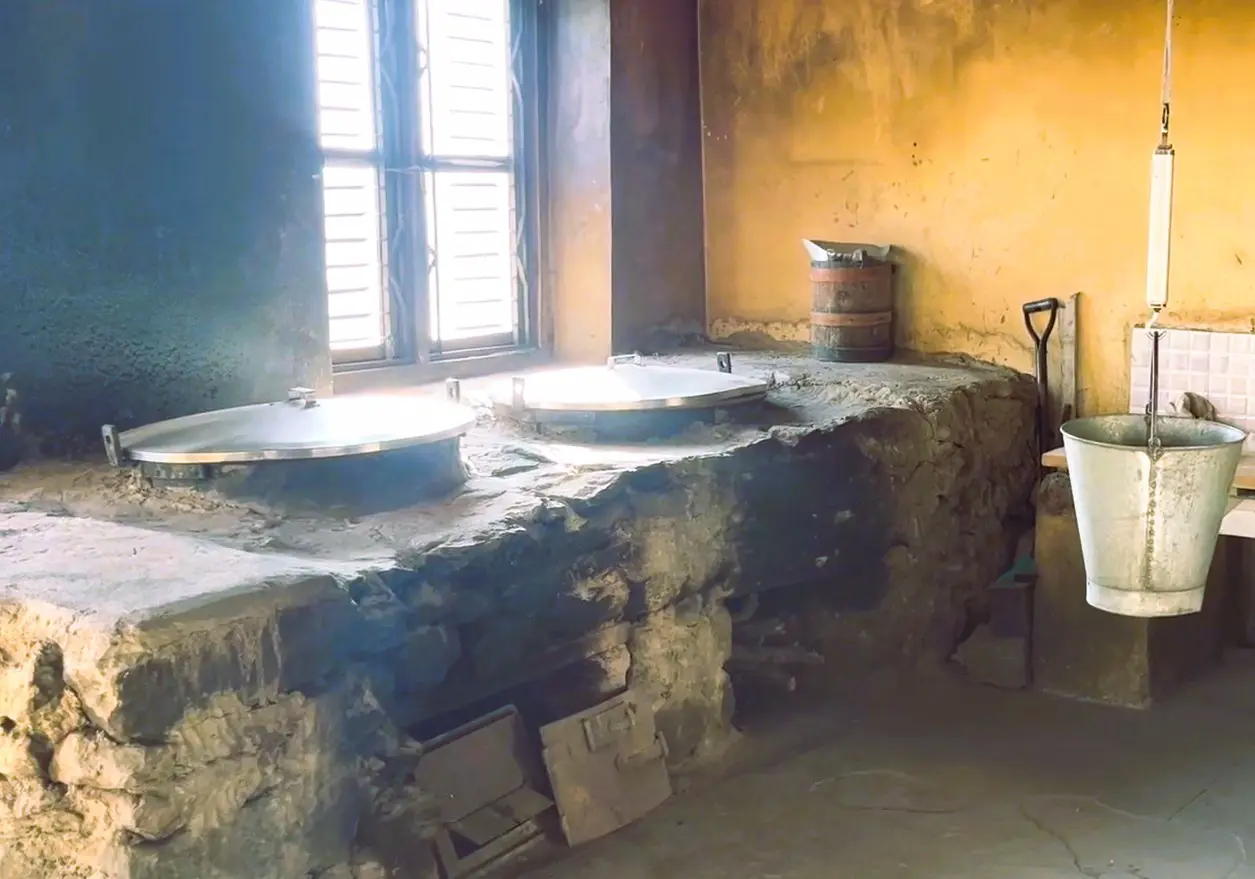
Once collected, the fresh yak milk is transported to the cheese factory in Kyanjin Gompa. The cheese-making process follows traditional methods adapted for the high-altitude conditions.
The milk is first warmed in large vats. A starter culture, often a natural culture maintained from previous batches, is added to begin the fermentation process.
Rennet, an enzyme that causes the milk to coagulate, is then introduced. After the milk has set into a solid curd, it is cut into small pieces to separate the curds from the liquid whey.
The curds are then pressed into molds to form the characteristic wheels of cheese and to expel additional whey. The final and most critical stage is aging, also known as affinage.
The cheese wheels are stored in cold, humid stone huts or storage rooms for a period that can range from several months to over a year. During this aging process, the cheese develops its firm texture, complex flavor, and natural rind.
There are distinct differences between cheese made from yak milk and cheese made from cow milk, stemming from the composition of the milk itself.
Yak milk contains a higher proportion of fat and protein compared to cow milk. This results in a cheese that is generally richer and denser.
In terms of taste, yak cheese has a pronounced, robust, and slightly tangy flavor profile. It is often described as earthier and more aromatic than standard cow milk cheese.
The texture is typically firm and can be slightly crumbly, especially when aged for a longer duration.
Nutritionally, due to the higher solid content of the milk, yak cheese is rich in protein and fatty acids. It also contains important minerals like calcium and phosphorus.
The specific grazing diet of yaks on wild Himalayan herbs and grasses may also influence the fatty acid composition and nutritional properties of the milk and cheese, contributing to its unique characteristics.
The yak cheese factory in Langtang is fundamentally integrated into the local economy of the Tamang and Sherpa communities. For these communities, yak herding is a traditional practice that predates the factory.
However, the establishment of the factory created a stable and reliable market for a key product: yak milk.
Before the factory, milk was primarily used for household consumption or to make basic dairy products like butter and chhurpi (a hardened cheese snack).
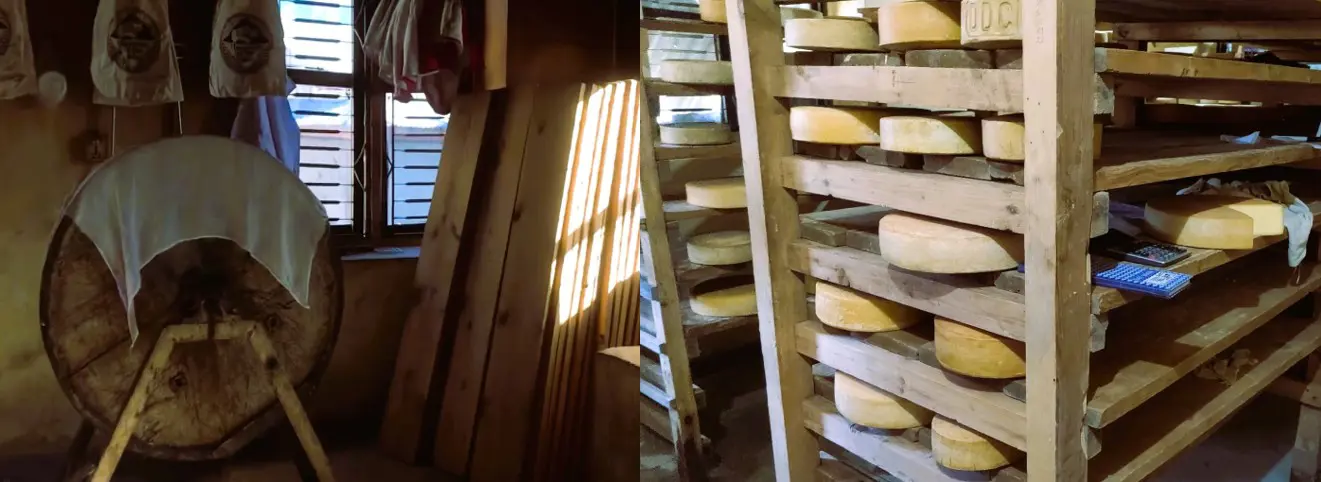
The factory provided a system where herders could sell their milk regularly, generating a consistent cash income. This cash infusion supports household expenses, including education, healthcare, and supplies that cannot be produced locally.
Furthermore, the factory provides direct employment for locals in roles related to cheese production, management, and sales. This economic model has helped to sustain the population in the high-altitude regions of Langtang, providing a viable alternative to seasonal migration for work and reinforcing the value of traditional pastoralism.
The cheese factory operates as a core component of a community-based tourism and economic model. It represents a form of eco-tourism by utilizing a local renewable resource (yak milk) through a low-impact production process and creating a unique cultural product for the trekking market.
The factory's presence adds a significant cultural and experiential dimension to the Langtang Valley trek, encouraging trekkers to visit and learn about local traditions.
When visitors purchase yak cheese directly from the factory or from local lodges, the revenue remains within the community, supporting the factory and the herders who supply it.
This creates a circular economy that is less dependent on imported goods. The model demonstrates how tourism can be structured to directly benefit local inhabitants, ensuring that the economic benefits of trekking are distributed more broadly.
It helps preserve the cultural heritage of yak herding and cheese making by making these traditions economically sustainable in the modern context.
The continued operation of the factory relies on the health of the local ecosystem, which incentivizes community-led conservation efforts within the Langtang National Park region.
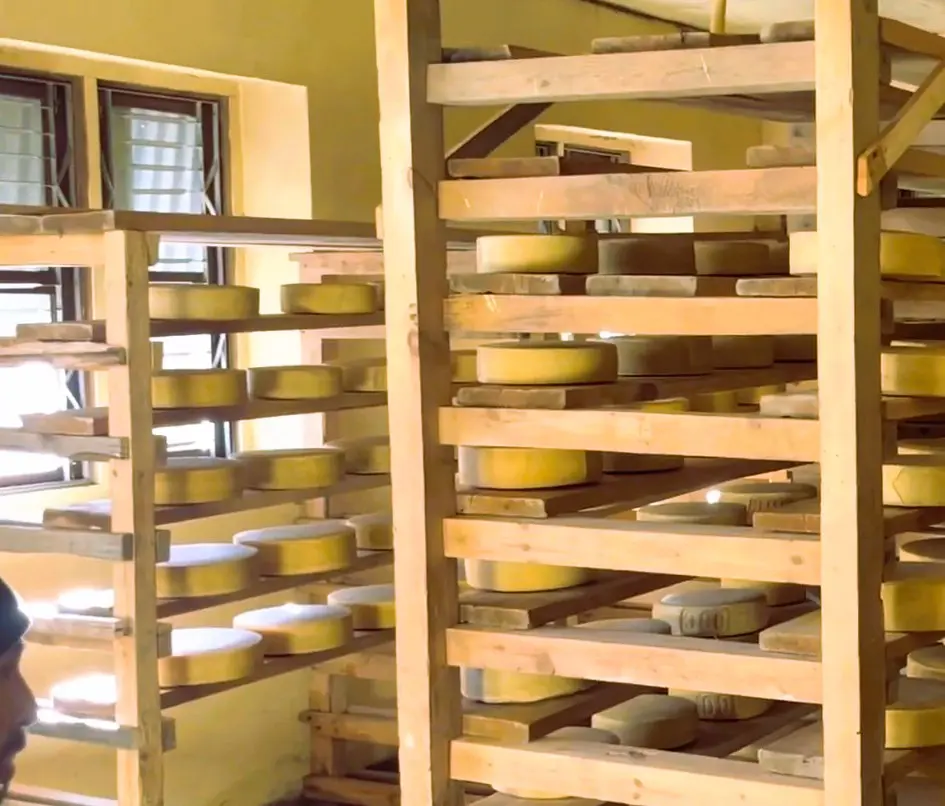
The yak cheese factory is located in the settlement of Kyanjin Gompa (also spelled Kyangjin Gompa) within the Langtang Valley, Langtang National Park, Rasuwa District, Nepal.
Kyanjin Gompa is situated at an altitude of approximately 3,870 meters (12,700 feet). It is one of the primary destinations and an overnight stop for trekkers on the Langtang Valley trek.
For more details on the Kyanjin Gompa, check out our blog here.
Reaching the factory requires completing the Langtang Valley trek. The journey begins with a drive from Kathmandu to Syabrubesi, which is the starting point of the trek. The drive typically takes between 7 to 9 hours.
From Syabrubesi, the trek to Kyanjin Gompa is a multi-day journey, usually taking 2-3 days of walking to ascend. The trail passes through forests and villages like Lama Hotel and Langtang Village before reaching the high-altitude basin where Kyanjin Gompa is located.
The cheese factory is located near the famous Kyanjin Gompa monastery and the cluster of lodges and teahouses.
For trekkers, a visit to the factory offers a practical insight into the local economy and production methods. The factory is a functional facility, not a purpose-built tourist attraction.
Visitors can typically observe the cheese-making process, which includes the large vats for warming milk, the molds for shaping the cheese, and the storage rooms where the cheese wheels are aged.
The experience is observational and educational, providing context to the cultural and economic significance of the product.
A key activity for visitors is the opportunity to taste and purchase the yak cheese directly from the source. The factory, and often the nearby lodges, sell portions of the finished cheese.
Tasting allows trekkers to experience the specific flavor and texture of the authentic product, which is denser and has a more robust, tangier profile than common cow's milk cheese.
Purchasing the cheese here ensures that the financial transaction directly supports the factory and the local herding communities that supply it.
The cheese is a durable product, making it a practical and valuable souvenir or a source of high-energy nutrition for the remainder of a trek.
Kyanjin Ri is a peak directly above the settlement of Kyanjin Gompa, with a summit reaching approximately 4,773 meters (15,659 feet). The ascent from Kyanjin Gompa is a common half-day or full-day hike for acclimatization and sightseeing.
The trail is a steep climb but does not require technical climbing equipment, making it accessible to most trekkers.
The primary reason for the climb is the comprehensive panoramic view from the summit. From this vantage point, it is possible to see a near 360-degree view of the surrounding Himalayas.
This includes a direct view of Langtang Lirung (7,234 meters) to the north, as well as other significant peaks such as Dorje Lakpa, Changbu, and Yala Peak.
The viewpoint also provides a perspective looking back down the Langtang Valley.
The Langtang Lirung Glacier is a major glacier system flowing from the summit and faces of Langtang Lirung. This glacier is visibly accessible from several points around Kyanjin Gompa, including the trail to Kyanjin Ri.
It appears as a large river of ice and rock debris descending from the high peaks.
Trekkers can observe the glacier's terminal moraine, the accumulation of rock and soil at its end, and its lateral moraines along its sides. For those on a longer itinerary, a day hike from Kyanjin Gompa brings you closer to the glacier's snout.
This offers a direct view of the ice and the meltwater streams that originate from it, which are part of the headwaters of the Trishuli River system.
The modern Langtang Village is located further down the valley from Kyanjin Gompa, approximately a day's walk away. The original Langtang Village was destroyed during the 2015 earthquake and subsequent avalanche. The village has been rebuilt in a new, safer location.
The culture in this area is predominantly influenced by the Tamang people, with Tibetan Buddhism as the central religion.
This cultural heritage is visible in the architecture of the homes and lodges, which often feature intricate woodwork, and in the mani walls, long stone structures carved with Buddhist prayers and mantras, that line the trails.
The Gompa (monastery) in Kyanjin Gompa itself is a central religious site for the local community. The cultural experience for trekkers involves observing these architectural elements, the daily life of the people, and the pastoral practices centered around yak and sheep herding.
Yak cheese from Langtang has a distinct flavor profile that differentiates it from common cow's milk cheese. Its taste is robust, tangy, and notably earthy.
The flavor intensity is influenced by the aging process; cheese aged for several months develops a sharper, more complex taste and a firmer, sometimes crumbly texture, while younger cheese is milder and more pliable.
This specific taste is a direct result of the yaks' diet, which consists of wild herbs, grasses, and shrubs found in the high Himalayan pastures, as well as the unique composition of the milk itself.
Yak cheese is considered a delicacy in Nepal due to its specific production constraints and unique characteristics. Its status is defined by several factors.
First, its production is seasonal and limited to the months when yaks produce milk, primarily from late spring to early autumn.
Second, the milk yield per yak is low, and the collection process in remote pastures is logistically challenging, limiting the total quantity of cheese that can be produced.
Third, the cheese is an authentic, artisanal product made using traditional methods without large-scale industrial processing.
For foreign visitors, it can be compared to aged, hard cheeses like a mature Gouda or a Pecorino in terms of its firm texture and savory depth, though its distinct earthy and tangy notes are unique.
ts high protein and fat content also make it a valuable, nutrient-dense food source, historically important for sustaining people in a demanding climate.
As a culinary experience, tasting this cheese in Langtang provides an authentic sample of a traditional Himalayan food product that is intrinsically linked to its place of origin.
The optimal time to visit the Langtang Valley and the cheese factory at Kyanjin Gompa is during two primary seasons: spring (March to May) and autumn (late September to November).
During these periods, the weather is generally stable, with clear skies and minimal rainfall, providing the best conditions for trekking and mountain views. The temperatures are moderate during the day, though nights at high altitude remain cold.
The spring season offers the additional advantage of blooming rhododendron forests along the trail. The monsoon season (June to early September) brings heavy rainfall, which can cause landslides, make trails muddy and slippery, and obscure mountain views with clouds.
The winter (December to February) is characterized by very cold temperatures and snow at higher elevations, including Kyanjin Gompa, which can make the high passes dangerous and close some trails.
The cheese factory's production cycle is also seasonal, with the most active production typically occurring from May to September when yak milk is most available, though aged cheese is available for purchase year-round.
For more information on Best Time to visit Langtang and Seasonal Trekking Tips, check out our blog here.
The standard and most direct route to reach the cheese factory in Kyanjin Gompa is the Langtang Valley trek.
The typical itinerary is as follows: The journey begins with a drive from Kathmandu to Syabrubesi, which serves as the trek's starting point. From Syabrubesi, the trek proceeds uphill, usually taking 2-3 days to reach Kyanjin Gompa.
Common overnight stops on the ascent include Lama Hotel and Langtang Village.
A full itinerary typically allocates 7 to 10 days for a round trip from Kathmandu to Kyanjin Gompa and back, allowing for adequate acclimatization, including a rest day in Kyanjin Gompa for side excursions to Kyanjin Ri or the Langtang Lirung glacier.
This route is a straightforward out-and-back trek, with the cheese factory being a key point of interest at the destination in Kyanjin Gompa.
The yak cheese factory in Kyanjin Gompa stands as a significant example of a long-term, community-integrated enterprise. Its existence, since 1955, demonstrates a model where a traditional pastoral practice was successfully integrated into a modern economic framework.
The factory's primary achievement is its role in providing a stable, cash-based income source for the local Tamang and Sherpa communities by creating a market for yak milk and providing employment.
This economic activity supports livelihoods in a high-altitude region where economic alternatives are limited.
Furthermore, the factory operates as a core component of sustainable tourism in the Langtang Valley. It adds a unique cultural and educational dimension to the trekking experience, moving beyond purely scenic enjoyment.
The revenue generated from visitors who purchase cheese or learn about the production process flows directly back into the local economy, reinforcing a cycle of community benefit.
This model helps to validate and preserve the traditional knowledge of yak herding and cheese-making by demonstrating its continued economic and cultural relevance.
Visiting the Langtang Valley and its cheese factory provides a direct understanding of this integrated system of culture, economy, and environment. To undertake this journey book a trip with Trek Me Nepal!
We will arrange the logistical requirements for the trek, including securing the necessary permits for Langtang National Park and TIMS, arranging transportation from Kathmandu, providing trained guides familiar with the route and altitude considerations, and organizing accommodation and meals. This allows you to focus on the experience of the trek and the destination.
Book your Langtang Region trek, which includes the Yak Cheese Factory, through Trek Me Nepal. We offer three primary package options: Langtang Valley 11 Days Trek, Tamang Heritage with Langtang Valley 14 Days Trek and Langtang-Gosaikunda Lauribina Pass 16 Days Trek.
We can also customise the treks according to your requirements. All bookings include guide services, permits, accommodation, and meals as specified in the chosen itinerary.
Trek Me Nepal Archives
Check out recent travel trends and news by Trek me Nepal


More Reasons Why Travellers Trust Us






Anweiti Upadhyay
Travel Content Writer
Upadhyay is a writer and journalist with a background in law, economics, and culture. Having worked with leading news portals in Nepal, she has an eye for detail and a curiosity about the world.As the... Read More