




Who We Are


Guide of the Year


Documents


Charity & SR


Latest Posts


Questions & Answers

Admin
Ghandruk village is a traditional Gurung settlement located in the Annapurna region of Nepal. This Ghandruk village is a key destination for those interested in Himalayan landscapes and local ethnic communities.
Trekkers visit Ghandruk Nepal for its position on major trails like the Annapurna Base Camp trek and Ghorepani-Poon Hill trek, where they can experience short hikes with mountain scenery.
Travelers searching for cultural experiences appreciate the authentic insights into Gurung traditions, including visits to museums that display historical tools, clothing, and artifacts related to their heritage and Gurkha military history.
The village's serene setting, with forests and biodiversity, makes it suitable for a relaxing stay, often as a weekend getaway from nearby urban areas.
| Aspect | Key Details |
| Location | Kaski District, Gandaki Province, Annapurna Conservation Area, Western Nepal. ~32-61 km NW of Pokhara. |
| Altitude | 1,940-2,012 meters (6,364-6,601 ft). Low risk of altitude sickness. |
| Best Time to Visit | Spring (Mar-May) and Autumn (Sep-Nov) for clear skies, stable weather, and best views. |
| Cultural Identity | Traditional Gurung settlement with over 200 years of history. Strong Gurkha military heritage. |
| Main Attractions | Panoramic views of Annapurna South, Machhapuchhre (Fishtail), Hiunchuli, Gangapurna; traditional stone houses; terraced fields; rhododendron forests. |
| Top Viewpoints | Komrong Danda, Deurali, Tea House Ridge, Western Edge Sunset Point, Australian Camp (sunrise). |
| Popular Treks | Ghandruk Short Trek (2-3 days from Pokhara). Connections to Chhomrong (5-6 hrs), Tadapani (4 hrs), and Ghorepani-Poon Hill circuit. |
| Transport from Pokhara | Jeep (Shared): 3-4 hrs, 600-850 NPR/person. Jeep (Private): 3-4 hrs, 5,000-10,000 NPR/vehicle. Bus: 3-5 hrs, 400-600 NPR/person. Trekking: Drive to Nayapul/Kimche + 4-6 hr or 1-2 hr hike. |
| Permits Required | ACAP Permit (Annapurna Conservation Area Permit): ~3,000 NPR for foreigners, ~1,000 NPR for SAARC nationals. TIMS card not required if trekking with a licensed guide. |
| Accommodation & Food | Teahouses & homestays ($10–30/night). Local meals (dal bhat, momos, gundruk soup) cost $15–25/day. |
| Estimated Daily Budget | $40–80 USD per person (independent travel, excluding souvenirs). |
| Packing Essentials | Trekking shoes, layered clothing, rain gear, sun protection, water bottle, cash (NPR), power bank, warm hat/gloves. |
| Unique Experience | Homestays with Gurung families, cultural performances, visits to Gurung Museum, participation in local festivals (Losar, Dashain, Tihar). |
| Why Visit | Perfect blend of accessible Himalayan scenery, rich Gurung culture, and beginner-friendly trekking. Ideal for families, first-time trekkers, and cultural travelers. |
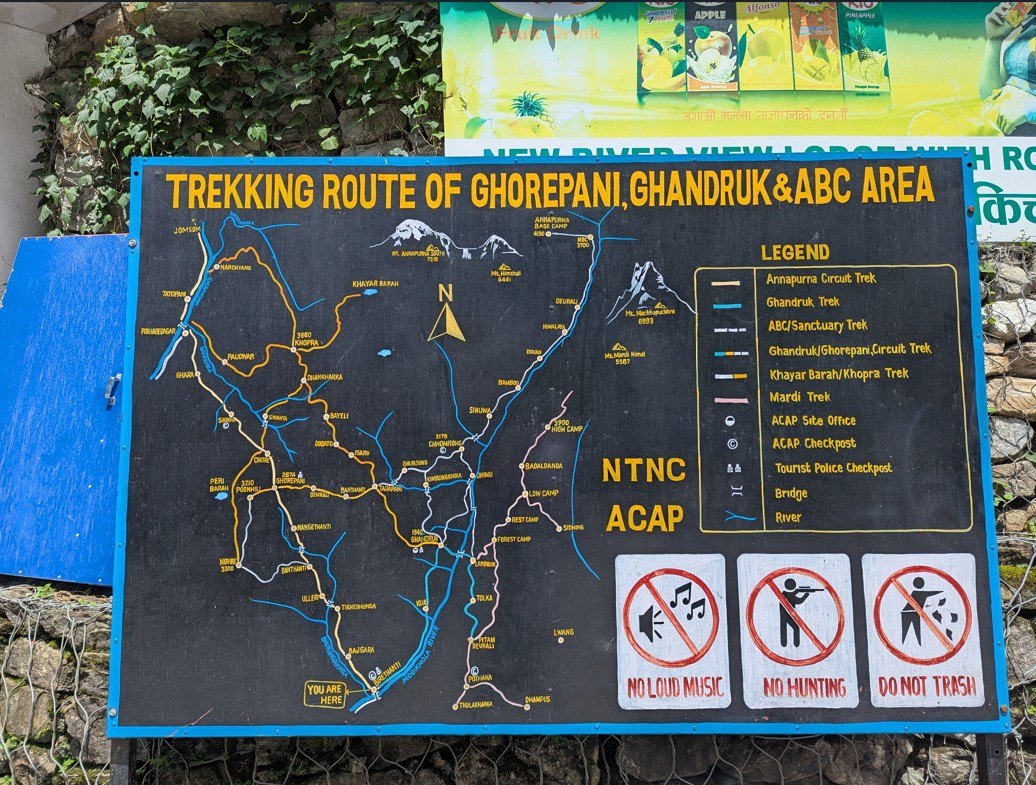 Where Is Ghandruk Village Located?
Ghandruk Village is in Kaski district, Gandaki Province, within the Annapurna Conservation Area in western Nepal. It lies approximately 32 to 61 kilometers northwest of Pokhara, the nearest major city, with a drive taking 3 to 5 hours depending on road conditions.
The village is positioned just south of the Annapurna range, offering direct views of peaks such as Annapurna South, Hiunchuli, Machhapuchhre (Fishtail), and Gangapurna.
Ghandruk's altitude is about 1,940 meters (6,364 feet) above sea level, which is low enough to minimize risks of altitude sickness for most visitors.
Nearby villages include Ghorepani to the north, Tadapani along trekking routes, Landruk to the west, Dhampus, and Birethanti closer to the trailheads from Pokhara.
Ghandruk's distance from Pokhara makes it accessible by road or foot, with trails passing through areas like rhododendron forests and river valleys.
For reference, Ghandruk in Kaski district is part of the broader Gandaki Province, which encompasses much of the Annapurna foothills.
Ghandruk Village is an old settlement in Nepal. The history of Ghandruk village dates back over 200 years, with origins linked to the Gurung people who may have migrated from Mongolian areas via Tibet.
It started as a key stop on ancient trading routes between Nepal and Tibet, and the name Ghandruk comes from Nepali words "ghana" meaning dense or compact, and "rukh" meaning tree, possibly referring to dense vegetation or a large tree near the founding site.
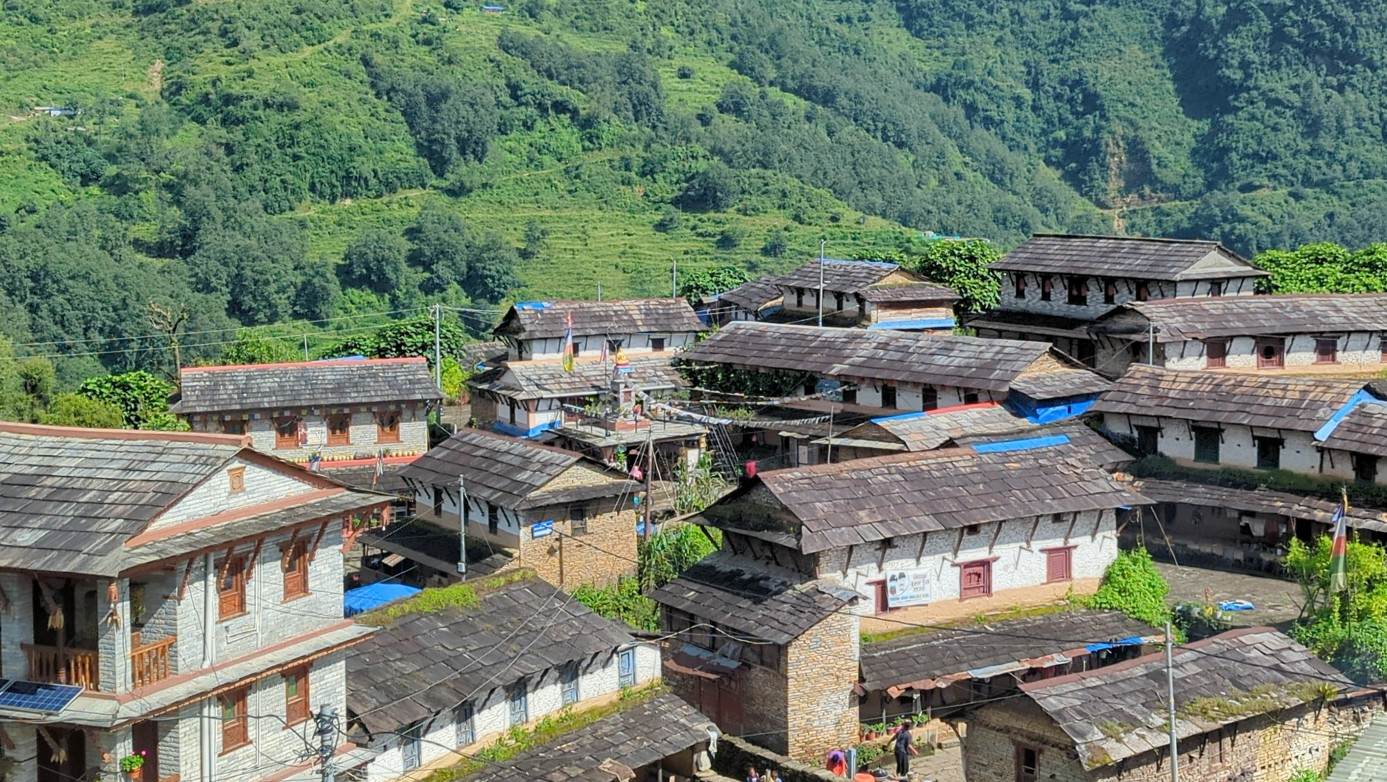
The village consists of several small sections, including Kotgaun, Majhgaun, Tallogaun, Dandagaun, and others, with around 1,200 homes and a population of about 5,316 residents people as per the 2021 census.
Traditional structures include stone-built houses over 200 years old, divided into areas like Old Ghandruk (Purano Ghandruk) with preserved layouts for sunlight and yards, and New Ghandruk with more modern additions.
In the 1970s and 1990s, Ghandruk developed as a trekking hub in the Annapurna region, becoming part of the Annapurna Conservation Area for ecological and cultural protection.
Road access from Pokhara was added in recent years, boosting tourism while maintaining its role as a base for routes like Annapurna Base Camp and Poon Hill.
Ghandruk village is home to the Gurung community, an indigenous group known for its distinct customs and village lifestyle. Gurung culture includes a Tibeto-Burman language called Tamukwyi and religious practices blending Bon and Buddhism, with roles for lamas, dhami, and jhankri as priests and healers.
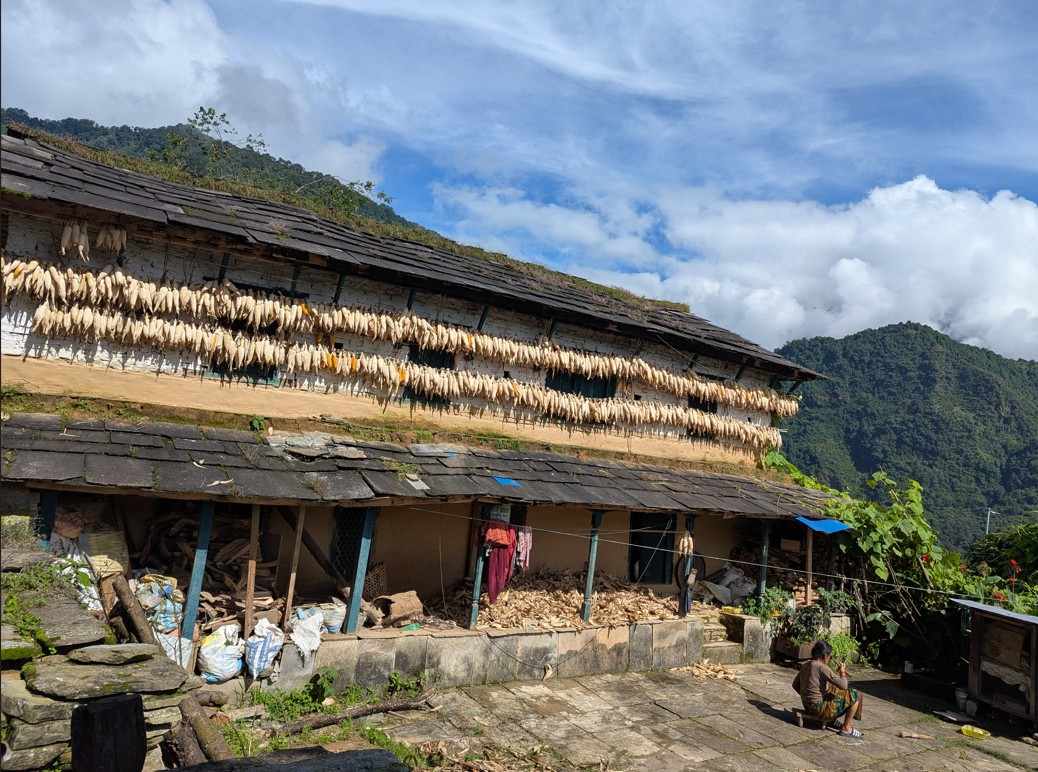
Traditional Gurung houses are rectangular, two-storied structures made of stone slabs, timber, and mud, with slate roofs and carved wooden windows and doors.
Men wear attire such as bhangra (vest), kachhad (trousers), bhoto (shirt), black vaadgaaule topi (hat), istakot (coat), khukhuri (knife), and sikagapuri belt.
Women wear velveteen or cotton blouses, saris in dark reddish tones, lungi mugiya, jari, makhmali cholo, patuka (waistband), ghalek (shawl), majetro, white pachari, tikis, jantar, kanthasri, and nugedi jewelry.
Daily life focuses on agriculture, with terraced fields growing rice, maize, millet, vegetables, buckwheat, potatoes, and green tea, plus sheep breeding and poultry. Craftsmanship involves women weaving textiles on traditional looms for woolen garments and intricate patterns.
Music uses instruments like flute, dhumpu, dhyangro, girling, jhurma, sankha, karnaal, damai baja, and maadal. Dances such as ghatu (performed by virgin girls in spring), kauda, and salaijo are performed during festivals and celebrations.
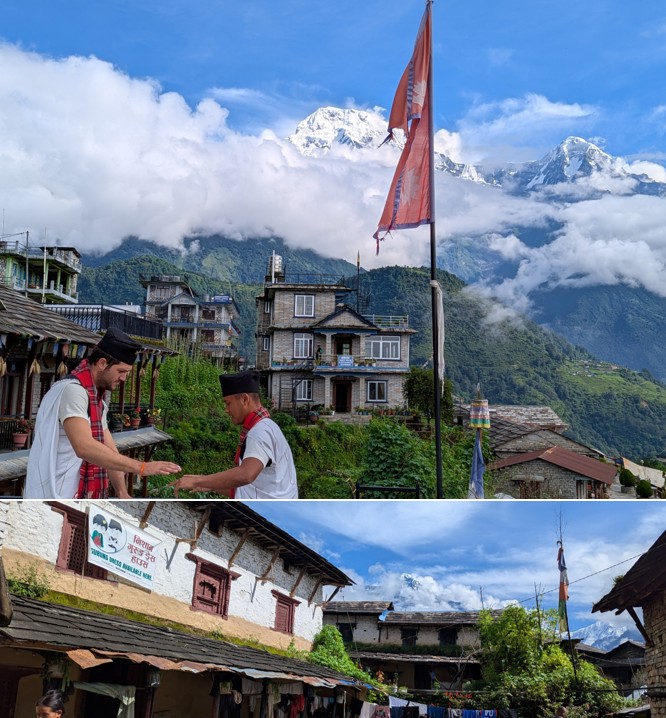
Some major festivals include Losar (Gurung New Year in February), Dashain and Tihar in autumn, celebrated with music, rituals, and community events.
The Gurung Museum Ghandruk and Old Gurung Museum display artifacts, costumes, tools, weapons, jewelry, utensils, and tableaux of daily life in a 200-year-old cottage.
Today, locals live through a mix of farming, tourism via homestays and teahouses, and remittances, with hospitality allowing visitors to join cooking sessions for dishes like dal bhat (rice with lentils, vegetables, and curry), dhido (flour-based food), gundruk soup (fermented greens), momos, noodles, soups, and millet-based drinks.
Ghandruk village lifestyle remains simple and connected to nature, with activities like birdwatching, nature walks in rhododendron forests, and cultural programs.
Ghandruk has a strong Gurkha history tied to the Gurung people, who form a large part of Nepal's Gurkha regiments in the British Army, Indian Army, Singapore Army, Nepali Army, and police forces.
Many families in Ghandruk have at least one member who has served, with locals earning decorations for valor in conflicts. This military tradition dates back generations, building a reputation for bravery and resilience among Gurungs.
The connection has influenced village development through remittances, which support agriculture, education, and infrastructure alongside tourism.
Pensions from service have improved living standards and access to schooling, though limited facilities lead some to study in cities like Pokhara or Kathmandu.
The Gurung Museum Ghandruk includes displays on Gurkha-related weapons, ornaments, and history, highlighting how this service shapes community identity and economic stability.
Trekkers can see clear sights of several Himalayan peaks from the village. Key peaks visible are Annapurna South view at 7,219 meters, Hiunchuli view from Ghandruk at 6,441 meters, Machhapuchhre view at 6,993 meters (also known as Fishtail Peak), Gangapurna at 7,455 meters, Annapurna III, and in some areas, Annapurna I at 8,091 meters and Dhaulagiri.
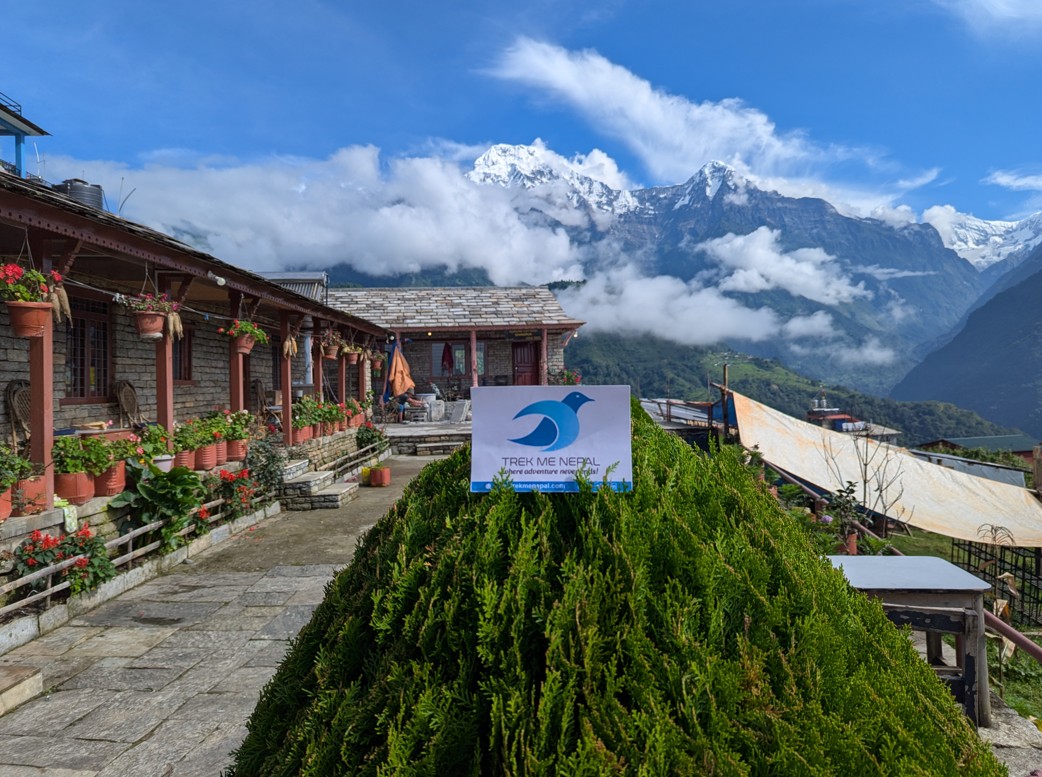
Visitors can see golden, pink, and orange colors on the snow during sunrise, while Ghandruk sunset views show the mountains in reddish, purple, and golden tones as the light fades over the valleys.
These moments are visible during clear weather in spring (March to May) and autumn (September to November), when skies are stable, and visibility is high.
Photographers value these views for the color changes and panoramic compositions that capture the peaks with village elements like houses and fields.
| Name | Location/Access | Key Features | Best For and Notes |
| Komrong Danda Viewpoint | Accessible via trails from the village. | Surrounding valleys, Annapurna South, Machhapuchhre, forested slopes. | Observing landscape depth, afternoon light, and seasonal changes. |
| Gurung Museum Ghandruk | Located within the village. | Cultural artifacts and exhibits. Himalayan backdrop visible from its setting. | Cultural insight combined with natural views. |
| Traditional Stone Streets | Wind through Ghandruk village. | Slate-roofed houses (200+ years old), terraced fields, prayer flags. | Walking, immersing in traditional village architecture and daily life. |
| Meshrom Baraha Temple | ~1 hour uphill hike from village. | Mountain views, villages, farmlands, trails, dense forests. | A cultural-spiritual site with rewarding panoramic vistas. |
| Deurali Viewpoint | On a ridge. | Panoramic views of valleys and peaks. | Broad, sweeping panoramas of the region. |
| Upper Ghandruk Ridge Viewpoint | On a ridge above the village. | Overview of Modi Khola valley, seasonal landscapes. | Understanding the layout of the valley and seasonal colors. |
| Terrace Fields Overlook | Along pathways in/around the village. | Patterned terraced fields in greens, golds, and browns. | Seeing the agricultural artistry and its harmony with nature. |
| Tea House Ridge Viewpoint | Near village lodges/tea houses. | Sharp, clear sights of Machhapuchhre (Fishtail Mountain). | Iconic, close-up mountain photography from a convenient location. |
| Western Edge Sunset Viewpoint | By guesthouses on the western edge. | Evening colors on the mountain peaks. | Spectacular sunset views over the Himalayas. |
| Australian Camp Viewpoint | ~30 min walk from Ghandruk area. | Stunning Himalayan sunrise vistas. | A dedicated spot for iconic sunrise panoramas. |
| General Exploration on Foot | Throughout the village and trails. | Integration of forests, waterfalls, wildlife, terraced fields, rhododendrons, and village architecture. Details like bird species and stream sounds. | Slow travel, noticing ecological and cultural details, immersive experience. |
| Ghandruk Village Photography | Best photo spots are the viewpoints listed above. | Mountains, traditional alleys, daily life, terraced fields. | Capturing the essence of Ghandruk in clear weather conditions. |
| Route | Duration (Hours) | Distance (Km) | Difficulty | Key Features and Highlightd |
| Ghandruk to Chhomrong | 5 to 6 hrs | 8 to 10 km | Moderate | Descent to Modi Khola river, suspension bridge, steep uphill on stone staircases. Valley & river views. Access to Jhinu Danda hot springs. Part of ABC trek. |
| Ghandruk to Tadapani | ~4 hrs | 8 to 9 km | Moderate | Uphill through rhododendron & oak forests. Scenic forest walks, mountain glimpses, scattered villages & terraced fields. Link in Poon Hill circuit. |
| Ghorepani to Ghandruk (via Tadapani) | 5 to 7 hrs | 10 to 14 km | Moderate | Descent from Ghorepani (after Poon Hill sunrise) through dense forests. Rhododendron blooms in spring, birdwatching, open Annapurna range views. |
| Ghandruk to Landruk | 2 to 3 hrs (one way) | Not specified | Easy | Descent to Modi Khola, suspension bridge crossing. Cultural interactions in Landruk village. Can be done as a loop. |
The Ghandruk is a short trek from Pokhara, typically completed in 2 to 3 days, making it suitable for beginner trekkers, families, and those with limited time. It features easy to moderate difficulty, with well-marked trails, stone-paved paths, and regular teahouses for rest.
The maximum elevation is around 1,940 to 2,012 meters (6,364 to 6,600 feet), which keeps the risk of altitude sickness very low and requires only average fitness for the ups and downs.
Access starts with a drive from Pokhara to trailheads like Nayapul, Kimche, or Phedi (1.5 to 2 hours by jeep or bus), followed by a trek of 4 to 5 hours (or 1 to 2 hours from Kimche) to Ghandruk village.
The Ghandruk trekking rewards include panoramic Annapurna range views (such as Annapurna South, Hiunchuli, Machhapuchhre, and Gangapurna), rhododendron forests, terraced fields, Modi Khola river crossings, and direct exposure to Gurung culture through village exploration and homestays.
It is also an entry point to longer routes like the Annapurna Base Camp trek while remaining manageable for novices.
Here are some of the most common trekking routes connected to Ghandruk, with practical details on time, distance, and highlights:
These routes connect to larger treks in the Annapurna region and can be adjusted for time and fitness.
Ghandruk offers several short village walks and side trips ideal for beginners who want low-effort exploration. A Ghandruk village walk involves strolling the traditional stone-paved streets, visiting the Gurung Museum to see artifacts and traditional costumes, and exploring old sections with stone houses.
These walks take 1 to 2 hours and allow time to observe daily life, terraced fields, and mountain views from ridges.
The Ghandruk Landruk trek is a descent to Landruk village (about 2 to 3 hours one way), crossing the Modi Khola on a suspension bridge, with options for a loop back to Ghandruk.
This provides cultural interactions such as meeting Gurung locals, joining homestay activities, or attending community cultural shows.
Other side trips include a short hike to Jhinu Danda (about 2 hours) for hot springs and river views, or to viewpoints like Komrong Danda for valley panoramas. These options encourage slow-paced activities with chances to talk with residents, learn about farming, or visit local sites without long commitments.
| Option | Vehicle Type | Details and Route | Travel Time | Approx. Cost | Notes |
| Jeep (Shared) | Shared 4WD | • Departs when full, often in the morning. • Paved road to Nayapul/Syauli Bazaar, then rough, unpaved, bumpy tracks uphill. • May stop short (e.g., Kimche, Bikash Danda) due to roadwork, requiring a 15-30 min walk to village center. | 3 - 4 hours | 600 - 850 NPR per person | Most common motorized option. Less flexible but cost-effective. Prepare for a bumpy ride and possible short walk. |
| Jeep (Private) | Private 4WD | • Can be hired for flexibility in timing. • Follows same route as shared jeep with same road conditions and potential stop points. | 3 - 4 hours | 5,000 - 10,000 NPR (for the whole vehicle, one-way) | Best for groups or those preferring direct, private transport. Price is per vehicle, not per person. |
| Local Bus | Public Bus | • Follows similar route with more frequent stops. • Less comfortable, especially on rough off-road sections. | 3 - 5 hours | 400 - 600 NPR per person | Cheapest option. Expect basic amenities and possible crowding. Travel time can be less predictable. |
| Trekking (Via Nayapul) | Jeep/Bus + Hike | • Drive: ~1.5-2 hrs from Pokhara to the trailhead at Nayapul. • Hike: 4-6 hours from Nayapul to Ghandruk. | Total: 5.5 - 8+ hours | Transport cost + possible guide/ lodge fees | Classic trekking route. Scenic walk through villages, forests, and terraced fields. Combines road and trail. |
| Trekking (Via Kimche) | Jeep/Bus + Hike | • Drive: ~3 hrs from Pokhara to Kimche (jeep goes further than bus). • Hike: 1-2 hours from Kimche to Ghandruk. | Total: 4 - 5+ hours | Transport cost + possible guide/ lodge fees | Shorter, steeper hike. Ideal if you want to minimize walking time after the drive. |
Ghandruk village is accessible from Pokhara by road using jeep, bus, or trekking on foot. The Pokhara to Ghandruk distance by road is approximately 42 to 60 kilometers, depending on the route taken. Vehicles typically depart from areas like Baglung Bus Park or Hari Chowk in Pokhara.
Road conditions to Ghandruk are mixed and can be affected by weather, with risks of landslides during monsoon season. Jeeps are recommended over regular cars for the off-road parts.
| Aspect | Driving | Trekking | Mixed Options |
| Total Time from Pokhara | 3-5 hours (direct to village or nearby) | 1-2 days (with overnight stops) | 4-8 hours total (e.g., 2-hr drive + 4-6 hr hike) |
| Physical Demand | Low to Moderate (bumpy ride, possible short walk) | Moderate to High (requires average fitness for long walks) | Moderate (reduces trekking time significantly) |
| Best For | • Limited time • Lower fitness levels • Families with children • Preference for comfort & speed | • Experiencing the trail gradually • Maximum scenery & immersion • Cultural stops along the path | • Balancing time efficiency with scenic immersion • Visitors wanting a taste of trekking without a multi-day commitment |
| Scenery & Experience | Passing views of hills, rivers, and villages from the vehicle. Less immersive. | Close-up, immersive scenery: rhododendron forests, river valleys, terraced fields, and villages. | Best of both: scenic drive followed by a focused trek through the most picturesque sections (e.g., from Nayapul or Kimche). |
| Key Consideration | Ride can be very bumpy on rough, unpaved roads. Vehicle may stop short, requiring a 15-30 min walk to the village. | Requires planning for overnight accommodation and carrying provisions. Pacing is essential. | Most common choice. Offers a practical balance between time, comfort, and landscape immersion. |
| Aspect | Details | Notes |
| Number of Options | Approximately 40-50 teahouses, lodges, and guesthouses. | Ranges from basic to more comfortable; no large hotels or luxury chains. |
| Primary Type | Teahouses / Guesthouses: Family-run operations providing integrated room and board. | The standard and most common form of trekker accommodation. |
| Room Facilities | Basic twin rooms with simple bedding. Shared bathrooms are standard. Attached bathrooms are a premium feature in only a few lodges. | No room heating. Hot showers (often solar/gas) usually cost extra. |
| Food Service | Communal dining hall in every teahouse. Menu includes: Dal Bhat (unlimited refills), noodles, pasta, soups, momos, pancakes, eggs, and drinks. | It is customary to eat dinner and breakfast at your lodging. |
| Other Services | • Device charging (small fee) • Limited Wi-Fi • Hot showers (extra charge) • Laundry (hand-wash) | Cash only (Nepali Rupees). No ATMs in the village. |
| Experience | Focus on simplicity, warmth, and direct connection to the Gurung community. The "luxury" is the scenery and cultural immersion. | Managing expectations is key; the focus is on functionality and authenticity. |
Ghandruk offers a wide range of accommodation, primarily consisting of family-run teahouses, lodges, and guesthouses. There are approximately over 50 lodging options in and around the village, catering to different budgets and preferences, from basic budget rooms to more comfortable establishments with enhanced services.
The vast majority of lodgings are teahouses, which provide integrated accommodation and meal services. They are the backbone of trekker infrastructure in the Annapurna region.
| Lodge Names | Category, Key Characteristic | Primary Features and Notes |
| Hotel Gurung Cottage & Hotel Old Village Inn | Authentic Gurung Experience | Located in or near the old village section. Known for traditional architecture, authentic atmosphere, and direct Gurung family hospitality. |
| Snow Land A Traditional Lodge & Annapurna Guest House | Established & Reliable | Frequently mentioned in trekking guides. Known for consistent, reliable service, good food, and central village locations. Suitable for most trekkers. |
| Little Paradise Lodge & Excellent View Lodge | Scenic Views | Prioritize mountain vistas from balconies, windows, or terraces. Ideal for photographers and those wanting to maximize their time with the panorama. |
| Ghandruk Eco Lodge | Sustainable Practice | Focuses on environmentally responsible operations. Caters to travelers seeking lodgings with a stronger emphasis on sustainability and low-impact tourism. |
| Himalaya Lodge, Hotel Sherpa, & Hotel Namaste | Larger Teahouses | Popular, larger establishments capable of accommodating bigger groups. Offer extensive menus and are often hubs of activity in the village. |
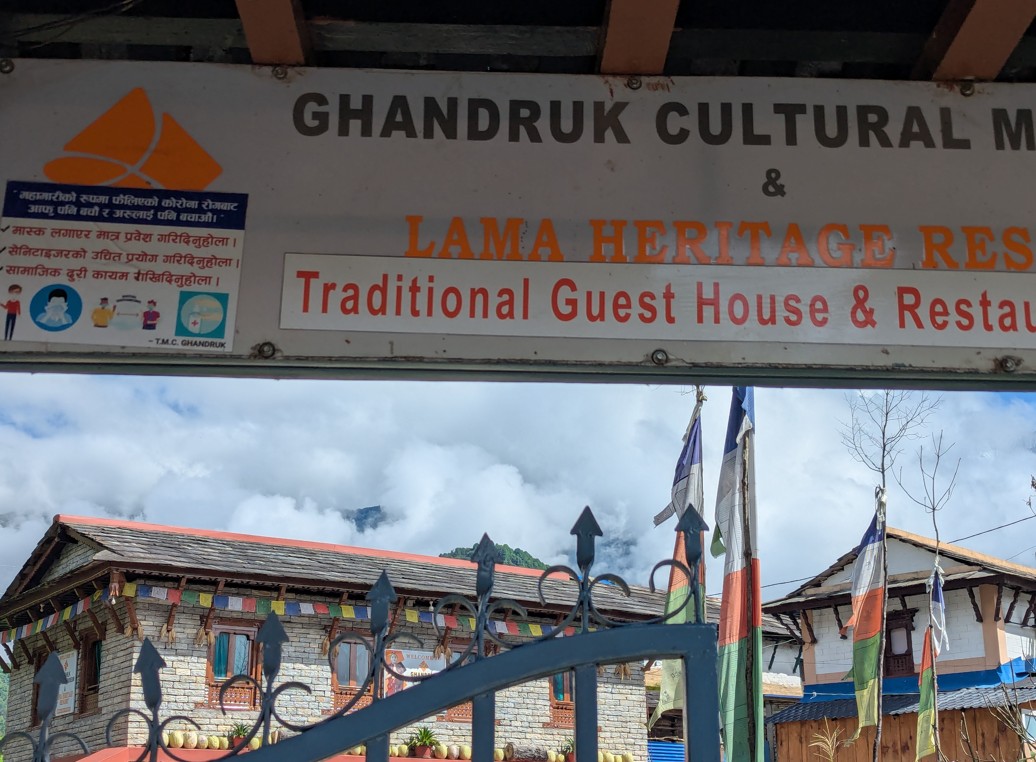
| Lama Heritage Resort | Upscale Comfort | One of the more upscale options in Ghandruk. Typically offers enhanced comfort, more private facilities, and a higher level of service compared to standard teahouses. |
| Simon Guest House, Shangri-La Guest House, & Peaceful Guest House | Reliable Family-Run Guesthouses | Representative of the core sector of Ghandruk's accommodation: dependable, family-run operations providing basic, clean rooms and meals with personal service. |
Accommodation in Ghandruk is plentiful, affordable, and integral to the village trekking experience. The choice of lodge often comes down to preferred location, specific views, and the particular character of the family running it, with all options providing a direct and authentic connection to life in the Annapurna foothills.
| Season | Months | Avg. Daytime High (°C) | Avg. Nighttime Low (°C) | Notes |
| Spring | March to May | 10°C to 20°C | 0°C to 10°C | Best for Flowers: Increasing warmth. Famous for spectacular rhododendron blooms. Low to moderate rain. Pleasant trekking conditions. |
| Monsoon/Summer | June to August | 15°C to 22°C | 9°C to 15°C | Challenging Conditions: Heavy rainfall, high humidity, and frequent cloudy skies. Trails can be muddy and slippery, with potential for landslides and flight delays. Views are often obscured. |
| Autumn | September to November | 10°C to 20°C | 0°C to 10°C | Peak Season: Clear skies, dry weather, and excellent visibility. Stable conditions offer the best mountain views. Cool, crisp days and cold nights. Most popular time for trekking. |
| Winter | December to February | 5°C to 12°C | -5°C to 5°C | Cold & Clear: Very cold, especially at night, with possible snowfall at higher elevations. Days can be sunny with exceptionally clear views. Requires warm clothing. Fewer tourists. |
The best time to visit Ghandruk is during spring (March to May) and autumn (September to November). These seasons have stable weather with clear skies, good visibility of the Annapurna range, including Machhapuchhre and Annapurna South, and moderate temperatures suitable for trekking and outdoor activities.
Spring brings blooming rhododendrons in the forests around the village, adding color to the trails, along with warmer days and low rainfall early in the season. It is popular for nature walks and photography, though late May sees increasing clouds and occasional rain as the monsoon approaches.
Autumn provides the clearest mountain views after the monsoon washes the air, with dry conditions and comfortable daytime temperatures. This period has the highest number of visitors due to reliable weather and festivals like Dashain and Tihar.
Winter (December to February) offers clear skies and sharp mountain views, but with cold temperatures, occasional snow, and shorter days, making it is quieter for those prepared for lower temperatures.
Monsoon (June to August) features lush green landscapes and fewer crowds but heavy rainfall, high humidity, slippery trails, cloudy skies, and risks of landslides, which limit trekking and views.
Ghandruk weather follows the Himalayan pattern at its elevation, with cool to cold conditions year-round and significant rainfall during the monsoon.
Daytime temperatures are mild in peak seasons, while nights are cooler. Ghandruk temperature varies by month, with the warmest period in summer and coldest in winter.
Ghandruk's climate includes dry winters and wet summers, with spring featuring blooming flowers and autumn offering post-rain freshness. Ghandruk in winter can have snow, and in monsoon it is green but rainy.
Ghandruk's elevation is moderate and does not typically cause altitude sickness for most visitors arriving from lower areas like Pokhara. Risks remain low compared to the higher Annapurna trails.
Basic health tips include drinking plenty of water to stay hydrated, walking at a slow pace on uphill sections to adjust gradually, and eating light meals with carbohydrates. Rest if feeling tired, and descend if any headache or nausea occurs.
No advanced medical terms are needed, as issues are rare at this level. Seasonal travel tips for Ghandruk recommend layers for temperature changes and sun protection in clear weather.
| Permit | Who Needs It? | Cost (Approx.) | Where to Obtain | Notes |
| Annapurna Conservation Area Permit (ACAP) | All visitors entering the area. | Foreigners: NPR 3,000 SAARC: NPR 1,000 Children <10: Free | • NTB Office (Kathmandu/Pokhara) • Registered Trekking Agency • Online via NTNC e-permit | Mandatory. Supports conservation. Carry original. Cost doubles if bought at entry checkpoints (e.g., Birethanti). |
| Trekker's Information Management System (TIMS) | Foreign trekkers. | Not required as a separate purchase. | Issued by a registered trekking agency when you hire a licensed guide. | Current regulations require a licensed guide for foreign trekkers in the Annapurna region. The agency provides the necessary documentation, so no separate TIMS card is needed. |
Ghandruk village lies within the Annapurna Conservation Area, so an ACAP permit for Ghandruk is required for all visitors entering the area, including those on short treks or drives.
Foreign nationals pay approximately NPR 3,000 per person. SAARC nationals pay NPR 1,000 per person. Children under 10 enter free.
The ACAP permit supports conservation efforts, trail maintenance, and local community projects in the region.
Obtain the permit in advance from the Nepal Tourism Board office in Kathmandu (Bhrikutimandap) or Pokhara (Lakeside), or through a registered trekking agency like Trek Me Nepal.
Online options are available via the NTNC e-permit system, with an additional small payment gateway charge. Permits issued at entry checkpoints like Birethanti cost double, so plan ahead. Carry the original permit, as checkpoints may require it.
A TIMS card for Ghandruk is not independently required for individual trekkers in the Annapurna region. Current regulations mandate that foreign trekkers hire a licensed guide through a registered agency, which issues the necessary tracking documentation.
No separate TIMS purchase is needed if trekking with a guide or agency. Do you need permit for Ghandruk? Yes, primarily the ACAP permit. Conservation rules in Ghandruk emphasize responsible practices, such as sticking to marked trails and proper waste disposal.
A Ghandruk trip cost for a short 2- to 4-day visit from Pokhara varies based on transport, accommodation type, and whether independent or guided. Independent travelers can keep costs lower, while guided options include permits and support.
Daily estimates in the village (per person, in USD approximate, based on 2025-2026 rates):
Total budget per day in Ghandruk for independent travelers: $40 to $80. For a full short trip, expect $150 to $400, excluding extras like souvenirs.
Some tips for visiting Ghandruk village include:
Guided packages from agencies like Trek Me Nepal often bundle transport, permits, meals, and lodging for $300 to $600 per person for short itineraries. Ghandruk tour cost from Pokhara rises in peak seasons (spring and autumn) due to demand.
A simple packing list for Ghandruk trek suits the moderate altitude and short duration:
Safety tips include:
The area is generally safe for tourists, with low crime and established trails. Travel insurance covering trekking up to 3,000 meters is recommended. Sustainable tourism in Ghandruk involves respecting local customs, avoiding single-use plastics, and supporting community lodges.
Ghandruk village photography includes a range of subjects from Himalayan landscapes to traditional Gurung life. Best photo spots in Ghandruk feature panoramic mountain views of Annapurna South, Machhapuchhre (Fishtail), Hiunchuli, and Gangapurna, visible from various points in the village and nearby ridges.
Sunrise and sunset times provide changing light on the peaks, with golden hues in the morning and reddish tones in the evening during clear weather in spring and autumn. Komrong Danda viewpoint, a short hike away, offers wide sights of valleys, forests, and the Annapurna range.
The stone-paved streets and traditional slate-roofed houses in the old village area create frames with terraced fields and prayer flags. Rhododendron forests bloom in spring with red and pink flowers, adding color along trails.
Other locations include upper village alleys for daily life scenes, Meshram Baraha Temple area for cultural elements, and terrace field overlooks for patterned farmland views.
Photographers use wide-angle lenses for expansive scenes and visit during early morning or late afternoon for softer light. Ghandruk village photography benefits from the combination of natural and built features in the Annapurna Conservation Area.
Staying with the Gurung family in homestays provides direct access to local life in this traditional Gurung village. Homestay cultural experience includes sharing meals with hosts, such as dal bhat, momos, gundruk soup, dhido, and seasonal vegetables prepared with local ingredients.
Visitors can join daily activities like farming on terraced fields or observing weaving of textiles on traditional looms.
Many homestays arrange cultural programs with traditional Gurung dances, music, and performances in vibrant attire. Interaction involves conversations about community history, Gurkha traditions, and daily routines.
Some options include guided visits to the Gurung Museum for artifacts and tools, or participation in festivals if timed with events like Losar. Staying in traditional stone houses allows observation of family life and hospitality from the Gurung people.
This setup supports local families directly and offers insights into customs preserved in the village setting.
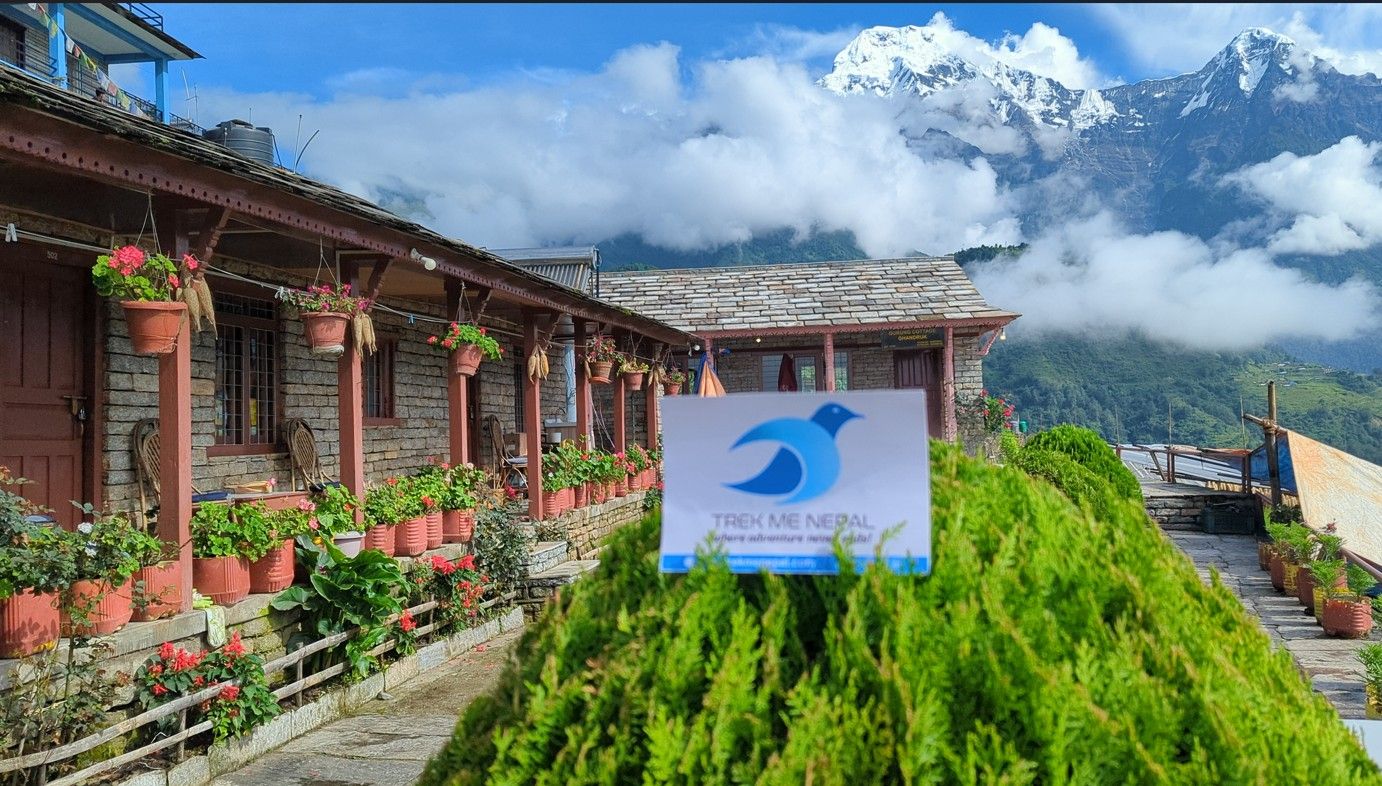
Trek Me Nepal offers guided tours to Ghandruk village, including part of larger routes and packages like our Ghorepani Poon Hill Trek, and many of our Annapurna Region Treks.
We hire local guides with years of Himalayan experience, many born and raised in areas near the trails. They provide details on Gurung culture, history, and daily life in Ghandruk Gurung village.
They handle route navigation, permit arrangements such as an ACAP permit, and adjustments for weather or group needs. Local expertise ensures better understanding of sites like the Gurung Museum Ghandruk, traditional stone streets, and viewpoints for the Annapurna South view from Ghandruk and the Machhapuchhre view.
Trek Me Nepal follows responsible tourism practices, including sustainable approaches like the One Guest One Tree initiative, where a tree is planted for each booking to support local ecosystems.
Guides prioritize safety with training, health checks, and knowledge of trails in the Annapurna Conservation Area.
Trek Me Nepal provides customizable Ghandruk trek package options suitable for different groups. Packages can include short 3- to 5-day trips focused on Ghandruk village tour package, or combined with routes like the Ghorepani Ghandruk trek for Poon Hill sunrise views.
Itineraries suit families with easy paths and cultural stops, beginners with moderate pacing on Ghandruk short trek, and those seeking more adventure with extensions to nearby areas.
Sample plans cover transport from Pokhara to Ghandruk jeep or trailhead, teahouse or homestay stays, meals, and returns. Custom trips allow adjustments for time, fitness, or interests such as extra village walks, photography at best photo spots in Ghandruk, or homestay experiences.
Ghandruk village offers cultural richness through Gurung traditions and scenic beauty with mountain views, making it a suitable destination for various travelers, including families on family-friendly trek.
Trek Me Nepal handles logistics, safety, and local insights for trips to this area. You can book your Ghandruk trek package Nepal or guided options through us for organized support in the Annapurna region.
Trek Me Nepal Archives
Check out recent travel trends and news by Trek me Nepal


More Reasons Why Travellers Trust Us